
What are the most common types of jewellery repairs and are there specialists for each?
The most common jewellery repairs include ring resizing, chain and clasp repairs, soldering, stone resetting, replacing worn claws, polishing, and repairing damaged settings. A skilled jeweller can handle many of these services, while specialist work such as intricate stone setting, antique restoration, engraving, or watch repairs may require a jeweller or watchmaker with the appropriate expertise.
The most common jewellery repairs are ring resizing, chain and clasp repairs, soldering, stone resetting, replacing worn claws, repairing damaged settings, polishing and restoring worn finishes. A skilled jeweller can complete many of these repairs, but specialist expertise may be needed for complex gemstone setting, antique or vintage restoration, engraving, pearl work and watch repairs. The right specialist depends on the jewellery’s metal, construction, age, gemstones and the nature of the damage.
Ring resizing and alterations
Ring resizing is one of the most frequently requested services. A jeweller may add or remove a section of metal, depending on whether the ring needs to be enlarged or reduced. Simple bands are generally more straightforward than rings with gemstones around the full circumference, intricate shoulders or a detailed patterned finish. Some designs cannot be resized safely without affecting their appearance or setting.
A specialist in ring alterations will assess the ring’s construction, metal, hallmark and stone placement before recommending a suitable method. The ring should also be checked for worn claws, thinning metal or movement around the gemstones while it is being altered.
Chain, bracelet and clasp repairs
Chains and bracelets commonly suffer from stretched links, broken links, split rings and damaged clasps. Repairs may involve soldering a link, replacing a connecting ring, fitting a new clasp or rebuilding a weakened section. Fine chains require careful handling because excessive heat or force can distort the links.
A jeweller experienced in chain repair can match the replacement component to the existing metal, colour and scale. Specialist attention is particularly important for delicate, patterned or multi-strand designs, where an unsuitable clasp or visibly different link can affect both strength and appearance.
Soldering and broken joints
Soldering joins separated sections of precious metal using a compatible solder and controlled heat. It is used for broken shanks, split rings, detached bails, damaged chain links and loose shoulders on some jewellery designs. The area normally needs to be cleaned, aligned and prepared before the repair, then filed and polished afterwards.
Repairs near gemstones, enamel, plating or heat-sensitive materials require particular care. A specialist repair jeweller will determine whether the stone needs to be removed before work begins and whether the original finish can be restored without creating visible heat marks or distortion.
Claw, bezel and setting repairs
Claws hold a gemstone in place and can become worn, bent or broken through everyday use. A repair may involve rebuilding an individual claw, replacing several claws, retipping worn metal or replacing an entire setting. Bezel settings, rub-over settings and channel settings require different techniques because the stone is secured by surrounding or adjacent metal rather than separate claws.
A stone-setting specialist is best placed to assess whether the gemstone is secure and whether the surrounding metal has become too thin to protect it. The stone may need to be removed and reset, particularly if the setting has cracked, the stone is loose or the damage extends beneath the surface.
Loose, chipped or damaged gemstones
A loose gemstone should be inspected promptly because continued wear can damage the setting or allow the stone to fall out. A jeweller can check the stone, claws, bezel and seat, then tighten or rebuild the setting as appropriate. If a gemstone is chipped, cracked or badly abraded, a specialist gemstone setter or gemmologist may advise whether it should be reset, repolished or replaced.
Repairs involving fragile, valuable or unusual gemstones need careful planning. Heat, pressure, chemicals and ultrasonic cleaning can affect certain stones, treatments and inclusions, so the repair method should be selected with the gemstone as well as the jewellery in mind.
Broken earrings, bails and pendant fittings
Earring posts, butterfly fittings, hooks, hinged mechanisms and pendant bails can bend, break or become loose. These repairs may involve replacing a fitting, repairing a hinge or rebuilding the attachment point. The replacement should be suitable for the weight of the item; a small fitting may not safely support a heavier pendant or earring.
For earrings, the jeweller should also check that both pieces remain balanced and that any replacement components match in style and metal. Antique or highly detailed fittings may require restoration rather than a standard replacement.
Polishing, refinishing and removing scratches
Polishing can reduce surface scratches, marks and light wear, while refinishing can restore a particular texture such as a matt, brushed or satin surface. The process removes a small amount of metal, so repeated heavy polishing may soften edges, lettering, hallmarks and decorative detail.
A polishing specialist or experienced bench jeweller will first assess whether the marks are superficial or indicate deeper damage. Jewellery with engraving, milgrain, antique patina or mixed finishes should be treated carefully so that its original character and detail are not lost.
Plating and colour restoration
White gold, vermeil and some fashion jewellery may have a surface coating that wears through with use. Replating can restore a more even colour, but it does not repair dents, worn edges or structural damage beneath the surface. Those issues should be addressed before plating.
A jeweller who provides plating services can advise whether the item is suitable for the required finish and whether stones, enamel or other materials need protection or removal during the process. The underlying metal and any existing coating should be identified before work starts.
Engraving and detail restoration
Engraving repairs include refreshing worn lettering, correcting damaged inscriptions and adding new dates, initials or messages. Hand engraving and machine engraving produce different results, and matching an existing style can require specialist skill. Fine decorative details, crests and personal inscriptions should be assessed before any metal is removed or polished.
An engraver may work alongside a repair jeweller where the item first needs reshaping, soldering or polishing. This order matters because structural repairs and surface finishing can affect the final engraving.
Antique, vintage and inherited jewellery restoration
Older jewellery often needs restoration rather than a standard repair. It may have thin or irregular metal, historic settings, hand-cut gemstones, old solder joints or signs of previous alterations. The aim is usually to preserve as much original material and character as possible while making the piece safe to wear.
A jeweller experienced in antique restoration can distinguish between necessary strengthening and changes that would unnecessarily remove original detail. They may recommend staged work, such as stabilising a setting before considering polishing or cosmetic restoration. Valuation or insurance documentation may also be appropriate before significant work is undertaken.
Pearl and delicate bead repairs
Pearl necklaces and bracelets may need restringing when the thread becomes dirty, stretched or weakened. A specialist can assess the condition of the pearls, replace the thread and create suitable knots where required. Knotting can help prevent the entire strand from scattering if the thread breaks, although the appropriate construction depends on the piece and how it is worn.
Pearls should not be treated like hard gemstones. They can be scratched or affected by heat, chemicals and harsh cleaning methods, so pearl repairs and cleaning should be carried out by someone familiar with their surface and organic structure.
Watch repairs and servicing
Watch work is a separate specialist discipline. Common services include battery replacement, bracelet or strap adjustment, clasp repair, crystal replacement, crown and gasket replacement, water-resistance checks and mechanical movement servicing. A watchmaker has the tools and training to inspect the movement, seals and case without causing avoidable damage.
A jeweller may be able to handle external work such as bracelet sizing or a damaged attachment, but movement faults, loss of timekeeping, moisture ingress and mechanical servicing should be referred to an appropriate watch specialist. Water resistance should not be assumed after a battery change or case repair unless it has been tested.
How to identify the right specialist
- Ask whether the repairer regularly works with the item’s metal, gemstones and construction.
- Explain any known treatments, previous repairs, plating or alterations.
- Point out loose stones, unusual sounds, sharp edges, stretched links or areas that have changed colour.
- For valuable, antique or sentimental pieces, request an assessment before authorising polishing, remodelling or replacement parts.
- Confirm what the proposed repair includes, such as cleaning, finishing, stone security checks and any post-repair testing.
- Ask whether the repair may affect hallmarks, engraving, patina, gemstone treatments or an existing valuation.
Do not continue wearing jewellery that has a loose gemstone, broken claw, cracked shank, badly distorted setting or damaged clasp. Keeping it separately in a soft, secure container can prevent further loss or abrasion while it is assessed. A professional jeweller can explain whether the item needs a straightforward repair, specialist restoration or a combination of services, and can advise on suitable aftercare once the work is complete.
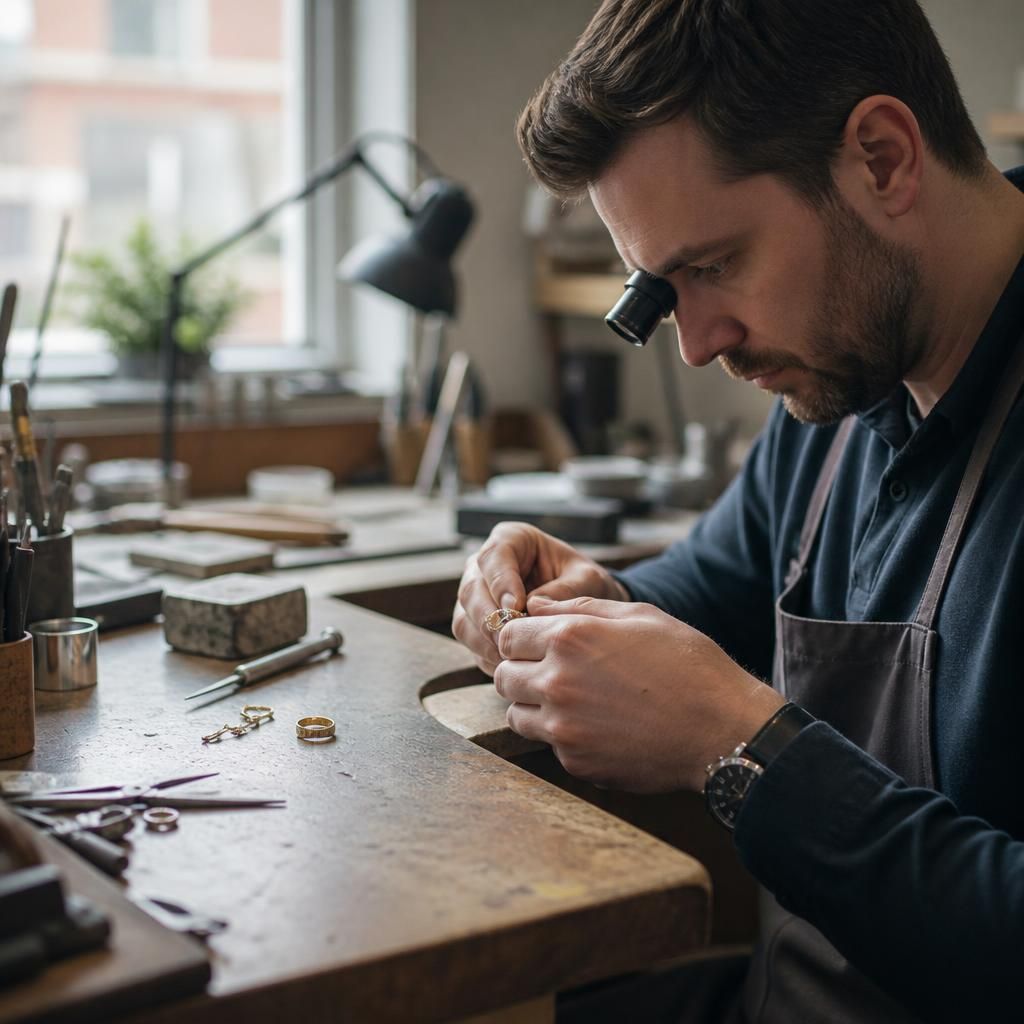
The right jewellery repair specialist depends on the item’s construction, materials and damage. A bench jeweller can often complete routine repairs such as resizing, soldering and clasp replacement, while loose gemstones, worn claws, antique settings and valuable or unusual stones may require a specialist setter or restoration jeweller.
Before work begins, the jewellery should be examined for hidden weakness, previous repairs, gemstone treatments and areas of worn metal. Ask what method is proposed and whether it could affect the setting, hallmark, engraving, patina or an existing valuation. Do not continue wearing a piece with a loose stone, broken claw, cracked shank or damaged clasp; store it securely until it can be assessed.