
How can different engagement ring settings enhance or detract from the functionality and presentation of various diamond cuts?
Engagement ring settings influence how a diamond cut looks, how securely it is held and how practical it is for everyday wear. Well-matched settings can maximise brilliance and protect vulnerable edges, while an unsuitable design may obscure the cut, reduce light return or leave corners exposed to damage.
Different engagement ring settings affect a diamond’s appearance, light return, protection and everyday practicality. The best pairing allows the cut to remain visible and well illuminated while supporting areas that are vulnerable to chipping; an unsuitable setting can hide the outline, interrupt the diamond’s sparkle, make the ring harder to wear or expose sharp corners to knocks.
How the setting changes presentation
Prongs hold a diamond at selected points, leaving more of the pavilion and girdle exposed to light. This generally gives a bright, open appearance and makes the centre stone look prominent. However, prongs can cover small parts of the outline, catch on clothing if they become worn or raised, and provide less protection to corners than a bezel or carefully placed protective claws.
A bezel surrounds the diamond with a rim of metal. It gives a clean, contemporary appearance, helps protect the girdle and corners, and is useful for an active lifestyle. The trade-off is that the rim can slightly reduce the visible outline and limit light entering from the sides. A bezel must be made accurately for the specific cut, particularly where the stone has pointed ends or a shallow profile.
A halo places smaller diamonds around the centre stone. It increases the visual spread of the design and can provide some protection around the centre diamond’s edges. The surrounding stones also add texture and brilliance, although they may make a simple cut appear busier. A halo can reduce the visual distinction between a centre stone and its surrounding stones, so its proportions should be considered carefully.
A cathedral or raised setting lifts the centre diamond above the shoulders of the ring and allows more light around it. The elevation can make the stone look elegant and prominent, but it also increases the likelihood of catching the ring on clothing or knocking it against a hard surface. A lower setting is usually more practical for someone who regularly works with their hands, although it must still allow sufficient clearance for a wedding ring if one is intended.
Three-stone and side-stone settings frame the centre cut with additional diamonds. They can balance a longer outline such as an oval, emerald or radiant cut, while tapered side stones can reinforce a pear or marquise shape. Too much surrounding detail may compete with a distinctive centre cut, and the setting must be designed so that each stone has appropriate support rather than relying on a crowded arrangement.
Round brilliant diamonds
A round brilliant is versatile because its symmetrical outline and facet pattern work with most settings. Four or six prongs show the circular shape clearly and allow strong light return. Six prongs provide additional security and a more defined metal presence, while four prongs can create a lighter, more open look but may leave the stone less supported if a prong is damaged.
A bezel gives a round brilliant a smoother, more contemporary appearance and protects its girdle, though it can make the diamond look slightly smaller from above. A halo can increase apparent size and add further sparkle, but the centre stone may no longer provide the sole focus. A cathedral setting emphasises the round outline, but the raised profile should be assessed for comfort and snagging.
Princess and other square cuts
Princess cuts have sharp corners, which are particularly susceptible to impact and chipping if they are not protected. Four corner prongs can secure the stone while displaying its square outline, but the claws need to be correctly positioned and robust. V-shaped claws or a bezel provide greater protection at the corners and are often more functional for everyday wear.
A halo can soften the geometric outline of a princess cut or reinforce its square appearance, depending on the shape and spacing of the surrounding stones. A channel or closely set arrangement may create a clean, structured look, but maintenance access and the security of individual stones should be considered. Any setting that leaves the corners exposed should be chosen with care.
Cushion cuts
Cushion cuts combine a square or rectangular outline with rounded corners. Their softer profile suits prongs, halos and three-stone designs. Rounded claws can follow the corners without making the setting look heavy, while a bezel accentuates the cut’s smooth outline and gives useful edge protection.
A cushion cut may have a more traditional, broad-flash appearance or a facet arrangement that produces stronger scintillation. The setting should not obscure too much of its outline, particularly where the appeal lies in the balance between curved corners and a defined shape. A halo can make a cushion look larger, but the space between the centre and halo needs to be even to avoid an irregular appearance.
Oval cuts
Oval diamonds benefit from settings that preserve their length and uninterrupted outline. Four or six prongs can keep the design open, while a halo or tapered side stones can enhance the elongated appearance. A bezel follows the curved outline neatly but may make the stone appear less open from the side.
Because an oval has no corners, it is generally less exposed to corner damage than a princess, pear or marquise cut. Its wider curved ends can still be vulnerable to knocks, particularly in a high setting. Prong placement should also avoid making the stone appear uneven or creating an unwanted visual division across its outline.
Pear-shaped diamonds
A pear cut has one rounded end and one pointed end, so the tip requires specific protection. A V-shaped claw is often used at the point, as a standard rounded prong may not shield it sufficiently. The setting should also prevent the diamond from twisting, since even a small change in orientation can affect the balance of the design.
A halo can follow the pear outline and protect the perimeter, although it may make the design appear wider or more decorative. Side stones can emphasise the direction of the point, while a simple solitaire keeps attention on the distinctive outline. The point should normally face towards or away from the hand according to the wearer’s preference, but the practical priority is secure alignment and adequate protection.
Marquise cuts
Marquise diamonds have two pointed ends and need protective claws at both tips. V-shaped claws or a bezel reduce the risk of damage, while carefully positioned prongs can retain the cut’s long, slender appearance. If the setting is too substantial, it can make the diamond look narrower or interrupt the elegant outline.
A north-south orientation lengthens the appearance of the finger, whereas an east-west orientation gives a broader, more contemporary presentation. Either orientation can work, provided the setting prevents movement and protects both points. A halo can accentuate the marquise shape, but its proportions must follow the curves accurately rather than creating a bulky border.
Emerald and Asscher cuts
Emerald and Asscher cuts use broad, step-cut facets that create clarity, reflection and a strong architectural outline rather than the intense scintillation associated with brilliant cuts. Their open facet structure can make inclusions and body colour easier to see, so the setting should not be relied on to disguise characteristics within the diamond.
A four-corner prong setting provides an open view and suits the clean geometry of these cuts, but exposed corners need careful protection. A bezel gives a crisp outline and protects the corners, although the metal rim can reduce the visual openness that makes step cuts distinctive. A halo may add brightness and apparent size, but it can detract from the restrained character of an emerald or Asscher cut if the surrounding design is too elaborate.
Radiant cuts
Radiant cuts combine brilliant-style faceting with a rectangular or square outline. Their clipped corners are more resistant to damage than sharp corners, but they still benefit from well-positioned prongs. A four-corner setting keeps the outline clear, while a bezel provides a more protected and modern finish.
Rectangular radiants often work well with tapered side stones, which reinforce their length without competing with the facet pattern. A halo can increase apparent spread and add sparkle, although the centre stone’s brilliance should remain distinct from the surrounding stones.
Heart-shaped diamonds
A heart cut requires accurate symmetry and careful support at its cleft and point. Prongs should protect the point without obscuring the heart outline, and the cleft must remain visible from above. A bezel can offer excellent protection but may soften the definition of the cleft if the rim is too broad.
A simple solitaire places emphasis on the symbolic outline, while a halo can make the heart appear larger and provide a decorative border. The setting should prevent rotation, since the design loses its intended shape if the stone moves out of alignment.
Functionality, maintenance and daily wear
The most visually open setting is not always the most practical. High-set prongs can maximise light and allow a wedding ring to sit closely beside the engagement ring, but they are more exposed to knocks and can catch on fabrics. Low-set bezels and secure claws are often easier to wear at work or during manual activities, but they may require a shaped wedding band or a deliberate gap between the rings.
Prongs and surrounding stones should be checked periodically because wear, impact or snagging can loosen them. Dirt beneath an open setting can reduce light return, while a bezel can be more difficult to clean beneath the stone. Regular professional inspection is particularly important for cuts with pointed corners, raised settings and rings worn every day.
Metal choice also affects how the setting presents the cut and how it performs. A bright white metal can make a colourless diamond appear crisp and can blend visually with the stone, while yellow or rose gold creates contrast around the outline. The setting must be sufficiently robust for its design, and the choice should take account of the wearer’s habits, the ring’s profile and the intended aftercare.
Choosing the right combination
Start with the diamond’s outline and vulnerable areas, then assess how much of the cut should remain visible, how much protection is required and whether the ring must sit alongside a wedding band. A specialist fitting can identify whether a claw is shielding a corner, whether a halo follows the centre stone evenly, and whether the setting height is suitable for everyday use.
In practical terms, prongs are usually suited to clients who want maximum visibility and a lighter appearance; bezels prioritise protection and a smooth profile; halos add presence and surrounding brilliance; and side-stone settings can balance or lengthen particular outlines. The most successful pairing is therefore not simply the most decorative one, but the design that supports the diamond’s shape, protects its vulnerable points and remains comfortable for the way the ring will be worn.
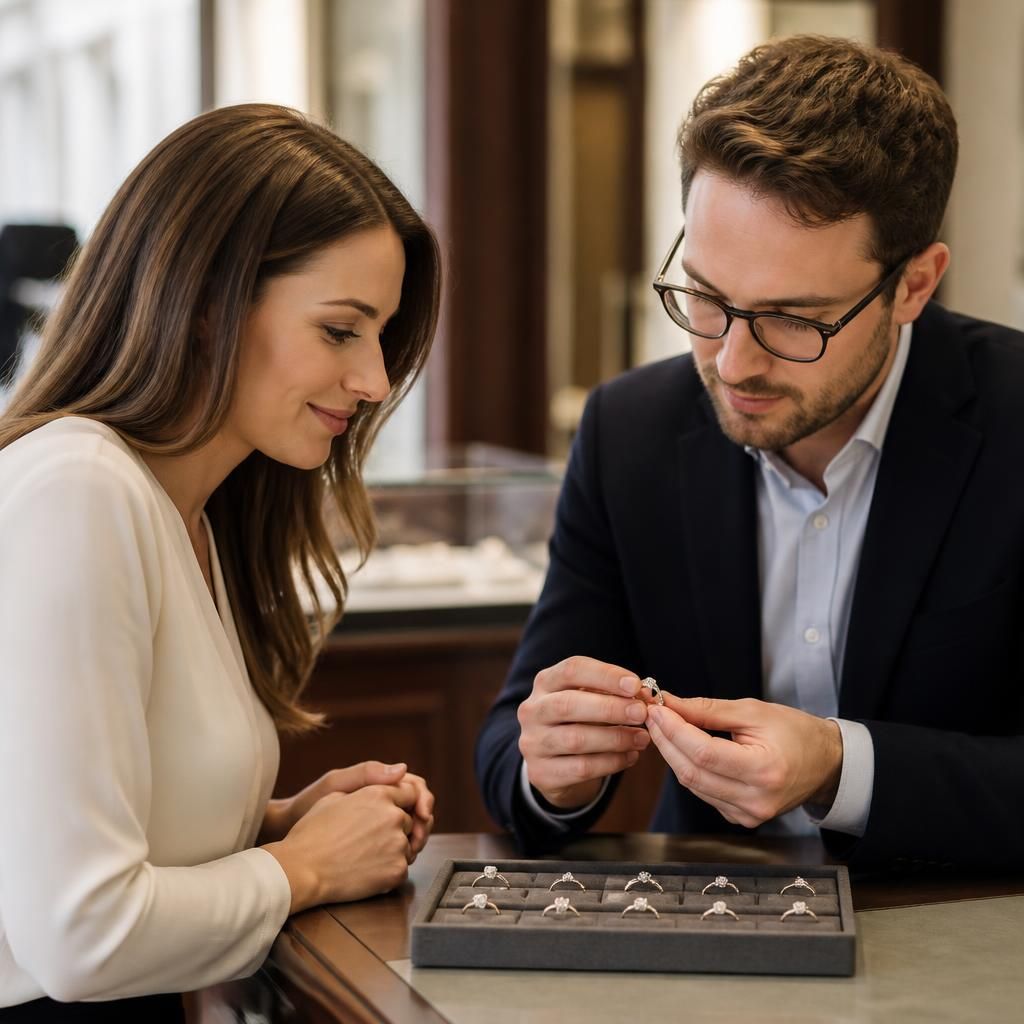
The setting should protect the diamond’s vulnerable areas without hiding the features that define its cut. Sharp-cornered princess, pear, marquise and heart-shaped diamonds usually need carefully positioned claws, often including V-shaped protection at a point. A bezel can provide more continuous protection, but its metal rim may reduce the open view of the stone.
Prong settings generally show more of the diamond and allow light to enter from the sides, which suits brilliant cuts such as round, oval and radiant diamonds. A halo or side-stone setting can increase visual spread and balance an elongated outline, although excessive surrounding detail may compete with an emerald or Asscher cut’s clean step facets. The setting should therefore be assessed for both appearance and practical security.
Everyday wear also affects the choice. A raised cathedral setting may allow a wedding band to sit closely beside the engagement ring, but it is more exposed to knocks and snagging. A lower bezel or protected claw setting is often more practical for active hands, provided there is enough clearance for the intended wedding ring and the setting can be inspected and maintained properly.