Are there any limitations to laser engraving on certain types of jewellery?
Yes. Laser engraving can be limited by the jewellery’s metal, surface finish, shape, thickness and any gemstones or delicate settings, so some pieces may require a different engraving method or may not be suitable at all.
An assessment of the item is recommended before engraving to confirm the safest technique and the clearest, most durable result.
Laser engraving on jewellery is not suitable for every metal, finish, shape or setting. The result depends on how the laser interacts with the material and whether the engraving area can be reached, positioned and supported safely. Most limitations can be identified during an assessment, allowing the engraving technique and design to be adjusted before work begins.
Metal type and composition
Different metals absorb and reflect laser energy in different ways. Gold, platinum, silver and many stainless-steel items can often be laser engraved, but the alloy, purity and surface condition affect the clarity and depth of the result. Highly reflective surfaces may need carefully controlled settings, while some plated, coated or treated jewellery may not be suitable for direct engraving.
Jewellery made from mixed metals can also require additional care. A laser may expose a different-coloured metal beneath the surface or create an uneven contrast where two materials meet. Items made from unusual alloys, fragile materials or unknown compositions should be assessed before any engraving is agreed.
Plating, coatings and surface finishes
Laser engraving can remove or alter plating, enamel, lacquer or other surface coatings. On a plated item, engraving may reveal the underlying metal, producing a deliberate contrast but potentially changing the appearance of the piece. If the coating is thin or already worn, the engraved area may look inconsistent with the surrounding surface.
Polished, brushed, satin, hammered and textured finishes also affect the appearance of lettering or artwork. Fine engraving is generally clearest on a smooth, stable surface. On a heavily textured finish, small details can be interrupted by the surface pattern and may be less legible. In some cases, the item can be refinished first, although this is not appropriate for every design or piece.
Shape, thickness and access
Laser engraving requires a suitable area that can be held securely and positioned accurately. Curved, narrow or irregular surfaces can limit the size and placement of the design. Engraving around the inside of a ring, for example, may be possible, but the available space and curvature can restrict the lettering. A very thin section may not safely accommodate deeper engraving, particularly where strength or structural integrity could be affected.
Engraving close to edges, hinges, joints, catches, claws or moving parts may also be unsuitable. The jewellery must be supported without pressure being placed on delicate components, and the laser must have a clear line of access. Designs may therefore need to be scaled, simplified or moved to a safer area.
Gemstones and delicate settings
Gemstones do not automatically prevent laser engraving, but their presence requires careful assessment. Heat, reflected energy, dust and vibration can present risks to certain stones, treatments and settings. Particularly delicate stones, fracture-prone materials, treated gems and stones close to the engraving area may make laser work unsuitable.
Loose or vulnerable settings should be checked before engraving. A stone may need to be removed by an appropriately qualified professional, although removal is not always advisable or possible. When a gemstone cannot be adequately protected, traditional engraving or an alternative location may be safer.
Design detail and legibility
Laser engraving is precise, but the available surface area still limits how much detail can be reproduced. Very small lettering, intricate motifs and closely spaced lines may merge visually, especially on a curved or reflective surface. The design should be proportionate to the item and allow enough space between letters and elements for the finished result to remain clear.
Photographs, handwriting and detailed artwork may need to be prepared digitally before engraving. A suitable file does not guarantee a suitable result if the jewellery cannot accommodate the detail. We may recommend a simplified version, a different font or a larger engraving area to improve legibility and durability.
Depth, contrast and long-term wear
Laser engraving can produce a fine, controlled mark, but the visible contrast varies according to the metal, finish and engraving settings. A subtle mark may be preferred on a luxury piece, while a darker or more noticeable result may require a particular surface treatment. The engraving itself may remain, but polished areas that receive frequent contact can develop scratches or wear that reduce contrast over time.
On rings, bracelets and other frequently handled items, the position of the engraving affects its longevity. Areas exposed to regular rubbing are more likely to lose definition than protected surfaces. This does not necessarily mean the engraving has disappeared; changes to the surrounding finish can make it less easy to see.
Existing jewellery and previous repairs
Older jewellery, repaired items and pieces with previous engraving require additional checks. Soldered areas, thin sections, previous resizing, worn settings and hidden damage can influence whether the item can be safely engraved. An existing inscription may also limit the space available or affect the alignment of new work.
For these reasons, an item should be inspected rather than assessed from a photograph alone. We can consider the metal, construction, surface, stone settings, proposed placement and design before confirming whether laser engraving is appropriate.
When laser engraving is not the best option
If laser engraving presents a risk or is unlikely to produce a clear result, alternatives may include traditional hand engraving, machine engraving, engraving on a different surface or adapting the design. In some cases, the safest choice is not to engrave the item at all. The correct recommendation depends on preserving the jewellery while achieving a durable and readable finish.
Before proceeding, bring or send details of the piece and the wording or artwork you have in mind. An expert assessment can identify any limitations, explain the likely appearance and confirm the most suitable method for your jewellery.
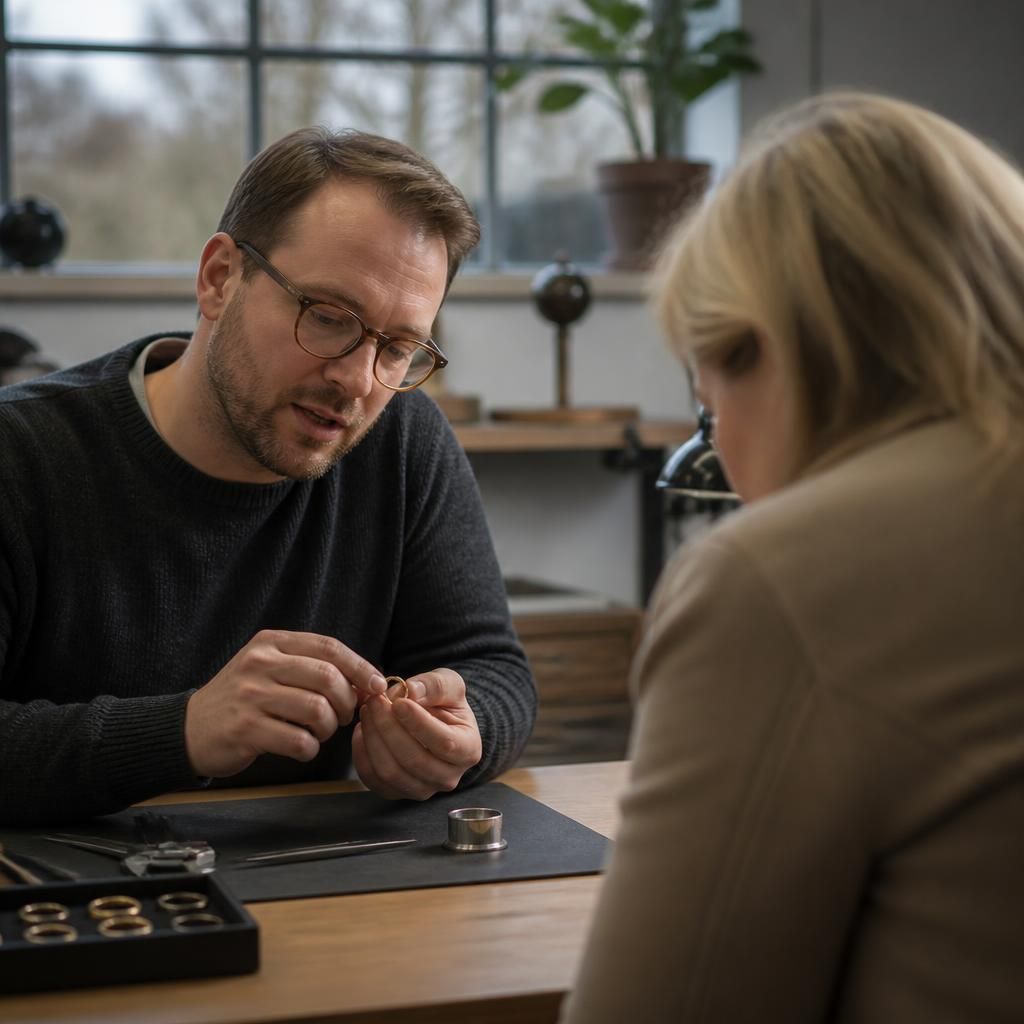
Laser engraving can alter plating, enamel, lacquer and other surface finishes, so the visible result depends on both the jewellery’s base material and the coating above it. Engraving a plated item may expose the metal underneath, while a textured, brushed or heavily patterned surface can make fine lettering less clear.
Smooth, stable surfaces usually provide the most even and legible finish. Where appropriate, the piece may be refinished before engraving, but this is not suitable for every item and could affect its original character. We will assess the surface, proposed placement and design first, then advise whether laser engraving, an alternative technique or a different engraving position will give the safest and clearest result.