
Have you thought about the potential costs associated with different types of jewellery repair services in Birmingham, and how they might vary based on the materials and craftsmanship involved?
Jewellery repair costs in Birmingham vary according to the type of work required, the metal, gemstones, design complexity and level of craftsmanship involved. A straightforward ring adjustment may cost less than restoring a vintage piece, repairing a luxury watch or replacing a fine gemstone, so an expert assessment is needed before providing an accurate quotation.
Jewellery repair costs in Birmingham depend on the repair required, the materials involved and the skill needed to complete the work safely. A simple adjustment to a plain precious-metal ring is usually less involved than rebuilding a worn setting, replacing a gemstone, restoring an antique piece or servicing a mechanical luxury watch. An accurate price therefore requires an inspection of the item, followed by a clear explanation of the work and materials recommended.
The principal cost is the time and expertise required to carry out the repair. Jewellery is often delicate, and a repair must restore strength and appearance without damaging the surrounding metal or stones. A straightforward soldering job may be relatively quick, while a hand-finished repair involving a detailed setting, fine engraving or an unusual construction can require considerably more bench work. Intricate designs, hidden joins and previous repairs may also make the process more complex.
The type of repair is one of the most important factors in the quotation. Typical services include:
- Ring resizing: The price depends on whether the ring is made larger or smaller, the amount of metal required, the width of the band and whether it includes gemstones, engraving or a patterned surface.
- Shank and shoulder repairs: A worn or split band may need to be reinforced or partly rebuilt. This involves more material and bench work than a minor solder repair.
- Claw and setting repairs: Worn claws can leave a stone vulnerable to loss. Re-tipping an existing claw may be appropriate in some cases, whereas a badly worn setting may need to be rebuilt or replaced.
- Stone replacement: The cost includes the replacement gemstone, its colour, clarity, cut and size, as well as setting and finishing. Matching an existing stone can require additional assessment.
- Chain and bracelet repairs: Reconnecting a broken link may be relatively simple, but replacing a damaged section, clasp or fine articulated component can require specialist work and matching materials.
- Polishing and refinishing: Removing surface marks, restoring a brushed finish or re-plating a suitable item is priced according to the metal, finish and condition. Excessive polishing can alter sharp edges or design details, so it should not be treated as a purely cosmetic process.
- Engraving and remodelling: Hand engraving, recreating a lost detail or transforming an existing piece involves design decisions and skilled finishing, which can make the work more substantial than a standard repair.
- Watch repairs: A battery replacement, strap change or bracelet adjustment is different from a mechanical service, water-resistance assessment or movement repair. Luxury watches may require specialist equipment, testing and carefully sourced components.
The metal can affect both the price and the method of repair. Gold, platinum, silver and other jewellery metals have different working properties and may require different solder, tools and finishing techniques. Platinum repairs, for example, need particularly careful heat control and finishing to maintain the integrity of the piece. Gold repairs may vary according to the metal colour and fineness, while silver can require attention to tarnishing and surface finish. If new metal is needed, its type, purity and weight form part of the material cost.
Some items also contain mixed metals, coated surfaces or delicate finishes that restrict the repair options. A jeweller should explain if a proposed process could affect a coating, patina, hallmark, texture or original finish. Preserving the character of an older piece may require a different approach from making a newer item look completely polished.
Gemstones add further variables. Diamonds and coloured stones differ in hardness, durability and sensitivity to heat, chemicals and pressure. Certain stones should be removed before soldering or other heat-based work, while others may need to remain undisturbed and be protected during the repair. A stone that is loose, chipped or heavily included may require additional care. The setting should be examined at the same time, because replacing a gemstone without correcting a weakened setting may not provide a lasting solution.
Vintage, antique and handmade jewellery can cost more to repair because its construction may not follow modern manufacturing methods. It may contain thin sections, hand-cut components, unusual joins or historic solder. Previous alterations can also make the metal less uniform. In these cases, the objective is often to retain as much original material and character as possible rather than simply replacing every worn part. The repairer may recommend a staged approach, beginning with a condition assessment before any work is authorised.
Craftsmanship is not interchangeable between repair services. A technically correct repair should be secure, appropriately finished and consistent with the original design. The quotation should reflect inspection, preparation, bench work, setting, polishing, quality checking and any required testing. Lower-cost work may not offer the same level of attention to alignment, surface finish or long-term durability, particularly on high-value, sentimental or intricate pieces.
For high-value jewellery and watches, the assessment should include more than a visual check. The condition of the metal, settings, hinges, clasps and moving parts should be recorded, and any existing damage or previous repair noted. Where appropriate, a valuation can be arranged separately from the repair. A valuation describes the item for insurance or other purposes; it does not replace a repair quotation and should not be used to assume that the repair will cost the same as its stated value.
Before authorising work, ask for a written quotation that identifies:
- the proposed repair and the reason it is recommended;
- the metal, gemstones or replacement components to be used;
- whether stones will be removed, reset or tested;
- any risks associated with age, wear, previous repairs or fragile materials;
- the expected timescale and whether specialist work is involved;
- what cleaning, polishing, finishing or testing is included;
- whether the quoted price includes applicable taxes and any additional services;
- how the item will be handled if further damage or hidden wear is discovered during the repair; and
- what aftercare or workmanship assurance is provided when the repair is complete.
An inspection may occasionally show that a repair is not the most appropriate option. If a ring has very thin metal, a gemstone is unstable or a watch requires more extensive work than first expected, rebuilding, remodelling or replacing a component may provide better long-term value. These alternatives should be explained before any additional cost is incurred. For sentimental jewellery, it may also be possible to preserve the original stone or part of the original metal within a redesigned piece.
Ethically sourced replacement metals and gemstones can also affect the quotation. Responsible sourcing involves traceability, suitable documentation and careful selection rather than simply choosing the cheapest available material. Where a replacement stone or new metal is needed, the options should be discussed so that you can balance appearance, durability, provenance and budget.
The most useful way to compare jewellery repair prices in Birmingham is to compare like-for-like quotations, not just the headline figure. Check whether each quotation includes the same materials, level of finishing, setting work, testing and aftercare. Bringing the item for an assessment allows the repairer to identify the actual cause of the problem and recommend a proportionate solution. This protects the jewellery from unnecessary work and gives you a more reliable understanding of the final cost.
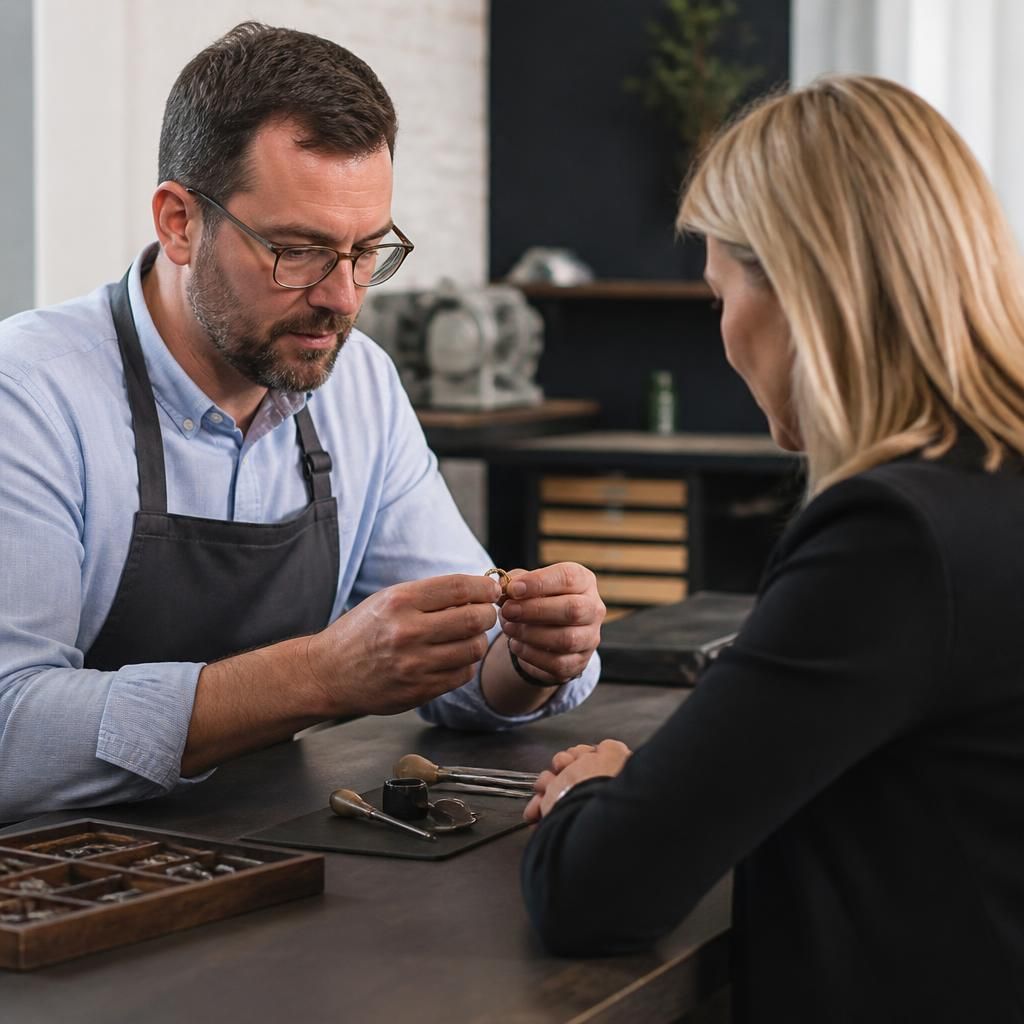
Jewellery repair costs in Birmingham are best compared through like-for-like written quotations, because the headline price may not include the same materials, setting work, finishing or testing. A lower quote may cover only a basic solder or adjustment, while another may include replacement metal, stone protection, polishing and final security checks.
Before authorising work, ask what repair is recommended, which materials will be used and how hidden wear or previous repairs will be handled. This is particularly important for platinum, vintage jewellery, intricate settings and luxury watches, where specialist craftsmanship can affect both the price and the long-term durability of the repair.
Arrange Your Jewellery Repair Assessment
Bring your jewellery or watch to Steven Charles Quance for a careful repair assessment and clear, written quotation based on its condition, materials and required craftsmanship. We will explain the recommended work, expected timescale and aftercare before you decide whether to proceed.