What are the common misconceptions about buying a used Rolex watch?
Common misconceptions about buying a used Rolex include believing that every pre-owned watch is heavily worn, cannot be authenticated, or offers no value compared with a new model. In practice, a carefully inspected and properly documented used Rolex can be genuine, well preserved and a sound purchase when bought from a trusted specialist who provides clear condition details, servicing information and appropriate aftercare.
Buying a used Rolex does not automatically mean accepting poor condition, uncertain authenticity or reduced reliability. A pre-owned watch can be genuine, well maintained and carefully preserved, but its condition, history, originality and documentation need to be assessed individually rather than assumed from its age or appearance.
Misconception: every used Rolex is heavily worn. Pre-owned watches vary considerably. Some have been worn regularly and show marks, while others have had limited use or been kept as part of a collection. Case and bracelet scratches, bezel wear, faded inserts and stretched bracelets can affect the assessment, but light signs of use are not necessarily a defect. The important point is whether the condition is accurately described and consistent with the watch’s age and history.
A specialist assessment should consider the case, bracelet, clasp, crystal, bezel, dial, hands and movement. Photographs can help, but they do not always show fine scratches, excessive polishing or bracelet stretch clearly. Ask for a direct explanation of any notable wear and whether parts have been replaced or refinished.
Misconception: a used Rolex is likely to be fake. Counterfeit watches do exist, so authenticity should never be taken for granted. However, buying from an established specialist with a defined inspection process provides a much stronger basis for confidence than relying on an unverified private listing. Authentication involves examining the movement, serial and reference markings, case construction, dial details, bracelet and overall consistency, rather than checking one feature in isolation.
Original paperwork can support a watch’s history, but documents alone do not prove that the watch currently contains all its original components. Conversely, the absence of a box or service documents does not automatically mean the watch is counterfeit. The seller’s inspection, provenance, written description and willingness to answer specific questions are all relevant.
Misconception: papers and a box guarantee authenticity and condition. A Rolex presentation box, guarantee card or service record may add useful context and can contribute to desirability, but these items should be assessed alongside the watch itself. They do not confirm that a watch has been serviced recently, that every component is original or that it has been protected from damage. A complete set can be desirable, but the watch’s mechanical and physical condition remain central.
Misconception: used means unreliable. A properly maintained mechanical watch can continue to perform well for many years. Reliability depends on factors such as servicing, storage, exposure to moisture or impact, and the condition of the movement. A pre-owned Rolex should be checked for timekeeping, winding, hand-setting, date change where applicable, power reserve, bracelet security and water resistance where this is relevant and can be tested safely.
Service history is useful, but a missing service receipt does not by itself make a watch unsuitable. The practical questions are whether the watch has been inspected, whether any required work has been identified, and what aftercare is available. Water resistance should never be assumed solely because a model was originally designed for water use; seals age and should be tested when appropriate.
Misconception: every used Rolex is substantially cheaper than a new one. Pricing depends on the model, reference, materials, dial and bezel configuration, production history, condition, originality, accessories and current demand. Some pre-owned models offer a more accessible route into Rolex ownership, while others command significant prices because of their specification or scarcity. Comparing only the age of two watches gives an incomplete picture of value.
Misconception: buying used always means compromising on choice. The pre-owned market can provide access to discontinued references, configurations no longer produced and established models with design characteristics that differ from current collections. It can also offer a wider range of condition and completeness. That variety makes careful comparison especially important: two watches with a similar appearance may differ materially in movement, components, service history and originality.
Misconception: a polished watch is always better cared for. Polishing can remove surface marks, but excessive polishing may soften the original case lines, reduce definition around the lugs or alter the shape of the case and bracelet. A watch with some honest wear may be preferable to one that has been aggressively refinished. Ask whether the case has been polished, what work was carried out and whether its proportions remain correct.
Misconception: a used Rolex is guaranteed to increase in value. Rolex watches can hold value strongly in some circumstances, but no pre-owned watch should be treated as a guaranteed investment. Future value can be affected by market demand, condition, originality, service history, completeness and wider economic conditions. Buy primarily because the watch suits your requirements, with resale potential considered as one factor rather than a promise.
Misconception: the seller’s description is enough. A trustworthy purchase should be supported by clear, specific information. Before committing, establish:
- the exact model and reference details;
- the watch’s condition, including any dents, scratches, refinishing or replaced parts;
- whether the movement and other components have been inspected;
- what is known about servicing and water-resistance testing;
- which box, cards, receipts or other accessories are included;
- the terms of any warranty, return arrangement and future aftercare; and
- whether the seller will provide an appropriate invoice and written description.
Misconception: online photographs remove the need for an in-person inspection. Detailed images are useful for narrowing a choice, but they may not reveal movement condition, bracelet stretch, case geometry or subtle dial and hand differences. When possible, examine the watch in person or ask for additional close-up images and precise answers before purchase. An established Birmingham jeweller should be able to explain what has been checked and identify any limitations in the available history.
Misconception: servicing destroys a watch’s originality. Appropriate servicing is intended to maintain safe and dependable operation. Some replacement components may be necessary, particularly consumable or worn parts, but originality can be important to collectors and should be discussed before work is undertaken. The right approach depends on the watch’s age, condition, intended use and whether preserving historical features is a priority.
In practice, the safest way to approach a used Rolex is to assess the individual watch rather than rely on assumptions about pre-owned goods. Confirm authenticity through professional examination, evaluate condition beyond cosmetic appearance, understand the service position and obtain clear written details from a reputable specialist. That process helps distinguish a genuinely well-presented pre-owned Rolex from one whose price or appearance hides unresolved concerns.
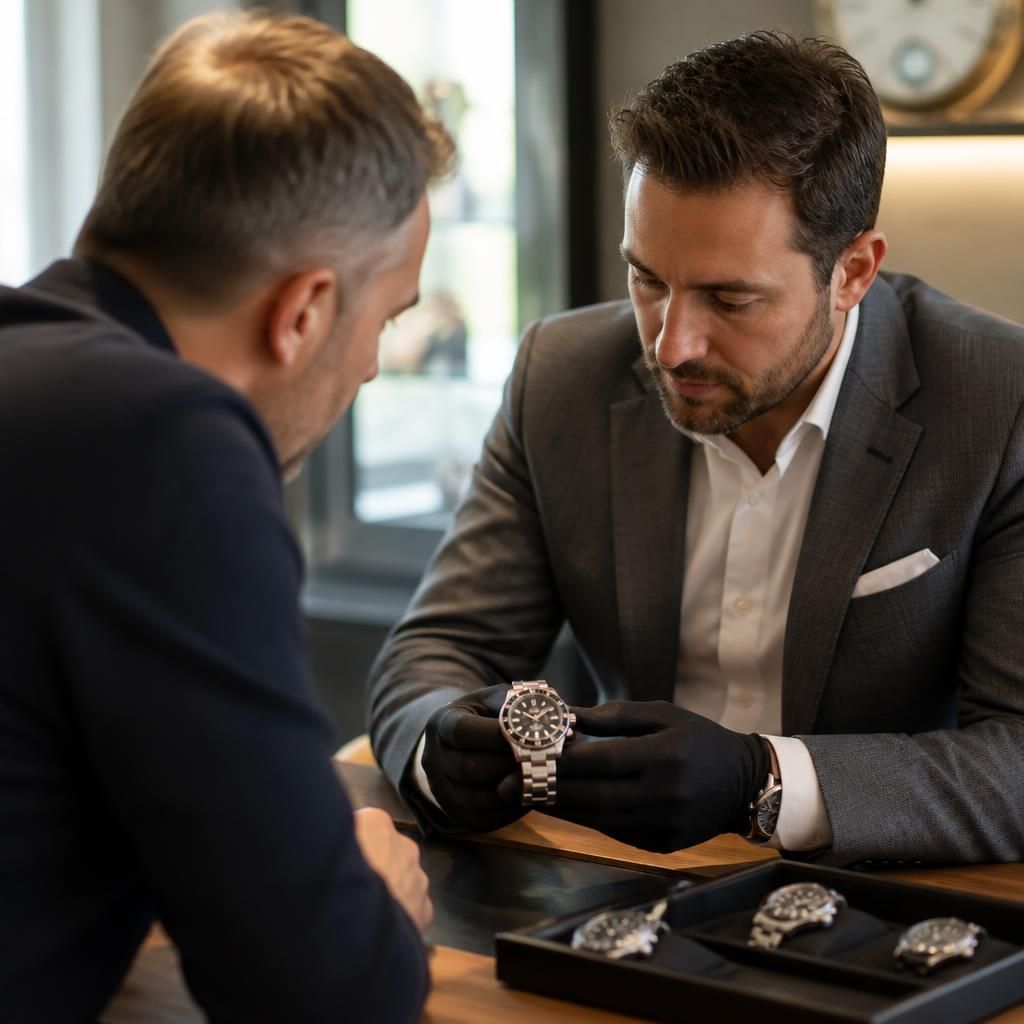
A used Rolex is not automatically less authentic or less reliable than a new one. Its suitability depends on the individual watch’s condition, originality, service history and the quality of the checks carried out before sale.
Authentication should involve more than examining a serial number or paperwork. The movement, case, dial, hands, bezel, bracelet and reference details should be assessed together for consistency. Box and papers can support a watch’s provenance, but they do not prove that every component is original or that the movement is currently in good condition.
Before buying, ask for a clear description of any replaced parts, refinishing, notable wear and known servicing. A specialist jeweller should also explain what has been inspected and what aftercare is available, giving you a sound basis for judging the watch rather than relying on assumptions about pre-owned Rolex timepieces.