
What factors influence the cost of local jewellery repair services?
The cost of local jewellery repair services depends on the type and extent of damage, the metal and gemstones involved, the parts or materials required, and the time and skill needed for the repair. Intricate designs, valuable stones, specialist techniques and restoration work usually require a detailed assessment before an accurate quote can be provided.
The cost of local jewellery repair services is mainly determined by the type and extent of the damage, the materials involved, the parts required and the specialist time needed to complete the work. A straightforward repair to a durable metal may cost less than intricate restoration involving delicate settings, valuable gemstones, unusual construction or extensive remodelling. An accurate price should therefore follow a physical inspection rather than being based on the description alone.
The main factors that influence the cost include:
- The nature of the repair: Replacing a worn clasp, repairing a broken chain, securing a loose stone or rebuilding a damaged setting all require different processes. A simple soldering repair may be relatively direct, while reconstructing a split or incomplete section can involve shaping, joining, filing, polishing and refinishing.
- The extent of the damage: A small crack or loose joint is usually easier to address than damage that has distorted the jewellery, weakened surrounding areas or caused a gemstone to become loose. If damage has been left untreated, wear may have spread to other parts of the item and increase the work required.
- The metal: Gold, platinum, silver and other alloys have different working properties and may require specific solder, heat control, tools and finishing techniques. The colour and carat of gold also matter when a replacement section or solder needs to match the existing piece. Platinum repairs, for example, generally require specialist handling to achieve a suitable result.
- Replacement materials and components: The price may include new metal, a replacement chain section, clasp, hinge, post, catch, stone setting or other component. Original or specially made parts can cost more than standard components, particularly where the item is old, unusual or no longer in regular production.
- Gemstones: Stones affect both the work involved and the precautions needed. Hardness, fragility, heat sensitivity, condition, size and setting style all influence the repair method. Some stones may need to be removed before soldering or other heat-based work, then reset and checked afterwards. Recutting or replacing a damaged stone is a separate cost from repairing its setting.
- Design and construction: Highly detailed, textured or hand-finished jewellery takes longer to work on than a plain design. Items with multiple moving parts, pavé stones, fine claws, enamel, hollow sections or concealed mechanisms need careful handling to avoid creating further damage.
- Craftsmanship and specialist techniques: The quotation reflects the skill, equipment and time required to carry out the repair safely and finish it to an appropriate standard. Restoration, invisible repairs, hand engraving, rebuilding a setting or matching an existing pattern may require more specialist work than a standard repair.
- Finishing requirements: Polishing, cleaning, rhodium plating, satin finishing or retexturing may be needed after the repair. These processes can restore the appearance of the item, but they are not always included in the price of the structural repair unless they are discussed as part of the work.
Why an assessment is important
A jeweller needs to examine the piece under magnification and assess the metal, settings, joints and gemstones before confirming the likely cost. This can reveal hidden wear that is not visible during a general inspection. For example, a ring that appears to need a single claw repair may also have worn claws elsewhere or a thinning setting that should be addressed to protect the stone.
An assessment also helps determine whether repair is the most suitable option. Some items are better suited to remodelling, partial replacement or careful restoration, particularly where the metal is thin, brittle or already heavily repaired. The condition, age and construction of the jewellery can affect the risks and the recommended approach.
What may be included in a repair quotation
- Inspection and advice about the recommended repair method.
- Labour for dismantling, repairing, rebuilding, setting or assembling the item.
- Replacement metal, gemstones or components where required.
- Cleaning, polishing or another agreed finishing process.
- Checks to ensure that stones, joints, clasps and moving parts are secure.
Not every quotation includes the same services, so it is sensible to check whether materials, finishing, stone setting, postage, insurance or any applicable taxes are included. If additional damage is discovered after work has begun, the jeweller should explain the change before carrying out work beyond the agreed scope.
Factors that can increase or reduce the final price
Urgent work may cost more if it requires changes to the normal workshop schedule. Conversely, combining related work during the same visit can sometimes avoid repeating preparation and finishing processes. The location of the repair is also relevant: a local jeweller may be able to assess the item in person, discuss options directly and identify practical alternatives before work is authorised.
The least expensive option is not always the most appropriate for valuable or sentimental jewellery. A temporary fix, unsuitable solder or poorly matched replacement can affect the appearance, durability and future repairability of the piece. The quotation should be considered alongside the proposed method, the experience required, the quality of the materials and the care taken with gemstones.
How to obtain a clear estimate
- Bring the complete item for inspection, including any detached stones or loose components.
- Explain the problem and mention any previous repairs, insurance requirements or concerns about preserving the original design.
- Ask what work is recommended, what materials will be used and whether cleaning or refinishing is included.
- Confirm whether the quoted price is fixed or an estimate, and how unexpected work will be authorised.
- Discuss the expected durability of the repair and any aftercare needed when the item is returned.
For high-value, antique or gemstone-set jewellery, a careful assessment is particularly important. The right repair balances cost with security, appearance, preservation of the original piece and future wear. A written quotation based on the item’s actual condition gives you the clearest basis for deciding how to proceed.
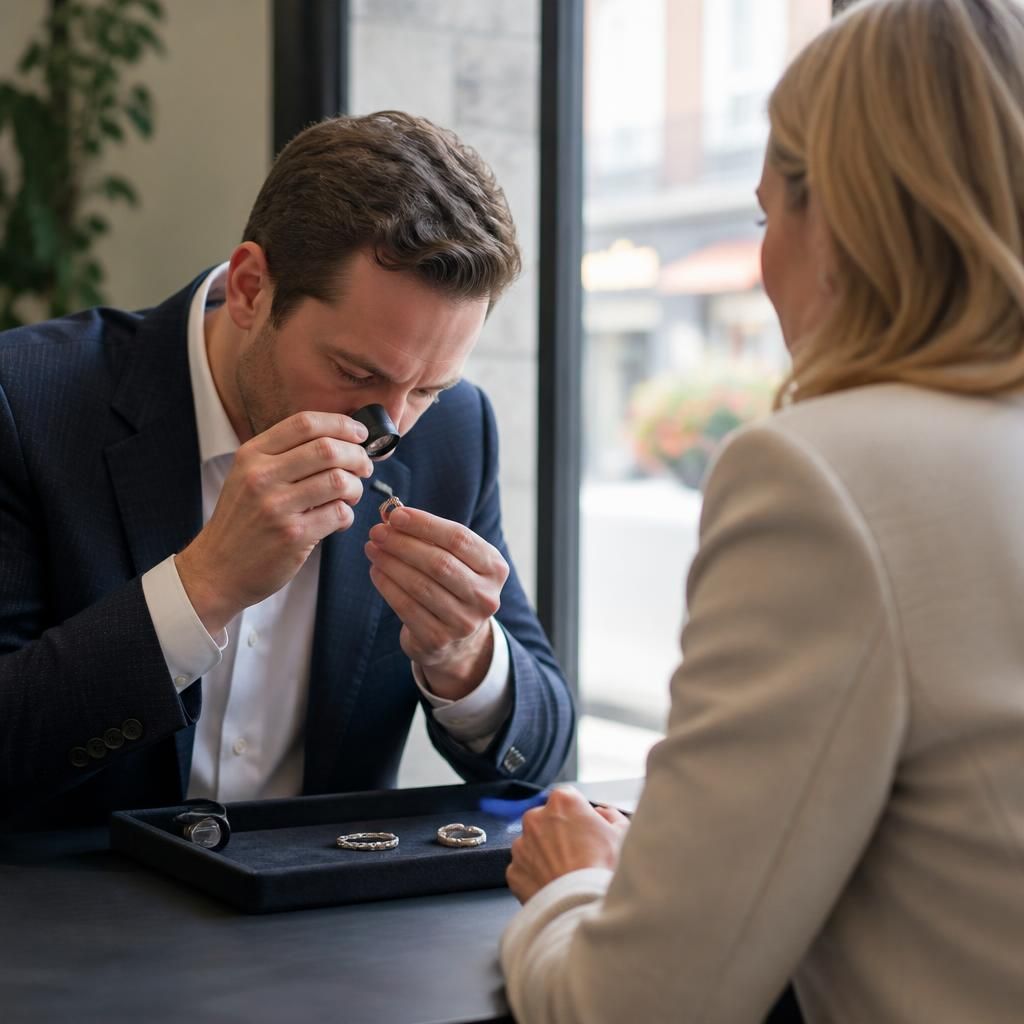
The most reliable way to establish the cost of a local jewellery repair is an in-person assessment. Examining the item under magnification can reveal worn claws, weakened joints, thinning metal or damage around a gemstone that may not be visible during a general inspection.
The quotation should explain the recommended repair, replacement materials, labour and any finishing such as polishing or re-plating. It is also important to confirm how unexpected damage will be handled before additional work begins. This gives you a clear choice between repairing, restoring or remodelling the piece, based on its condition rather than price alone.