
How do you determine the best jewellery repair service for high-value pieces, like luxury watches or designer rings?
Choose a jewellery repair service with proven experience in high-value watches and designer rings, secure handling procedures, qualified workmanship and a clear written assessment before work begins. They should explain the repair method, parts and risks, protect the piece’s value and finish, provide appropriate insurance and valuation guidance, and offer dependable aftercare.
The best jewellery repair service for a high-value piece is one that can demonstrate relevant technical expertise, secure handling, appropriate insurance, transparent assessment and a repair method that protects the item’s condition and value. Luxury watches and designer rings should not be treated as routine repairs: the materials, construction, provenance and potential replacement cost all affect how the work should be planned and carried out.
Start with experience relevant to the piece. Ask whether the jeweller regularly handles the specific type of item requiring attention. A fine diamond ring, an antique setting, a modern designer piece and a luxury mechanical watch each require different knowledge and equipment. Experience should include identifying precious metals and gemstones, assessing worn settings, matching finishes, preserving hallmarks and recognising when a repair could affect the item’s originality.
For a luxury watch, the service should understand the movement, case, crown, seals, bracelet and clasp. A watch that has been opened, repaired or polished may require checks for correct sealing and water resistance. Water resistance should never be assumed after work has been completed, particularly if the case back, crown, crystal or gaskets have been disturbed. Where specialist movement servicing is needed, the jeweller should explain who will carry it out and whether the work is being completed in-house or by an appropriately qualified watch specialist.
For a designer or diamond ring, the assessment should consider the condition of the shank, shoulders, claws, settings, gemstone security and any distinctive design details. Repairs should preserve the proportions and character of the original piece. Excessive polishing, poorly matched metal or careless alteration can reduce definition and may affect future valuation, so restoration should be proportionate to the damage and the intended use of the jewellery.
Look for a documented inspection before authorising work. A reliable service should record the item’s condition when it is received. This may include photographs, a description of visible marks, hallmarks, gemstone details, serial numbers where relevant and any existing damage. The assessment should distinguish between the repair requested and other issues discovered during inspection, such as thinning metal, loose stones, worn hinges or previous alterations.
Ask for a written explanation of the proposed work. It should set out the repair method, materials or replacement components, expected finish, estimated cost and any limitations. If the repair involves a risk of movement, colour variation, heat damage or alteration to an original feature, that risk should be explained before work begins. A professional service will seek approval for additional work rather than proceeding on the basis of an unclear verbal instruction.
Check how the piece is protected while it is in the jeweller’s care. High-value jewellery should be logged accurately, stored securely and kept separate from other customers’ property. Ask how items are transported if specialist work is required elsewhere, and whether the business has suitable insurance while the piece is on its premises or in transit. Your own insurance provider may also require an approved repairer, a written valuation or evidence of the work, so check the policy requirements before authorising the repair.
For particularly valuable items, confirm whether the repair service can provide an updated valuation after completion. A repair may change the condition, appearance or market description of a piece, while a valuation should accurately reflect its post-repair state rather than simply repeat an old document. Retain photographs, invoices and repair records as part of the item’s ownership history.
Consider whether the repair approach is appropriate for the item’s age and value. Modern replacement components may be suitable for some watches or jewellery, but not for every vintage or collectible piece. An original component, an existing hallmark or an unusual construction method may have historical importance. Ask whether the proposed work is restoration, functional repair, replacement or cosmetic improvement. These terms describe different outcomes and can have different implications for collectability and value.
Good repair practice is usually conservative. A competent jeweller will remove only as much material as necessary, avoid unnecessary polishing and use a compatible metal or finish. With gemstones, the repairer should consider sensitivity to heat, chemicals and sudden temperature changes. Some stones can be damaged during soldering, laser work, setting adjustment or ultrasonic cleaning, so the treatment should be selected according to the stone rather than convenience.
Ask how quality will be checked after the repair. A ring should be inspected for secure settings, smooth edges, correct alignment, a comfortable fit and a finish consistent with the rest of the piece. A watch should be checked for correct operation, the condition of the crown and clasp, and any relevant tests following case or seal work. The service should tell you what has been tested and what care restrictions apply afterwards. No repair can make an old or heavily worn item risk-free, so any remaining limitations should be stated clearly.
Review the aftercare offered. High-value pieces often require more than a single repair. Useful aftercare may include setting checks, cleaning advice, ring resizing, further adjustments, valuations and guidance on when the item should be inspected again. You should receive clear information about the repair guarantee, what it covers, and what may invalidate it, such as accidental damage, unauthorised work or exposure to unsuitable conditions.
Be cautious if a service cannot explain who will carry out the work, refuses to provide a written assessment, offers a price without inspecting the item, makes broad promises about preserving value or cannot confirm how the piece will be insured and stored. A low quotation is not necessarily economical if it involves unsuitable parts, excessive polishing or a repair that needs to be repeated.
Before leaving a luxury watch or designer ring, record its condition and provide any relevant paperwork, valuation, service history or design information. Remove personal items from watch compartments and tell the jeweller about known damage or previous repairs. When collecting the piece, compare it with the intake record, inspect the repair under suitable lighting, check that moving parts operate correctly and keep the receipt and repair documentation.
For a high-value repair, the decision should therefore be based on documented expertise and control of the entire process, not price alone. A suitable service will assess the item carefully, explain the available options, protect its condition and security, obtain your approval before work begins and provide practical aftercare once the repair is complete.
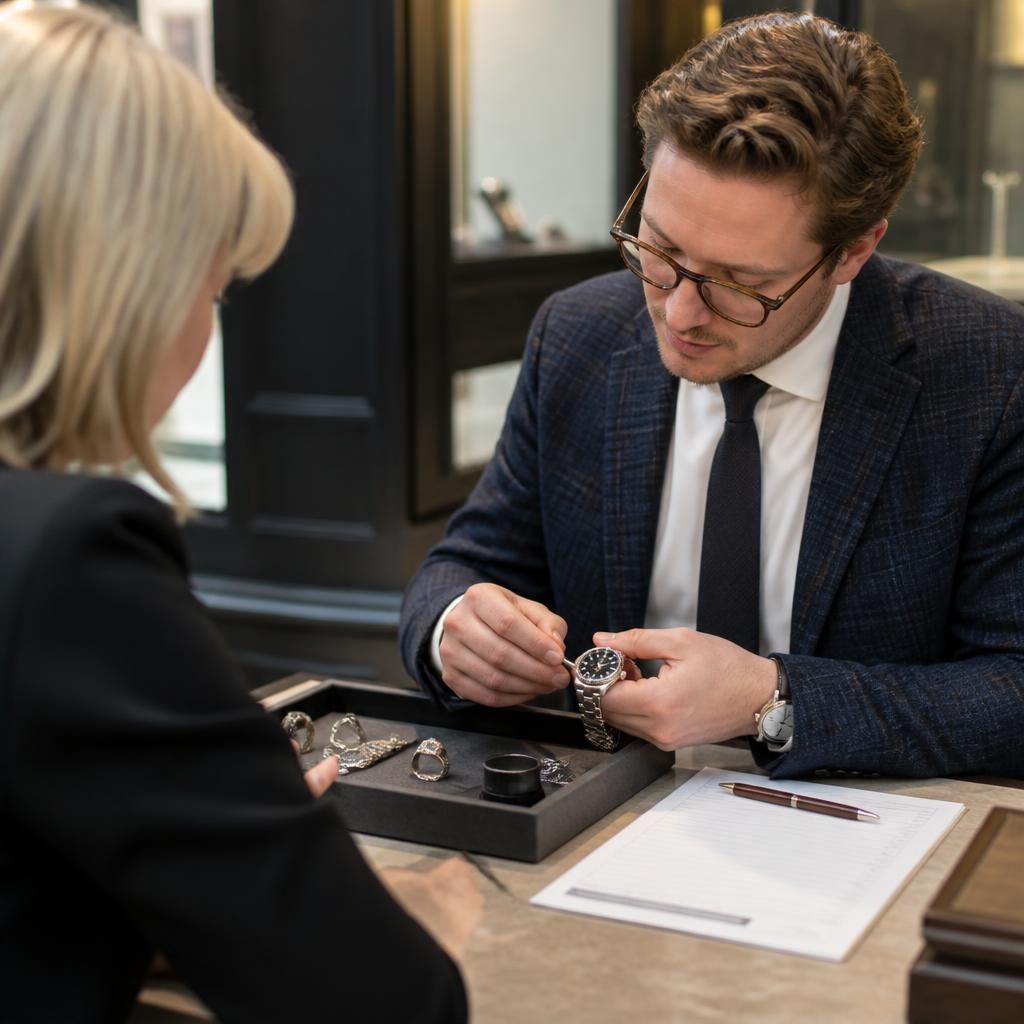
A written condition report is one of the most important safeguards when a high-value watch or designer ring is sent for repair. It should record the item’s visible condition, hallmarks, gemstones, serial numbers where relevant, existing damage and any previous alterations before work begins.
The repair service should also explain how the piece will be logged, stored, insured and transported if specialist work is required elsewhere. Photographs and a signed repair estimate create a clear record of what was authorised and help distinguish pre-existing wear from damage arising during the repair. Keep this documentation with the invoice and any updated valuation as part of the item’s service history.