What role does the metal choice play in the overall look and durability of an engagement ring?
The metal choice affects an engagement ring’s colour, finish, setting style and long-term durability. Platinum offers substantial strength and naturally white colour, while gold alloys provide different shades and hardness levels, so the right choice depends on the design, lifestyle and preferred level of maintenance.
The metal of an engagement ring affects its colour, reflectivity, setting design, weight, maintenance requirements and resistance to everyday wear. Platinum provides a naturally white, dense metal that is well suited to secure settings, while yellow, white and rose gold offer different appearances and alloy characteristics. The best choice depends on the diamond or gemstone, the ring’s construction, how it will be worn and the level of upkeep you are prepared to provide.
Platinum: naturally white and highly durable
Platinum is naturally white, so its colour does not depend on a surface coating. It has a substantial feel and is commonly chosen for engagement rings with prominent diamonds, delicate claws or intricate settings. Rather than wearing away quickly when scratched, platinum tends to displace slightly, which can help preserve the overall volume of metal around a setting. Its density also gives the ring a reassuring weight on the finger.
Platinum is not scratch-proof. Its surface can develop a soft patina over time, and claws, edges and other working parts still need inspection. Some people prefer the patinated finish, while others choose professional polishing to restore a brighter appearance. Platinum is also generally more expensive than gold because of its density and the specialist skills required to work with it.
Yellow gold: warm colour and established versatility
Yellow gold provides a warm, traditional appearance that can make a diamond’s setting feel softer and more distinctive. It is an adaptable choice for solitaire, halo, three-stone and vintage-inspired designs, and it pairs naturally with other yellow-gold jewellery. Its colour comes from the gold alloy itself rather than a surface treatment.
Pure gold is too soft for most everyday jewellery, so engagement rings are made with gold mixed with other metals. The fineness and alloy affect the colour, hardness and resistance to wear. Higher-purity gold contains more gold but is not automatically the most durable option for every design. A well-made ring with suitable metal thickness and properly formed claws is more important than fineness alone.
White gold: a bright look with ongoing maintenance
White gold is created by combining gold with lighter-coloured alloy metals. It offers a modern appearance and can complement a colourless or near-colourless diamond, often at a different price point from platinum. Many white-gold rings are finished with rhodium plating, which gives the surface its bright, highly reflective white appearance.
Rhodium is a surface layer rather than the underlying metal, so it gradually wears in areas exposed to friction, such as the base of the shank and between adjoining rings. The warmer tone of the white-gold alloy may then become visible. Replating is a normal part of caring for many white-gold rings, although the frequency depends on wear, skin chemistry and daily activities. Anyone with a known sensitivity to particular alloy metals should discuss the specification before choosing white gold.
Rose gold: distinctive colour and balanced wear
Rose gold gets its pink or blush tone from the copper in its alloy. It creates a distinctive contrast with a white diamond and works especially well in contemporary, vintage-inspired and mixed-metal designs. Its durability is influenced by the complete alloy and the ring’s construction, not simply by its colour.
The warm tone may become more noticeable as the surface develops everyday marks. Rose gold can usually be cleaned and polished professionally, but repeated polishing removes a small amount of metal over time. This is why preserving the original profile and avoiding unnecessary refinishing are important for a ring intended to be worn for many years.
How metal affects the appearance of the stone
A white metal can create a continuous bright frame around a diamond and may make the setting appear more understated. Yellow or rose gold can introduce contrast, making the diamond and claws more visually defined. The effect is also influenced by the diamond’s colour grade, cut, setting style and whether the claws or bezel are made in the same metal as the band.
Metal colour is particularly relevant for halo and pavé designs, where a large amount of metal is visible around the centre stone. In a solitaire, the band and claws may have a more noticeable influence on the overall look. A mixed-metal design can combine a warm-coloured band with white claws, allowing the ring to retain character while keeping the diamond’s setting visually bright.
How metal affects durability and security
Durability is determined by more than the name of the metal. The thickness of the band, the height of the setting, the shape of the shoulders, the quality of the alloy, and the way the claws or bezel are formed all affect how a ring performs. A high-set stone may be more exposed to knocks regardless of whether the ring is platinum or gold, while a low bezel or well-designed halo can offer additional protection.
Gold gradually loses metal where it rubs against other rings, clothing or hard surfaces. Platinum can also mark, but its wear pattern is different because metal is more likely to move than flake away. Neither material removes the need for regular checks. Claws can become worn or loosened, and settings should be examined promptly if the stone moves, the ring catches on fabric or the profile looks uneven.
Practical considerations before choosing
- Daily activities: Frequent contact with tools, gym equipment, gardening materials, chemicals or abrasive surfaces can accelerate marking and wear. Removing the ring for demanding tasks is advisable, whatever the metal.
- Matching a wedding band: Rings that sit together closely may rub against one another. Choosing compatible metals and profiles can reduce friction, particularly where a straight wedding band meets a shaped engagement ring.
- Weight and feel: Platinum feels denser than gold. Some clients value that substantial feel, while others prefer the lighter feel of a gold design.
- Colour stability: Platinum, yellow gold and rose gold retain their underlying colour. White gold may require periodic rhodium plating to maintain its brightest finish.
- Repairs and resizing: Most traditional gold and platinum rings can be professionally resized within sensible limits, but construction, gemstones set around the band and the amount of available metal must be assessed first. Some alternative metals are difficult or impossible to resize.
- Skin sensitivity: The alloy specification matters as much as the visible colour. If sensitivity is a concern, request clear information about the metals combined with the precious metal.
- Long-term care: Regular cleaning, careful storage and professional inspections help identify worn claws, thinning shanks and loose stones before more serious damage occurs.
For most engagement rings, platinum is a strong choice where a naturally white finish, substantial feel and durable setting are priorities. Gold offers greater flexibility in colour and design, with yellow and rose gold requiring relatively straightforward care and white gold requiring awareness of its plating. The right decision should be made alongside the ring design: a well-proportioned setting in a suitable alloy will generally serve you better than choosing a metal based on appearance or purity alone.
When selecting or commissioning a ring, the metal specification, stone setting and intended daily wear should be considered together. A professional inspection can also confirm whether an existing ring is suitable for resizing, remodelling or pairing with a new wedding band.
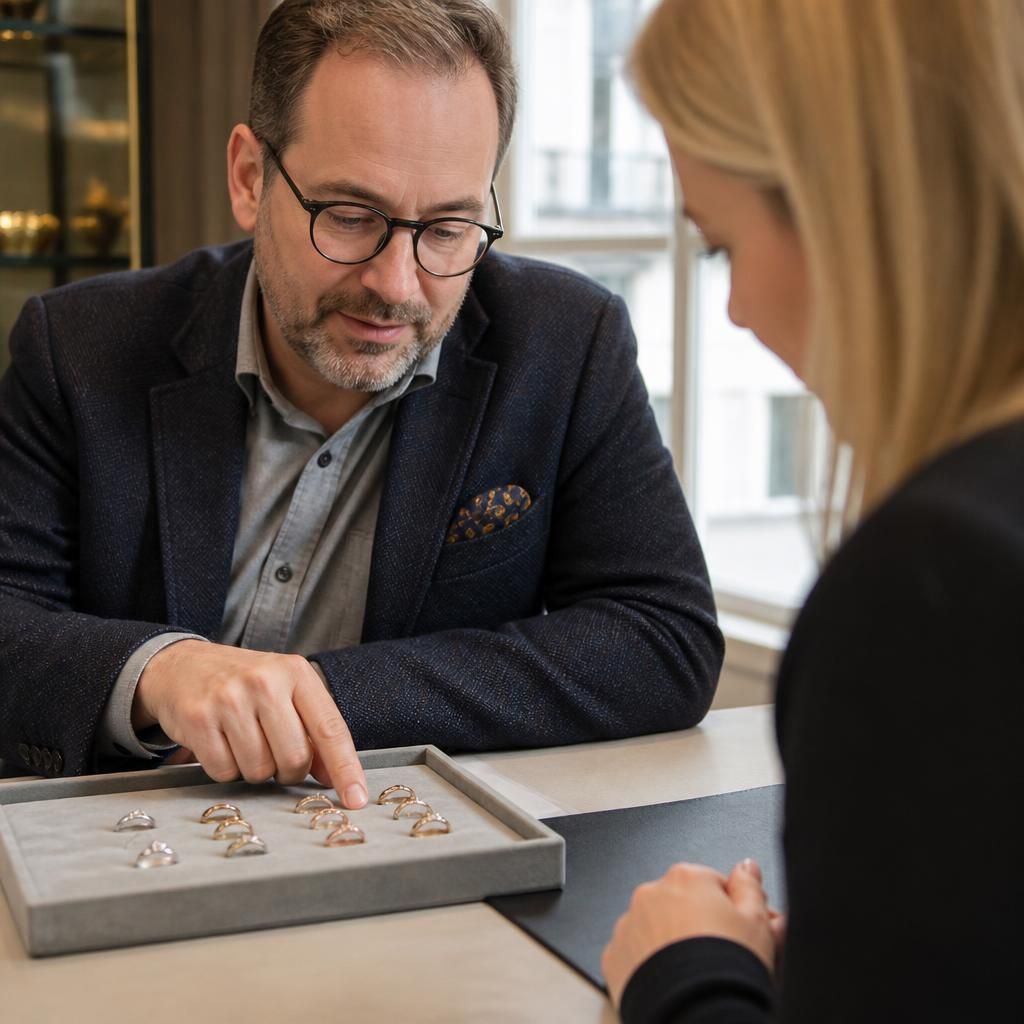
The metal’s colour changes how the diamond is framed and can influence whether its natural colour is more noticeable. Platinum and white gold create a bright, continuous surround, while yellow and rose gold provide contrast that can make the stone and claws appear more defined.
This is particularly important in halo and pavé designs, where more metal is visible around the centre stone. A mixed-metal design can combine a warm-coloured band with platinum or white-gold claws, balancing character with a bright setting. The choice should be considered alongside the diamond’s colour grade, cut and setting style rather than made on metal colour alone.