What are the benefits and drawbacks of using alternative metals, such as tungsten or titanium, for wedding bands?
When considering alternative metals like tungsten and titanium for wedding bands, each offers unique benefits and potential drawbacks. Tungsten is renowned for its exceptional hardness and scratch resistance, making it an enduring choice, though it can be more brittle and difficult to resize. Titanium, on the other hand, is valued for its lightweight nature and hypoallergenic properties, ideal for individuals with sensitive skin, but it may show scratches more easily over time compared to tungsten.
Exploring the benefits and drawbacks of using alternative metals, such as tungsten or titanium, for wedding bands provides valuable insight into making an informed choice. Tungsten, often praised for its incredible hardness, is one of the most scratch-resistant metals available for jewellery. Its dense nature gives it a substantial feel, contributing to its popularity among those seeking a durable wedding band. However, this hardness also results in brittleness; tungsten bands can crack or shatter upon significant impact, and resizing is not an option due to the same property. For those whose finger size may change over time, as is often the case, tungsten may prove less forgiving than its metal counterparts.
On the other hand, titanium stands out for its exceptional lightweight characteristics, making it a comfortable choice for those unaccustomed to wearing jewellery. Its hypoallergenic nature is a crucial benefit for individuals with metal sensitivities or allergies, providing a safe option without irritating the skin. Titanium, being more malleable than tungsten, offers some flexibility for resizing, although it’s still a task that requires skilled craftsmanship. However, titanium is more susceptible to showing scratches over time, potentially needing more frequent maintenance to maintain its appearance.
For clients at Steven Charles Quance looking for bespoke options, these characteristics must be balanced between lifestyle needs and the intended longevity of the wedding band. Tungsten’s resilience might appeal to those leading active lifestyles that could scratch softer metals, while titanium’s skin-friendliness and comfort may be the decisive factor for others. It’s equally important to consider the style preferences and the availability of finishes that each metal offers, as both can be crafted into stunning, polished designs.
By understanding these factors, our clients can confidently select a metal that not only aligns with their lifestyle and aesthetic desires but also represents the enduring commitment that a wedding band symbolises. Our expert guidance ensures that each bespoke creation serves as a perfect expression of personal style and sentiment.
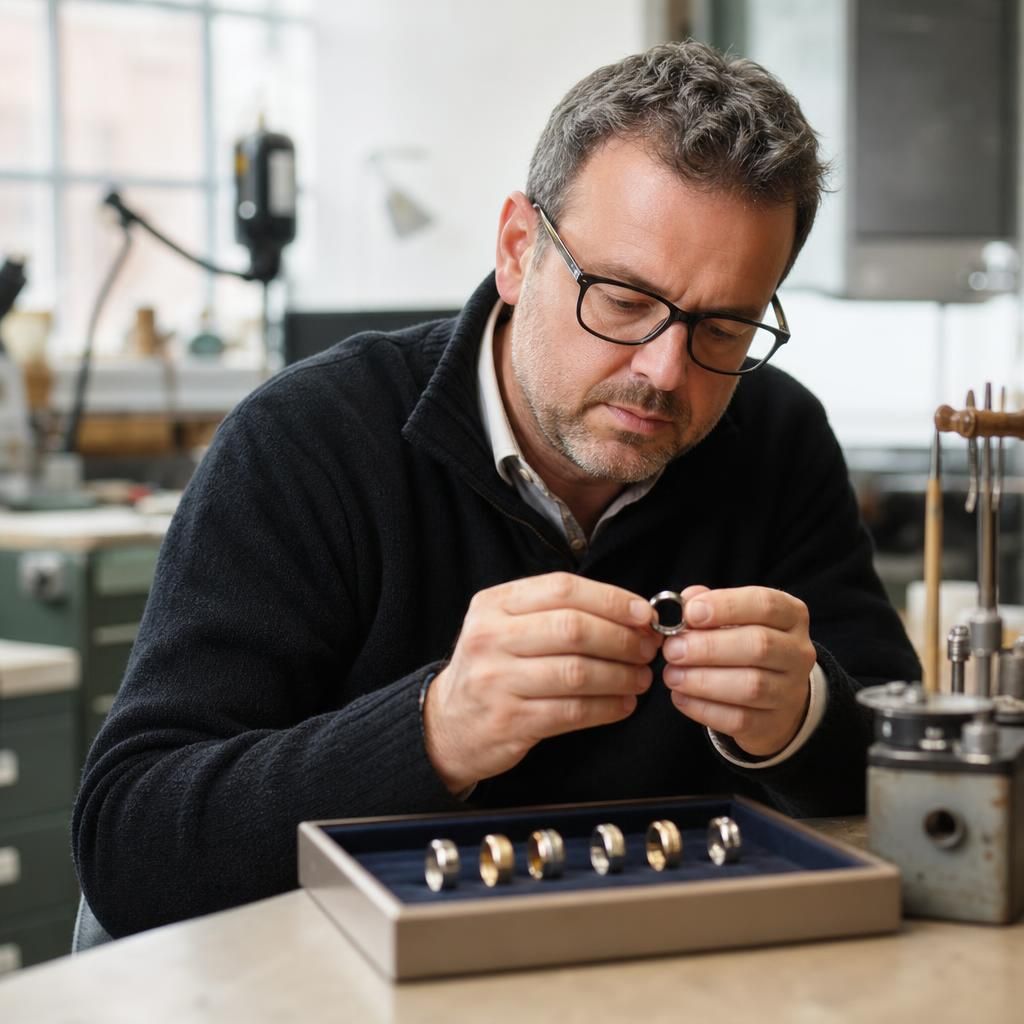
Scratch Resistance in Metal Choices: One of the primary considerations when choosing between tungsten and titanium wedding bands is scratch resistance. Tungsten’s exceptional hardness gives it a remarkable ability to resist scratches and maintain its pristine appearance for many years. This characteristic makes tungsten an attractive option for those who prioritise enduring aesthetics without frequent maintenance. Conversely, titanium, while known for its durability and lightweight comfort, is more susceptible to surface scratches. Those who choose titanium must be prepared for additional maintenance to preserve its look. However, titanium’s ability to be refinished can often mitigate visible wear, helping to restore its appearance over time. Understanding these differences allows our clients to weigh the importance of care and aesthetics tailored to their lifestyle needs.