What features can I customise in a personalised locket?
You can customise a personalised locket’s metal, shape, finish, engraving, gemstones and photo or message insert, depending on the design. We can also discuss bespoke details such as chain style, motif and proportions to create a locket that suits the wearer and carries personal meaning.
A personalised locket can be customised in several ways, including its metal, shape, surface finish, engraving, gemstones, chain and the photograph or message held inside. The options depend on whether you choose an existing design or commission a more bespoke piece, as the construction, available space and intended method of manufacture affect what can be added safely and proportionately.
Metal and colour
The choice of metal affects the locket’s colour, weight, durability, appearance and future maintenance. Common options include yellow gold, white gold, rose gold, platinum and silver. Gold may also be available in different purities, which can alter its colour and hardness. White gold is typically finished with a bright rhodium surface, which may require refinishing over time as the underlying metal becomes more visible through everyday wear.
Metal choice should reflect how frequently the locket will be worn, whether the wearer has any metal sensitivities and how it will sit alongside existing jewellery. If a matching chain, ring or earrings are important, we can help compare tones and finishes so that the complete piece looks considered rather than assembled from mismatched elements.
Shape, size and proportions
A locket may be round, oval, heart-shaped, rectangular or designed around a less conventional outline. Its proportions can also be adjusted for the image or message it needs to hold. A larger locket provides more room for a clearly visible photograph or longer engraving, while a smaller design may be more discreet and comfortable for everyday wear.
Shape and size need to be balanced against weight and practicality. A locket that is too large or heavy for its chain may pull forward, place unnecessary strain on the fastening or feel uncomfortable. The position of the hinge, clasp, bail and internal compartments must also be considered when altering the outline or depth.
Engraving and meaningful details
Engraving can include a name, date, initials, short message, coordinates, handwriting, a fingerprint or a small symbol. Depending on the design, the engraving may be placed on the front, back, inside surface or a separate element within the locket. You can usually discuss different lettering styles, including a clean, traditional font or a more personal handwritten reproduction.
The available engraving area is limited, so concise wording generally produces the clearest result. Fine lettering, detailed artwork and handwriting may need to be simplified to remain legible at the finished size. We can advise on the wording, placement and scale before production and confirm the design so that names and dates are recorded accurately.
Gemstones and birthstones
Gemstones can be used as a discreet accent or as a prominent part of the locket’s design. A birthstone may represent the wearer, a child, a partner or a significant month. Other stones can be selected for their colour, symbolism or relationship to an existing piece of jewellery.
Stone choice affects both appearance and wearability. Harder gemstones are generally better suited to jewellery exposed to regular knocks, while softer or more delicate stones may need greater care. The setting also matters: a securely protected stone is more suitable for everyday wear than a design with exposed edges. The number, size and position of gemstones should remain in proportion to the locket and leave sufficient space for opening and closing it.
Surface finish and decorative style
The same metal can produce a very different result depending on its finish. High polish creates a reflective surface, whereas a matt, satin or brushed finish gives a softer appearance and may make minor marks less noticeable. A combination of finishes can be used to define a border, highlight an engraving or contrast with a textured section.
Decorative features may include milgrain edging, engraved patterns, floral or geometric motifs, a raised frame, pierced detail or a deliberately plain surface. These details should be chosen with the intended use in mind. Deep textures and fine relief work can collect residue or become less distinct with heavy wear, while a simpler finish may be easier to maintain.
Photo, message and internal compartments
The inside of a locket can be customised to hold a photograph, a printed message, a short handwritten note or another flat keepsake. Some designs can accommodate separate images on both sides, while others provide space for a single insert. The internal shape and dimensions determine how the photograph should be cropped and whether a protective covering is needed.
Photographs should be clear at the finished scale, with the subject positioned so important facial details are not lost when the image is trimmed. A message may be printed, engraved or placed on a removable insert, depending on the design. Non-flat or bulky items should not be enclosed unless the locket has been specifically constructed to accommodate them, as pressure can affect the hinge, closure or internal surface.
Chain and fastening
The chain is an important part of a personalised locket because it must support the pendant securely and suit its proportions. Options may include a fine trace chain, a curb-style chain or another link pattern, with the length selected according to how the locket is intended to sit. The chain metal and finish can match the locket or provide a deliberate contrast.
For a heavier pendant, a stronger chain and dependable clasp are essential. The bail must also be large enough for the chosen chain while remaining visually balanced. If the locket will be worn frequently, we can discuss the fastening and the points most likely to experience stress, as these affect long-term security and aftercare.
How the customisation is assessed
- We establish what the locket needs to contain and how often it will be worn.
- We compare suitable metals, shapes, finishes and gemstone options.
- We check that the proposed engraving or image will fit and remain legible.
- We consider the pendant’s weight, chain strength, hinge, clasp and overall proportions.
- We review the final design details before the piece is made or personalised.
Not every feature can be combined in every locket. For example, an intricate front motif may leave less room for engraving, a small pendant may not support a long message and a particular stone setting may require a thicker construction. Practical limitations are identified at the design stage rather than after completion.
To begin, bring or provide the wording, image, handwriting or other reference material you would like considered, along with any preferences for metal, colour, gemstones and chain style. We can then explain which options are suitable for the chosen design and recommend adjustments where they improve clarity, security or everyday wearability.
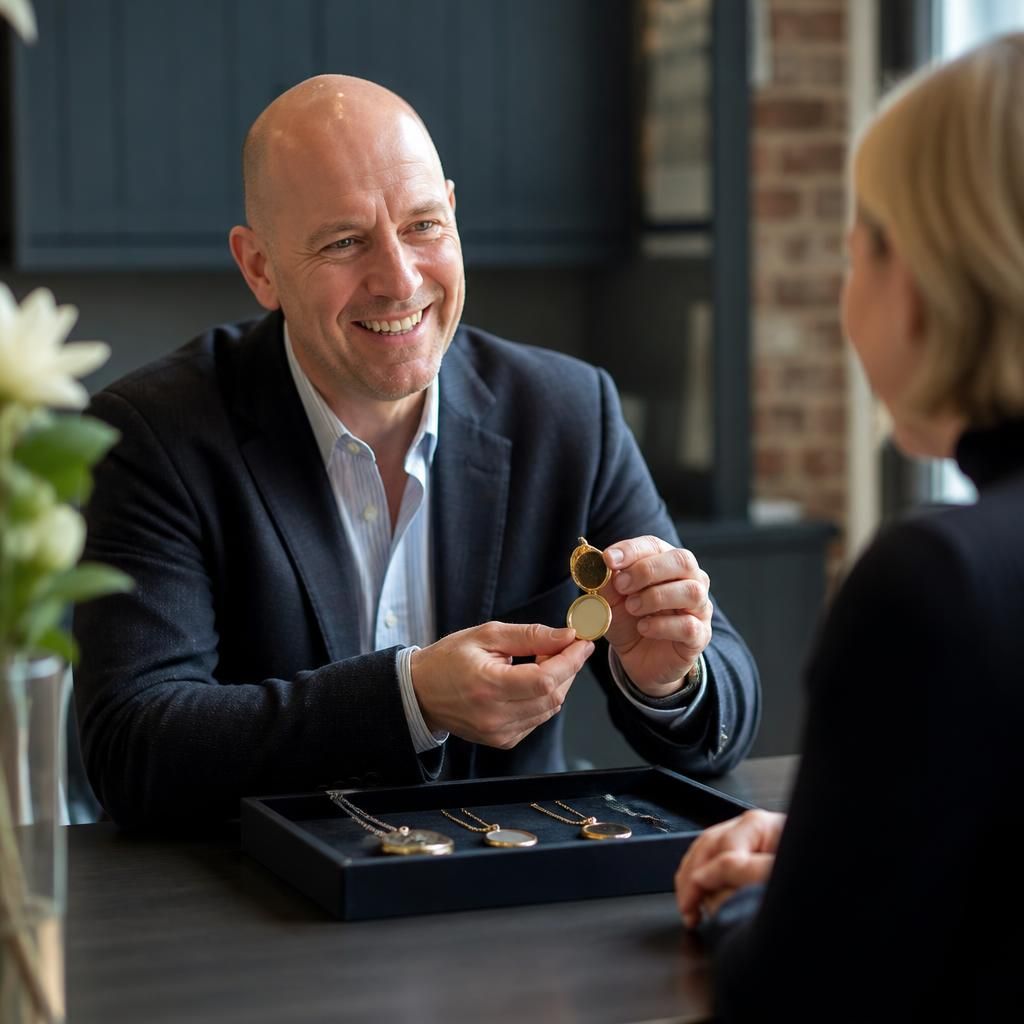
Engraving is one of the most adaptable features of a personalised locket, but the available space determines what can be added clearly. Names, initials, dates, short messages, symbols, handwriting and coordinates can be considered for the front, back or inside, depending on the locket’s construction.
For the clearest result, wording should be concise and artwork should not contain excessively fine detail. We assess the engraving area, lettering style and finished scale before production, making sure the design remains legible without affecting the hinge, clasp or opening mechanism. A photograph or message insert can also be planned alongside the engraving so that the internal and external details work together.
Discuss your personalised locket design
Bring your preferred wording, image or design ideas to Steven Charles Quance to discuss which features can be customised for your personalised locket. We can advise on suitable metals, engraving, gemstones, proportions and chain options before the design is confirmed.