
What distinguishes bespoke engagement rings in Birmingham's Jewellery Quarter from mass-produced options?
Bespoke engagement rings in Birmingham’s Jewellery Quarter are made to an agreed design, with personalised choices of stone, metal, setting and finish, rather than selected from a fixed mass-produced range. They also offer closer consultation, skilled local craftsmanship and greater scope to reflect the wearer’s preferences, budget and the ring’s personal meaning.
Bespoke engagement rings in Birmingham’s Jewellery Quarter differ from mass-produced options because they are designed and made around an agreed set of personal requirements. You can select or adapt the stone, metal, setting, proportions, finish and engraving, while receiving direct guidance throughout the design and making process. A mass-produced ring is usually selected from an established range, with fewer opportunities to alter its construction or create a genuinely individual result.
Design tailored to the wearer
A bespoke ring can be developed to suit the wearer’s style, hand shape, lifestyle and preferences rather than being chosen solely from available stock. This may involve creating a distinctive setting, changing the profile of the band, combining design details from different rings or incorporating an existing stone or family jewellery. Proportions can also be adjusted so that the engagement ring sits comfortably and works with a future wedding ring.
The design process normally begins with a consultation to establish the desired appearance, practical requirements and budget. Sketches, examples, computer-aided design or other visual references may be used to refine the proposal before the ring is made. This gives you the opportunity to consider how the finished piece will look and function, rather than relying only on a display model.
Greater choice of materials and gemstones
Mass-produced rings are generally made using a limited selection of standard metals, stones and settings. Bespoke work allows more careful consideration of these elements. You can discuss the relative appearance, durability and maintenance requirements of metals such as platinum or gold, including the available colour and finish.
There is also greater flexibility when choosing a diamond or coloured gemstone. The stone can be assessed for its cut, colour, clarity, carat weight, shape and suitability for the proposed setting. These characteristics can be balanced according to what matters most to you, rather than accepting the specification of a pre-designed ring. Alternative gemstones or an unusual stone shape may also be considered where they are appropriate for the design and intended wear.
Craftsmanship suited to the design
A bespoke ring is made to the approved design, so the construction needs to account for the stone, setting style and way the ring will be worn. Details such as claw placement, setting height, band thickness, shoulder shape and the transition between the engagement ring and wedding ring all require careful planning.
The Jewellery Quarter has a long-established jewellery-making and manufacturing base, giving customers access to specialist knowledge and skilled craft processes. The exact methods used will depend on the design, but may include hand-finishing, setting, polishing and detailed inspection. Bespoke making is not simply a matter of adding a name or changing a minor detail on an existing ring; it involves creating or substantially adapting the piece to meet an agreed specification.
A more transparent consultation process
With a bespoke ring, you can discuss why particular materials, settings or proportions have been recommended and understand the compromises involved. For example, a delicate design may need additional care, while a lower setting may offer greater practicality for everyday wear. A higher setting may show more of the stone but can be more exposed to knocks. Professional guidance helps you compare these considerations before approving the design.
The consultation should also clarify the stone’s identity and documentation where relevant, the metal specification, the expected finish, the price, the production arrangements and the proposed timescale. These details are important because the finished ring should match the agreed design and expectations. If any element changes during the process, it should be discussed and approved rather than assumed.
Personal meaning and future flexibility
Bespoke design is particularly useful where the ring needs to represent something specific. It may incorporate a meaningful motif, an unusual architectural detail, a family stone, a discreet engraving or elements that reflect an existing piece of jewellery. The personal significance comes from the choices made during the design, not merely from describing the ring as unique.
A custom design can also allow for future changes. For example, a ring may be planned so that a wedding band can sit alongside it, or it may be remodelled later using stones or metal from another piece. This should be considered at the design stage, as some settings and profiles offer more practical options for alteration than others.
Quality is assessed differently from appearance alone
A mass-produced ring can provide a consistent, readily available product, but a bespoke ring requires attention to how each component works together. Quality should be considered in relation to the security of the setting, the evenness of the finish, the symmetry of the design, the comfort of the band and the suitability of the construction for regular wear.
Ask how the stone will be secured, whether the setting can be maintained, what hallmarking applies to the metal and what documentation accompanies the gemstone. A professional jeweller should be able to explain these points clearly. An attractive design is important, but durability, wearability and the ability to inspect or repair the ring are equally relevant.
Price and timescale
Bespoke does not automatically mean that every ring will cost more than a mass-produced alternative. The price depends on the metal, gemstone, weight, complexity of the design, level of hand-finishing and work required. A tailored design can sometimes make better use of the budget because choices are made deliberately rather than paying for features that are not important to you.
It is also important to allow time for consultation, design approval, sourcing materials, making, setting and final checks. A ring made to order is not normally available in the same way as a finished item from stock. If a particular date matters, discuss it at the beginning and ensure the expected timescale is realistic, including any necessary resizing or final adjustments.
Ethical and provenance questions
A bespoke consultation provides an opportunity to ask where the metal and gemstones come from and what documentation or assurances are available. You can discuss recycled or newly refined metals, gemstone provenance and the standards used by suppliers. The appropriate choice depends on your priorities, but clear information is preferable to unsubstantiated claims about ethical sourcing.
For diamonds and coloured gemstones, ask what information is available about origin, treatment and grading where applicable. A responsible jeweller should explain the limits of any documentation and avoid presenting a certificate as a complete guarantee of ethical provenance.
Aftercare remains part of the decision
A bespoke ring should be supported by practical aftercare, including advice on cleaning, inspection, resizing, repairs and valuation. Settings and finishes can change with wear, so periodic checks are sensible, particularly for rings worn every day. Resizing may be possible, but the feasibility depends on the design, gemstones and amount of adjustment required.
When comparing a bespoke ring with a mass-produced option, consider not only the initial purchase but also how easily the piece can be maintained, repaired or remodelled in the future. A clear aftercare arrangement helps preserve the ring’s condition and provides reassurance if your size, lifestyle or jewellery requirements change.
In practical terms, a mass-produced ring may suit someone who wants a familiar design, immediate availability and a straightforward purchase. A bespoke engagement ring is better suited to someone who values considered design, individual proportions, specific materials, personal symbolism and direct expert involvement. The Jewellery Quarter’s specialist setting makes it possible to combine consultation with skilled making, provided you choose a jeweller who explains the design, materials, costs, timescale and aftercare clearly.
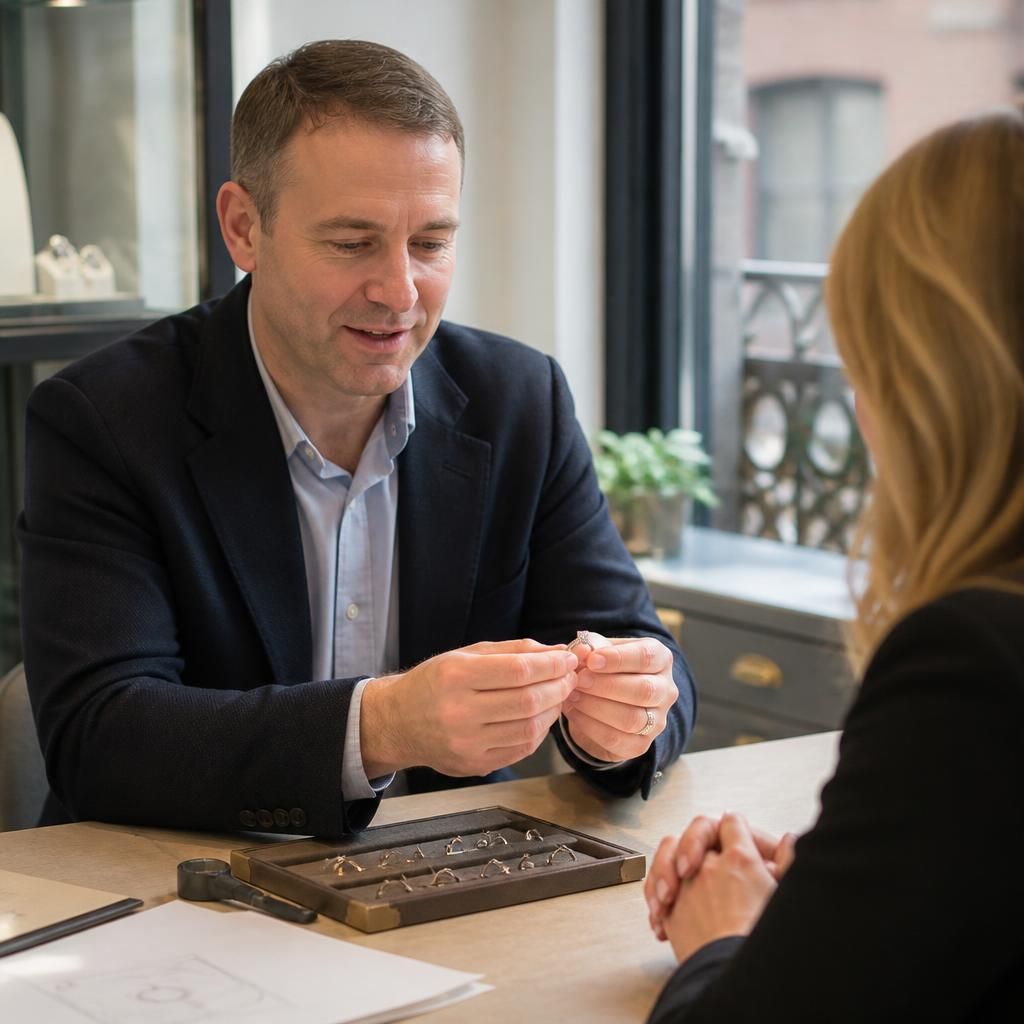
A bespoke engagement ring is designed and made around your requirements, rather than selected from a fixed, mass-produced range. In Birmingham’s Jewellery Quarter, the consultation allows the setting, stone, metal, proportions and finish to be considered together so the finished ring suits the wearer’s style and everyday needs.
This is particularly useful when you want a ring to accommodate a specific gemstone, sit neatly with a future wedding band or include a meaningful detail. The design can be reviewed before making begins, giving you the opportunity to check practical points such as band comfort, setting security and how exposed the stone will be to knocks.
The result is not simply a standard ring with a minor alteration. It is a considered piece made to an agreed specification, with direct guidance on materials, craftsmanship, timescale and aftercare.
Discuss Your Bespoke Engagement Ring Design
Arrange a consultation to discuss your bespoke engagement ring design, including the stone, metal, setting, proportions and budget. We can review practical requirements, explain the making process and advise on suitable aftercare before you approve the design.