What should I do if my second-hand Rolex needs repairs before selling?
Have your second-hand Rolex assessed by a qualified watch specialist before authorising repairs, as the cost of servicing or replacing parts may not be recovered in the sale price. We can advise whether professional repair, essential servicing or selling the watch in its current condition is the most sensible option for protecting its value.
If your second-hand Rolex needs repairs before selling, have it assessed by a qualified watch specialist before authorising any work. The repair cost may not be recovered in the sale price, and replacing original components or refinishing the case can sometimes reduce the appeal of a vintage or collectible watch. A professional assessment should establish whether essential repairs, a full service, minor cleaning or an as-is sale is the most sensible option.
Begin by recording the watch’s current condition and history. Note any symptoms such as poor timekeeping, a stopped movement, difficulty winding, a loose crown, a damaged crystal, bracelet wear, water ingress or a clasp that does not secure properly. Gather the original box, papers, service receipts and any previous valuation documents. Do not attempt to open the case, polish the watch or use aftermarket parts before it has been examined.
An inspection should separate mechanical faults from cosmetic wear. A movement that is running inaccurately may need adjustment or servicing, whereas a damaged winding system, crown, crystal or seal may require specific repairs. Scratches, stretched bracelet links and light surface marks are not necessarily faults. Buyers and dealers can allow for ordinary wear when valuing a pre-owned Rolex, so cosmetic work is not automatically worthwhile.
Ask for a written condition report and an itemised estimate before proceeding. The assessment should explain:
- Which faults affect reliable operation, water resistance or safe daily use
- Whether the recommendation is a minor repair, a complete service or replacement of a component
- Whether parts are genuine and appropriate to the watch’s reference and production period
- Whether the case, bracelet or other components would be polished, refinished or replaced
- How the estimated work could affect the likely selling value
- Whether the repairer will return removed parts and provide paperwork confirming the work completed
Essential mechanical work can make sense when it resolves a serious fault and gives a prospective buyer confidence that the watch is functioning properly. For example, repairing a loose crown, replacing a cracked crystal or addressing signs of moisture may be more important than improving minor case scratches. However, a full service can be a substantial expense, particularly if the movement has been damaged or parts need to be sourced. Compare the estimated cost with an updated valuation before committing.
Originality requires particular care. On older or less common Rolex watches, the original dial, hands, bezel, bracelet and case finish may contribute to desirability. Replacing these with modern or non-original components, or removing too much metal during polishing, can alter the watch’s character and affect its value. A technically improved watch is not necessarily worth more if important original features have been lost. This is why repairs should be discussed in the context of the watch’s reference, age, condition and likely buyer.
If the watch has been exposed to water, stop wearing it and arrange an examination promptly. Moisture can damage the movement and may not be visible through the dial or case back. Avoid placing the watch near a heat source and do not assume that a watch is water-resistant simply because it was originally designed for water resistance. Seals can deteriorate with age, and water resistance should be tested after relevant work has been completed.
There are usually three practical choices after the assessment:
- Repair or service before sale: suitable where the work is necessary, reasonably priced and likely to improve buyer confidence or the achievable valuation.
- Carry out only essential work: appropriate where the watch needs to function safely but cosmetic refurbishment would add cost without a clear return.
- Sell the watch in its current condition: sensible where repairs are extensive, the watch has significant damage, or its originality is more valuable than a modern refurbishment. The faults should be disclosed clearly and reflected in the valuation.
Do not arrange work solely to obtain a fresh service document or to make the watch appear newer. A service history can support a sale, but it does not remove the need for a condition assessment, and an expensive service shortly before selling may not be financially justified. Likewise, replacing a bracelet, dial or bezel without checking its effect on originality can produce a lower return than selling the watch honestly in its existing condition.
When we assess a second-hand Rolex for sale, the condition, originality, reference, supporting documentation and current market demand are considered together. We can explain which issues are likely to influence the valuation and whether repairs are proportionate to the watch’s expected sale value. If work is recommended, obtain approval for the scope and cost first, and keep all invoices, service records and replaced components with the watch.
Once the decision has been made, keep the watch, documents and any removed parts secure. Do not wear or wind a watch with suspected internal damage, and do not send it for repair or sale without confirming who is responsible for its insurance and safe handling. A transparent assessment, sensible repair decision and accurate disclosure of remaining faults provide the strongest basis for a fair and secure sale.
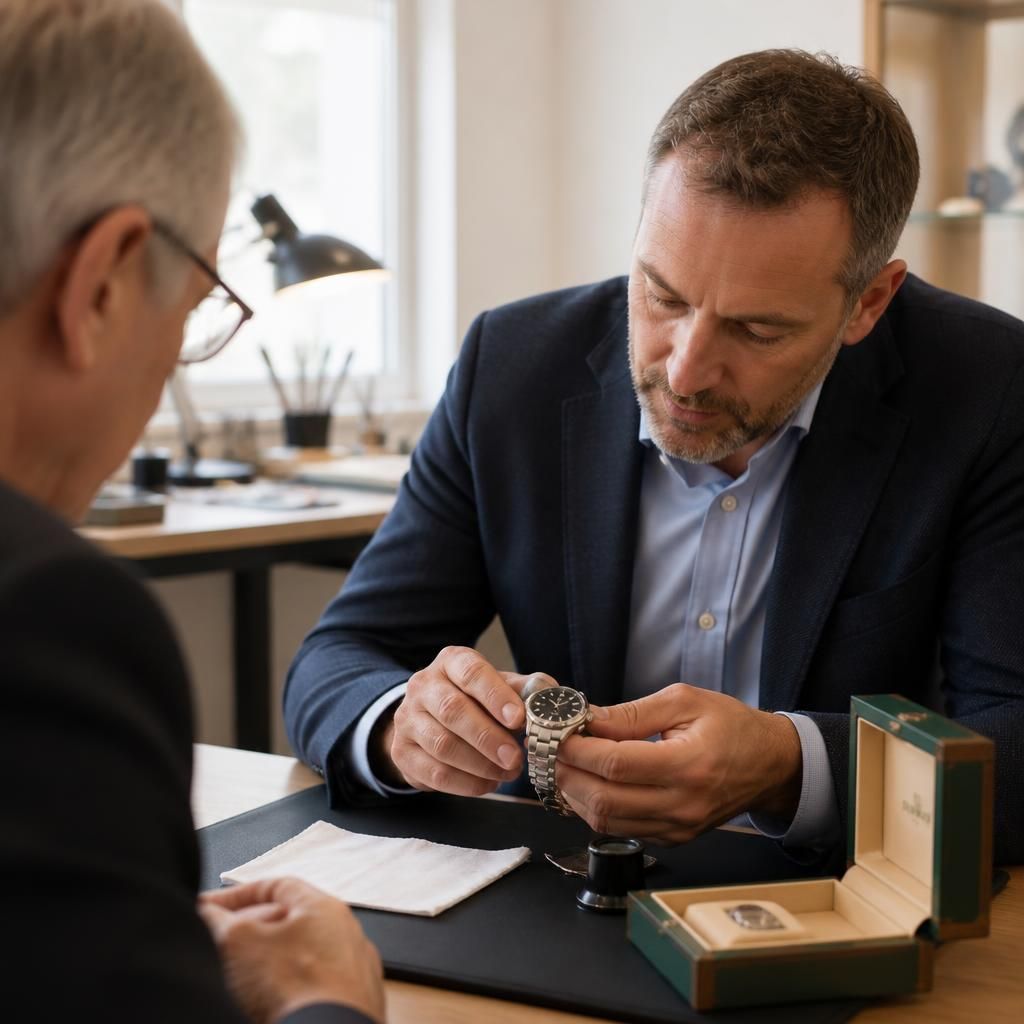
Before selling a second-hand Rolex that needs attention, obtain a specialist assessment rather than authorising repairs immediately. Essential work affecting timekeeping, winding, the crown, crystal, seals or water resistance may support a sale, while cosmetic polishing or replacing original components may add cost without increasing the watch’s value.
Ask for an itemised estimate and clarification on whether parts are genuine and appropriate to the watch’s reference and age. For vintage or particularly original watches, preserving the existing dial, hands, bezel, case finish and bracelet may be more valuable than making the watch appear newer. Compare the likely improvement in saleability with the repair cost, then choose between essential repairs, limited work or an honest as-is valuation. Keep all service paperwork and replaced parts with the watch.