
What materials are typically used in personalised lockets and how do they affect durability?
Personalised lockets are typically made from gold, silver or platinum, with the metal’s hardness, purity and finish affecting resistance to scratches, dents, tarnishing and everyday wear. Gold karat, sterling silver and platinum each offer different durability and maintenance requirements, so the best choice depends on how often the locket will be worn and the finish you prefer.
Personalised lockets are most commonly made from gold, sterling silver or platinum, with durability influenced by the metal’s purity, hardness, construction and surface finish. Solid precious metals generally provide the best long-term performance, while plated or vermeil finishes can offer a lower-cost appearance but may require more care as the outer coating wears.
Gold is a popular choice because it does not rust or tarnish and is available in different levels of purity. Higher-karat gold contains more pure gold, giving it a rich colour and good resistance to corrosion, but it is also relatively softer and more susceptible to dents and surface marks. Lower-karat gold contains a greater proportion of strengthening alloys, which can make it better suited to a locket worn regularly. Yellow, white and rose gold have different alloy compositions, so their colour and maintenance requirements vary.
White gold is usually finished with rhodium to give it a bright, reflective appearance. This surface treatment can gradually wear through normal contact, particularly around edges and areas that rub against clothing or the skin. The locket may then develop a warmer tone, at which point professional refinishing may be appropriate. Rose gold’s colour comes from copper within the alloy and does not depend on a surface coating, although its softness and scratch resistance still depend on the karat and exact composition.
Sterling silver is an accessible precious-metal option with a bright, versatile appearance. It is harder than pure silver, but it can still acquire scratches, dents and fine marks over time. Silver also naturally reacts with compounds in the air and with substances such as perfume, cosmetics and perspiration, which can cause tarnishing. This does not usually indicate permanent damage: careful cleaning and professional polishing can restore its appearance, provided excessive material is not removed during repeated polishing.
Platinum is naturally white, highly resistant to corrosion and well suited to jewellery intended for long-term wear. It is dense and durable, although its surface can develop a soft patina as it is worn. Rather than losing metal in the same way as some harder, plated finishes, platinum tends to move when marked, which means it can often be professionally polished back to a smooth finish. Its weight and value also make it a suitable choice when a substantial, heirloom-quality locket is required.
Some lockets use gold plating or vermeil, in which a thin layer of gold is applied over another metal, commonly silver in the case of vermeil. The underlying metal can be durable, but the visible gold layer is more vulnerable to friction, moisture, chemicals and repeated polishing. Plated lockets are therefore better suited to occasional or careful wear than to constant use. Ask about the construction and finish when comparing options, as the thickness and method of plating affect how long the surface remains consistent.
The locket’s durability also depends on components other than the outer metal. A well-made hinge should open smoothly and close securely without excessive looseness. The bail, jump rings and clasp need to be properly sized and securely finished, as these are points that experience repeated movement and carry the weight of the locket and chain. The inner frame should hold photographs or keepsakes firmly without placing pressure on the hinge. If the design includes a glass or transparent protective panel, it should be handled carefully because it can scratch or break even when the metal body remains undamaged.
Engraving normally has little effect on structural durability when it is carried out to an appropriate depth and position. However, very fine surface engraving can become less distinct if the locket is repeatedly scratched or aggressively polished. Deeper hand or machine engraving can remain legible for longer, although the most suitable approach depends on the metal, design and available surface area.
When selecting a material, consider how the locket will be worn rather than choosing solely by colour. For daily wear, solid gold or platinum with a secure chain and robust fittings will generally provide better long-term resilience. Sterling silver can be an excellent choice when regular cleaning is acceptable. Gold-plated or vermeil options may suit occasional wear, provided they are protected from water, chemicals and friction.
- Remove a locket before bathing, swimming, exercising or applying perfume and cosmetics.
- Keep it in a soft, dry jewellery box or pouch, separately from harder pieces that could scratch it.
- Wipe it with a clean, soft cloth after wearing to remove oils and residue.
- Do not use abrasive creams, household cleaners or aggressive polishing cloths unless the finish is known to tolerate them.
- Have the hinge, bail, clasp and chain checked if they feel loose, catch when opening or show visible wear.
No precious-metal locket is completely resistant to marking, and a personalised design may require particular care around its engraving, hinge and decorative details. With the right material, secure construction and suitable aftercare, a locket can remain wearable and legible for many years. We can advise on the practical differences between metals and finishes, and assess cleaning, repairs, resizing or refinishing requirements as the piece ages.
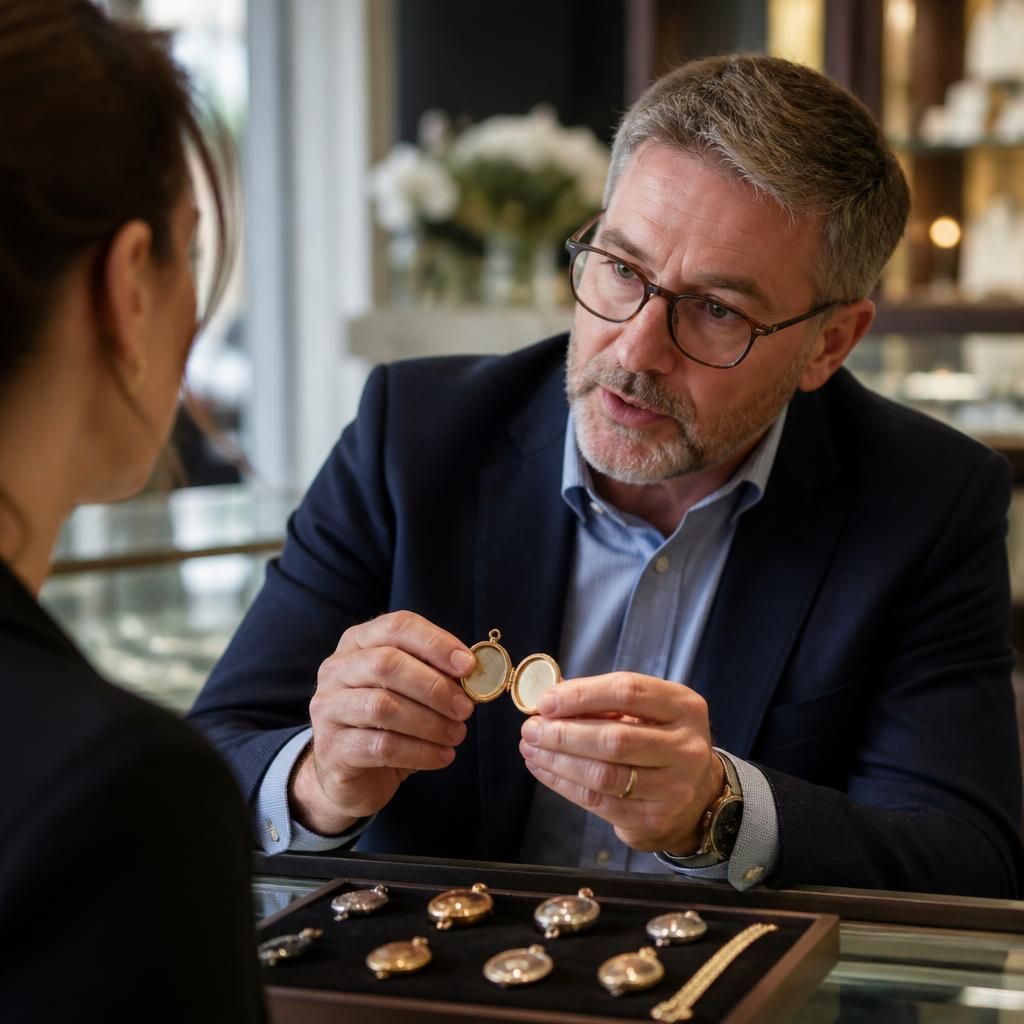
The durability of a personalised locket depends on both its metal and the way its hinge, bail, clasp and engraving are constructed. Solid gold, platinum and sterling silver can provide long-term wear, while plated finishes are more vulnerable to friction, moisture and repeated polishing.
For a locket worn regularly, choose a secure hinge and well-finished fittings, not just a preferred colour or surface finish. Remove the locket before bathing, swimming, exercising or applying perfume, and store it separately in a soft, dry pouch. A gentle wipe after wear helps reduce the effect of oils and residue, while professional checks can identify a loose hinge, worn bail or damaged clasp before it becomes a bigger problem.