What factors should I consider when choosing pre-loved jewellery for purchase?
When choosing pre-loved jewellery, assess its condition, authenticity, hallmarks, materials, craftsmanship, sizing, provenance and price, while considering whether it can be repaired, resized or remodelled to suit you. A reputable jeweller should explain any wear or alterations, provide an honest valuation and offer appropriate aftercare, helping you make a confident and ethically informed purchase.
Choosing pre-loved jewellery means assessing more than its appearance. Before buying, consider the piece’s condition, authenticity, hallmarks, materials, craftsmanship, sizing, provenance, price and future aftercare. A reputable jeweller should explain what is known about the item, identify any alterations or repairs, and help you decide whether it is suitable for everyday wear or a particular occasion.
Start with the condition. Pre-loved jewellery may show signs of previous wear, but wear should be assessed in relation to the item’s age, design and intended use. Look closely at the metal for deep scratches, dents, thinning, worn edges or areas where the surface has been polished heavily. Inspect settings for loose, bent or worn claws, and check that stones sit securely rather than moving when gently touched. Clasps, hinges, catches and safety chains should operate properly and close firmly.
Some marks are mainly cosmetic and can be reduced through professional cleaning or polishing. Others may affect security or durability. For example, worn claws can increase the risk of losing a stone, while a thin shank on a ring may need strengthening before it is worn regularly. Ask whether the piece has been examined under magnification and whether any recommended work is included in the price or charged separately.
Verify the metal and hallmarks. Hallmarks can help confirm the precious metal content and identify the assay office and maker or sponsor. On British jewellery, a hallmark may include a fineness mark showing the proportion of precious metal, although older, imported or unusual pieces may have different marking conventions. A missing hallmark does not automatically prove that an item is not genuine, particularly where the piece is very small, has been significantly altered or falls within an applicable exemption. However, the absence or inconsistency of expected marks should be investigated rather than overlooked.
Do not rely on colour alone when judging whether jewellery is gold, silver or platinum. Gold-plated and gold-filled items can look similar to solid gold when new, while worn plating may reveal a different-coloured base metal. A professional jeweller can use appropriate testing methods and examine the hallmark, construction and condition together. The same principle applies to gemstones: appearance alone cannot confirm whether a stone is natural, laboratory-grown, treated or an imitation.
Ask about stones and treatments. Find out what stones are present, whether they are natural or laboratory-grown, and whether they have received treatments. Treatments are common in the jewellery trade, but they can affect value, cleaning methods and future repairs. Some stones may be sensitive to heat, chemicals, sudden temperature changes or ultrasonic cleaning. If a gemstone is important to the value or design, request clear information about its identity, condition and any available documentation.
Examine stones for chips, abrasions, cracks, cloudy areas and uneven colour. Small inclusions may be natural characteristics, whereas damage can weaken a stone or affect its appearance. A stone that is secure today may still require resetting if the surrounding claws or setting are worn. Ask whether the stone has been replaced, whether the setting is original and whether the design has been modified.
Consider the craftsmanship and construction. A well-made piece should be proportionate, properly finished and comfortable to wear. Check that links move smoothly, joints are sound and surfaces do not have sharp edges that could catch on clothing or irritate the skin. On rings, look for a balanced shape and an even inner surface. On earrings, examine the posts and backs; on bracelets and necklaces, inspect links, end fittings and clasps.
Handcrafted and antique jewellery may show minor variations that are part of its character rather than a fault. However, attractive design should not distract from structural concerns. A jeweller should distinguish between acceptable signs of age, previous repair work and defects that may require attention.
Check the size and suitability. Jewellery should be assessed for how it will be worn, not just how it looks in a display case. Confirm the ring size, chain or bracelet length, earring style and overall weight. Consider whether the item will be worn daily, occasionally or alongside other jewellery. A delicate piece may be appropriate for occasional use but unsuitable for work involving frequent contact with tools, water or chemicals.
Ask whether the item can be resized, altered or remodelled. Many rings can be adjusted, but the scope depends on the design, metal, setting, pattern and amount of alteration required. Eternity-style rings, intricate shoulders, engraved bands and settings containing fragile stones may have limited resizing options. Resizing can also affect a hallmark, engraving or the balance of a design, so the work should be assessed before purchase. If the piece is intended as a gift, establish whether the size can be changed after purchase and what conditions apply.
Establish provenance where it matters. Provenance is information about an item’s history and ownership. It may be especially relevant for antique, signed, designer, unusual or historically significant jewellery. Original boxes, receipts, valuation documents and previous repair records can support the description, but they should not replace physical examination. Documentation may relate to a different item, or describe a previous condition, so it needs to be considered alongside current testing and inspection.
For ordinary pre-loved jewellery, complete ownership history may not be available. The important point is that the seller should describe the item accurately and be transparent about what is known, unknown or inferred. If a piece is being represented as antique, vintage, signed or made by a particular maker, ask what evidence supports that description.
Compare the price with the whole condition and specification. A fair price is influenced by the metal, weight, gemstones, workmanship, age, rarity, brand or maker, condition and current desirability. The highest precious-metal content does not automatically make one item better value, and a lower-priced piece may require significant repair or resizing before it can be worn safely.
Ask what is included in the purchase and whether there will be additional costs for cleaning, repairs, stone security checks, resizing, valuation or insurance documentation. Compare like with like rather than using the scrap value of the metal as the only reference point. Jewellery is a finished object, and its design and craftsmanship may contribute substantially to its value beyond the raw materials.
Check the paperwork and aftercare. Before completing the purchase, make sure the description identifies the materials, gemstones and known condition accurately. Keep any receipt, valuation, certificate, written assessment and details of completed work. Clarify the terms for returns, exchanges, guarantees and future repairs, particularly if the item is being resized or altered.
After purchase, arrange suitable care according to the materials and stones. Remove jewellery when carrying out heavy work, using harsh cleaning products or applying creams and sprays that may damage certain finishes or settings. Store pieces separately to reduce scratching, and have frequently worn items checked if a clasp, stone or setting begins to feel loose. Professional cleaning and inspection can identify problems before they become more serious.
Consider ethical and personal factors. Buying pre-loved jewellery can extend the useful life of an existing piece and may reduce the need for newly mined materials, but ethical considerations still require careful questions. Ask how the item has been sourced, whether its description is accurate and whether any gemstones or materials have relevant documentation. Remodelling an inherited or unwanted piece may also be an option when you value the metal or stones but not the original design.
Finally, choose a piece that suits your lifestyle, budget and reason for buying. A pre-loved ring may have excellent materials but need more maintenance than a simpler design. An antique item may be desirable for its workmanship but unsuitable for constant wear. When condition, authenticity, practical suitability, price and aftercare have all been explained clearly, you can make a confident decision based on the jewellery itself rather than appearance alone.
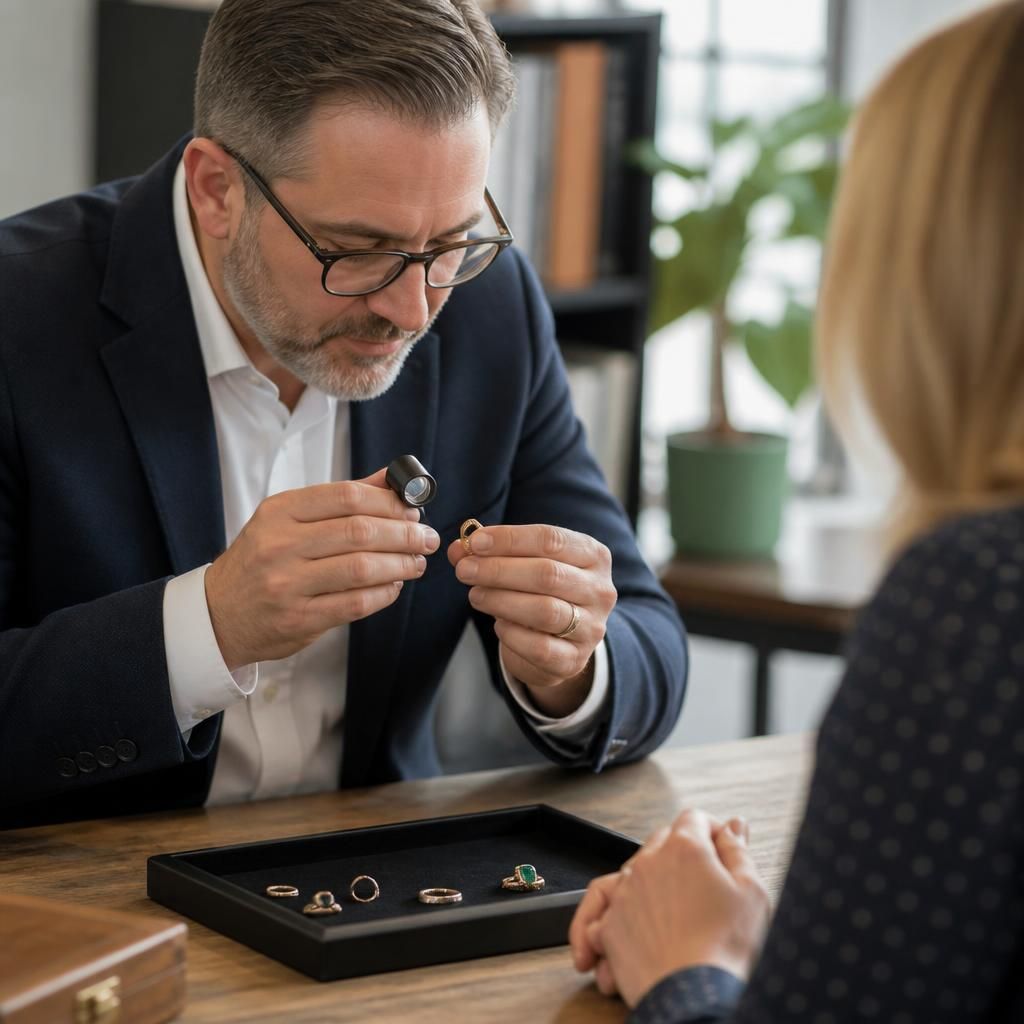
When choosing pre-loved jewellery, assess its condition as carefully as its appearance. Previous wear is not necessarily a problem, but damage to the metal, settings or fastenings can affect safety, durability and the cost of future repairs.
- Check rings for thinning, dents, worn edges and loose or damaged claws.
- Examine gemstones for chips, cracks, abrasions or movement within the setting.
- Test clasps, hinges, catches and safety chains to ensure they close securely.
- Ask whether the piece has been inspected under magnification and whether cleaning, resizing or repairs are recommended.
Some surface marks can be improved through professional cleaning or polishing, while structural wear may require attention before regular use. A reputable jeweller should explain the difference and confirm any additional costs before you purchase.