
What factors should I consider when choosing a jeweller in the Jewellery Quarter?
When choosing a jeweller in the Jewellery Quarter, consider their craftsmanship, professional expertise, transparency about materials and pricing, ethical sourcing, and ability to provide personalised advice for your requirements. Also check the quality of their aftercare, including resizing, repairs, remodelling and valuations, so your jewellery remains properly supported after purchase.
Choosing a jeweller in the Jewellery Quarter should be based on more than appearance or price. Assess the jeweller’s expertise, quality of workmanship, transparency about materials and costs, ability to provide personalised guidance, ethical standards and aftercare provision. The right jeweller should be able to explain your options clearly, show how a piece will be made or sourced, and support you throughout its ownership.
Consider the jeweller’s specialist expertise. Different jewellers may focus on different areas, such as bespoke engagement rings, wedding bands, handmade jewellery, remodelling, luxury watches or pre-owned pieces. Check that the jeweller regularly handles the type of purchase you are considering. For a bespoke ring, this includes knowledge of design, stone setting, proportions, practical wear and resizing. For a luxury timepiece, it includes being able to discuss authenticity, condition, provenance, servicing and documentation.
A reputable jeweller should be willing to explain their experience without relying solely on broad claims. Ask who carries out the design, setting, repairs or valuation, and whether work is completed in-house or entrusted to an external specialist. This helps you understand the level of oversight and who will be responsible for the finished piece.
Look closely at craftsmanship and materials. Examine the quality of the jewellery, including the precision of settings, the finish of the metal, the symmetry of the design and the security of claws, clasps or hinges. Small details can indicate how carefully a piece has been made. If you are commissioning a design, ask to see examples of previous work that demonstrate the relevant technique rather than simply viewing a general collection.
The jeweller should also explain the materials used. This may include the precious-metal fineness, plating or surface treatments, gemstone characteristics and any limitations associated with a particular design. For diamonds and other gemstones, ask what information is available about colour, clarity, cut, treatments and certification where applicable. You should understand precisely what is included in the quoted price and whether the finished piece may differ from an initial drawing or computer-generated image.
Expect clear pricing and written information. A professional quotation should separate, where relevant, the cost of the metal, gemstones, design and making, bespoke work, alterations and any additional services. Ask whether the price includes a consultation, design revisions, resizing, delivery, insurance documentation or aftercare. Confirm how deposits and final payments are handled, and establish what happens if a bespoke design needs to be changed before manufacture.
Price should be considered alongside quality, service and suitability. A lower quotation may reflect differences in materials, stone quality, construction, workmanship or aftercare rather than a like-for-like saving. A jeweller should be comfortable discussing these differences and should not pressure you to make a decision before you understand them.
Assess the consultation process. Personalised advice is particularly important when choosing an engagement ring, wedding ring or significant gift. A useful consultation should consider your budget, intended use, style, comfort, hand or wrist measurements and any practical requirements. For a bespoke piece, the process should normally cover initial ideas, material and gemstone choices, design development, approval, manufacture and final inspection.
Good advice is not the same as being directed towards the most expensive option. The jeweller should explain suitable alternatives and identify any compromises, such as the effect of a delicate setting on everyday wear or the maintenance requirements of a particular finish. You should leave the consultation knowing why a recommendation has been made.
Check ethical and responsible sourcing. Ask where precious metals and gemstones come from and what information the jeweller can provide about their supply chain. Responsible sourcing may involve recycled or traceable metals, documentation for gemstones and clear policies concerning suppliers. If a claim cannot be explained or supported, treat it cautiously. Ethical sourcing is not simply a label; it should be reflected in the jeweller’s purchasing practices and willingness to answer reasonable questions.
Review the jeweller’s bespoke and remodelling capabilities. If you want something unique, find out whether the jeweller can develop a design from a conversation, sketch or existing piece of jewellery. Ask how sentimental stones or inherited jewellery are assessed before remodelling, how the original materials will be used, and what happens if a stone is found to be unsuitable for the proposed design. A careful jeweller will discuss risks, preserve important features where possible and obtain approval before proceeding.
For handmade jewellery, ask how the construction method affects durability and future maintenance. A design should be attractive but also appropriate for the way it will be worn. The jeweller should explain any features that require particular care, including fine settings, delicate chains, textured finishes or moving components.
Understand verification and documentation. For higher-value jewellery and watches, ask what documentation accompanies the purchase. This may include an invoice describing the item accurately, gemstone reports where relevant, a valuation for insurance purposes, service records or original watch documentation when available. Documentation should correspond with the item you receive and should be retained for insurance and future aftercare.
A valuation is different from a purchase receipt. A receipt records the transaction, while a formal valuation may describe the item in greater detail for insurance or other purposes. Ask whether valuation services are available and whether the valuation should be completed at the time of purchase or after any alterations.
Examine aftercare before committing. Jewellery changes with wear, and a reliable aftercare service is an important part of choosing a jeweller. Ask whether the business provides cleaning, inspection, ring resizing, repairs, claw work, chain repairs, polishing, remodelling and valuation services. Find out how repairs are assessed, whether work is carried out by an experienced specialist and how the item is protected while it is in the jeweller’s care.
For watches, ask about servicing, battery or movement-related work, water resistance checks and the handling of manufacturer requirements. If you are buying a luxury timepiece, clarify what is covered by any guarantee, what documentation is supplied and how future servicing will be managed. Aftercare should be explained before purchase rather than presented as an afterthought.
Consider trust, security and communication. A professional jeweller should provide a secure environment for viewing valuable pieces and should handle personal information discreetly. Communication should remain clear from the first consultation through to collection, particularly for bespoke commissions or repairs. You should receive updates when agreed, have a clear point of contact and be told promptly about any changes to the specification, timescale or cost.
It is also sensible to check the terms for bespoke orders, deposits, cancellations, returns, exchanges and commissioned work. Bespoke items may not have the same return options as standard stock because they have been made to an individual specification. Understanding these terms in advance prevents avoidable misunderstandings.
Use your consultation to make a direct comparison. Before choosing, prepare questions about:
- the jeweller’s experience with the type of jewellery or watch you want;
- the materials, gemstones, treatments and documentation included;
- the design and approval process for bespoke work;
- the total price, payment terms and any additional charges;
- ethical sourcing and the information available about suppliers;
- guarantees, insurance valuations and ownership documentation; and
- cleaning, repairs, resizing, servicing and other aftercare.
The best choice is the jeweller who gives precise answers, sets realistic expectations and offers a suitable level of expertise for your purchase. A consultation should leave you confident about the quality, provenance, cost and future care of the piece, rather than relying on appearance or sales pressure alone.
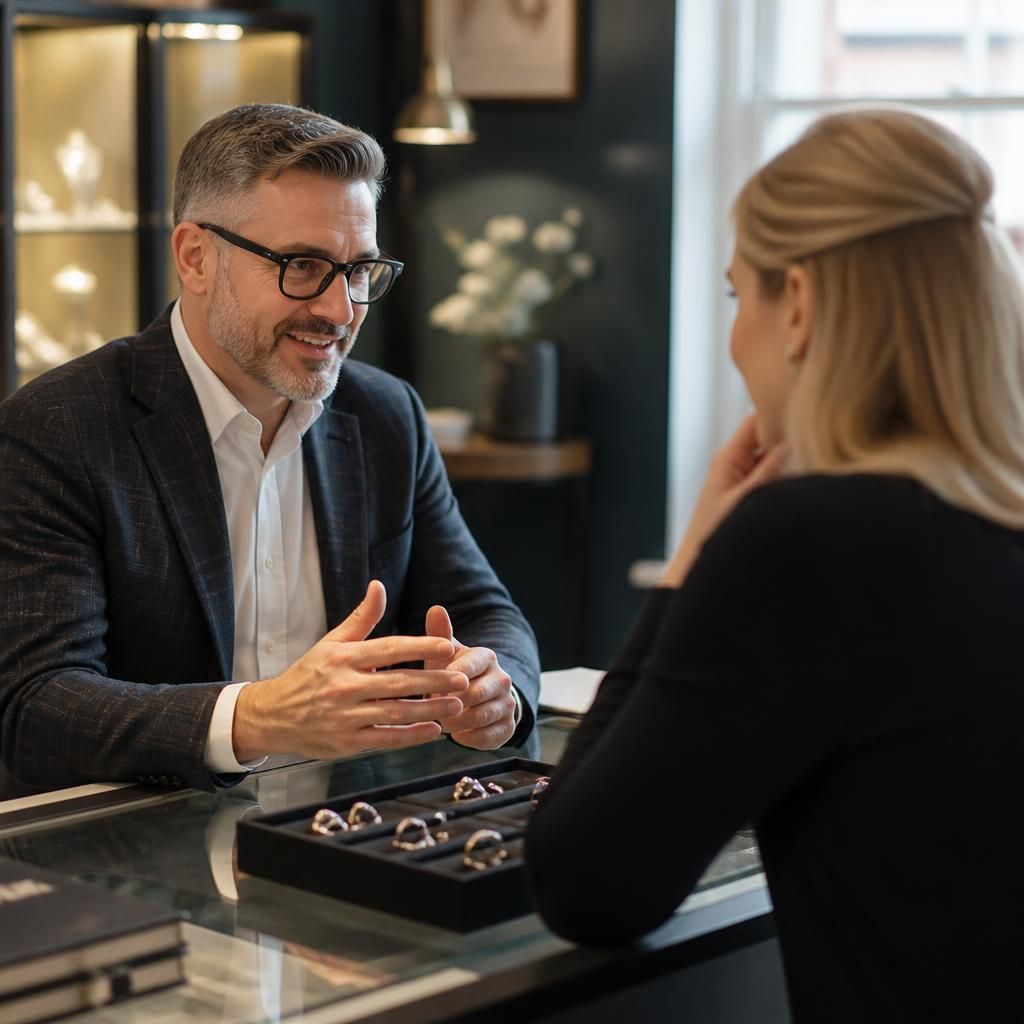
Aftercare is a key factor when choosing a jeweller because cleaning, inspections, resizing and repairs help protect the condition and wearability of a piece after purchase. Ask what services are available, who carries out the work and how your jewellery is protected while it is in the jeweller’s care.
For bespoke or regularly worn jewellery, confirm whether the jeweller can provide ongoing adjustments, claw repairs, chain repairs, remodelling and valuation services. If you are buying a luxury watch, clarify how servicing, battery or movement-related work and water-resistance checks are handled. Clear aftercare arrangements give you a practical point of support throughout the ownership of your jewellery or timepiece.