
What role does the complexity of the ring's design play in the resizing process?
The complexity of a ring’s design significantly influences the resizing process. Ornate or intricate designs can pose challenges, requiring more time and precision to maintain the ring’s original aesthetic and structural integrity. Goldsmiths like those at Steven Charles Quance must carefully assess each unique detail, such as engravings, filigree, or gemstone settings, to ensure a seamless resize without compromising the ring’s craftsmanship or durability.
The complexity of a ring’s design plays a critical role during the resizing process, influencing both the technical approach and the care needed to preserve its visual and structural qualities. An intricate design, featuring elements such as detailed engravings, filigree work, or delicate gemstone settings, demands a higher level of expertise and attention from the goldsmith. The challenge primarily lies in ensuring that the original aesthetic and craftsmanship of the ring are retained even after the structural adjustments are made.
For rings with ornate designs, the resizing process often starts with a meticulous assessment. This involves closely examining the intricate features, identifying potential weak points, and determining the best method to adjust the size without disrupting the design. For example, if a ring includes complex engravings or a large number of small stones, precision is key to maintaining alignment and appearance.
Those with gemstone settings or elaborate bezels may require additional steps in the resizing process. Gemstones, particularly if channel-set or in tension settings, can be at risk of loosening or shifting during resizing. A skilled goldsmith at Steven Charles Quance might temporarily remove certain stones to secure their safety during modification or take precautions to protect them while work is undertaken.
Maintaining the structural integrity of the ring is another important consideration. While resizing a simpler band might involve straightforward techniques like cutting and soldering, complex designs often necessitate specially tailored techniques. These might include carefully strengthening joints or using laser welding for precise adjustments, ensuring that the integrity and durability of the original piece are maintained.
In conclusion, resizing a ring with a complex design is a nuanced task that facilitates the retention of its original beauty and strength. By employing expert craftsmanship and careful planning, jewellers like those at Steven Charles Quance ensure that each resizing meets the client’s needs while respecting the unique qualities of their cherished piece. When considering resizing, it is advised to always consult with an experienced professional to navigate the intricacies involved effectively.
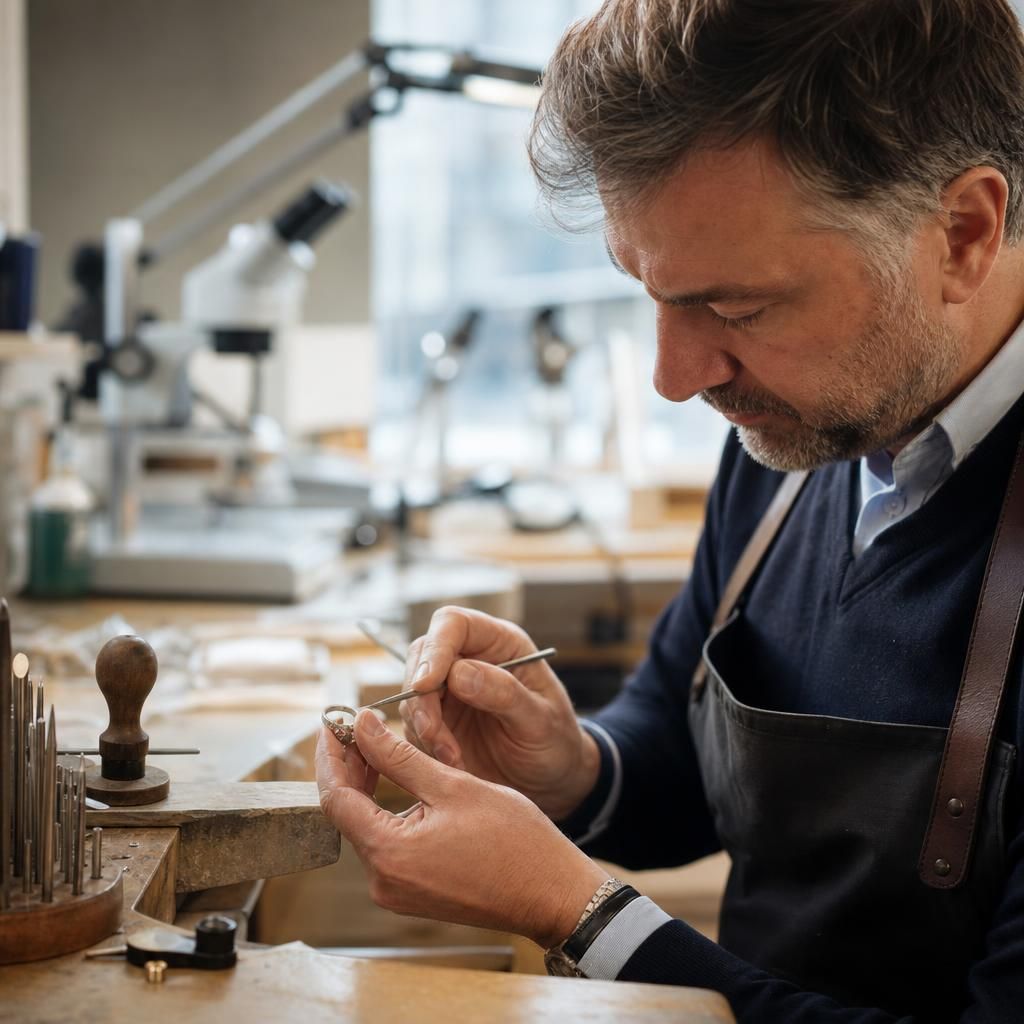
A significant aspect of ring resizing is understanding how the complexity of the ring’s design influences the process. One of the key supporting elements involves assessing the intricate features of a ring, such as its engravings and gemstone settings, to plan a resizing strategy that maintains the ring’s original beauty and structural integrity. This assessment is crucial as it allows the goldsmith to determine the best methods for altering the size without compromising the design. For instance, rings with filigree or ornate patterns may require more careful techniques, such as laser welding, to avoid damaging the artistic features. Implementing these specialised methods ensures that your bespoke jewellery retains its elegance and serves as a testament to the craftsmanship and expertise employed during the resizing process.