What types of materials can be laser engraved in jewellery?
Laser engraving is suitable for many jewellery materials, including gold, platinum, silver, stainless steel and titanium. The best approach depends on the metal’s purity, surface finish, colour and any plating or coating, so each piece should be assessed before engraving.
Laser engraving is suitable for many jewellery materials, including gold, platinum, silver, stainless steel, titanium and some non-metal components. The most appropriate setting depends on the material’s composition, hardness, colour, surface finish and any plating or coating. Before engraving, each piece should be assessed to confirm that the laser can create a clear, durable result without damaging the jewellery.
Gold is one of the most commonly laser engraved jewellery materials. Yellow, white and rose gold can all be engraved, provided the alloy and surface are suitable. The laser can produce fine lettering, dates, symbols, fingerprints and detailed motifs on rings, pendants, bracelets and other pieces. The appearance of the engraving will vary according to the depth, finish and colour of the gold. A polished surface may produce a bright contrast, while a deeper engraving can create a more pronounced shadow.
Gold purity is relevant because jewellery gold is alloyed with other metals to provide strength and alter its colour. Different alloys may react slightly differently to the laser, so a test or careful assessment can be appropriate where the design is particularly fine. White gold may also have a rhodium-plated surface. Engraving through this plating exposes the underlying white-gold alloy, meaning the finish around the engraving may change as the piece wears and is professionally refinished.
Platinum can also be laser engraved and is well suited to precise personalisation. Its density and hardness require appropriate equipment and settings, particularly for small lettering or intricate designs. Platinum’s natural colour means that the contrast in an engraving may be more subtle than on some darker metals. The advantage is that the engraving remains part of the metal rather than being a surface colour applied over it.
Silver, including sterling silver, is generally suitable for laser engraving. It can accept detailed text and artwork, although its relatively soft surface means that the engraved area may be more vulnerable to everyday scratches or changes in polish. Tarnish, oxidation and a highly reflective finish can also affect the visual contrast. Cleaning and finishing should be considered when choosing the desired appearance.
Stainless steel and titanium are commonly engraved for contemporary jewellery, watches and practical everyday pieces. Titanium is lightweight and hard-wearing, making it useful for some rings and modern designs. Stainless steel can produce a crisp result, although the visible effect may be a dark mark, a lighter mark or a change in surface texture depending on the laser process and the grade of steel. These metals are not all identical, so the exact alloy and finish should be checked rather than treated as interchangeable.
Other metals may also be suitable, depending on the equipment and the item’s construction:
- Palladium can generally be engraved with suitable settings and careful control of heat.
- Tungsten carbide may be marked or engraved using specialised methods, but its hardness and brittleness mean that not every item is suitable. The design may need to remain relatively simple.
- Copper and brass can be laser processed, although their colour, reflectivity and tendency to oxidise can affect the final appearance.
- Aluminium may be marked effectively, particularly where it has an anodised surface. Engraving through anodising changes the colour contrast and should be planned as part of the design.
Plated, coated and finished jewellery needs particular care. Gold-plated, vermeil, rhodium-plated, blackened, anodised or PVD-coated items may be engraved, but the laser can remove or alter the surface layer. The result may intentionally reveal the base metal underneath, or it may look uneven if the coating is thin or inconsistent. Engraving a plated item can also make the exposed area more susceptible to wear. If preserving the original coating is important, the item should be inspected first and the design positioned accordingly.
Laser engraving is not limited to solid metal, but non-metal materials require a different assessment. Some jewellery incorporates wood, leather, acrylic, ceramic, glass, resin or enamel, all of which may respond differently to heat. A laser may create a clean mark on certain components, while on others it can cause charring, cracking, melting, discolouration or loss of gloss. Composite pieces can be especially difficult because the laser may pass from one material to another within the same design.
Gemstones should not be treated as interchangeable engraving surfaces. Certain diamonds can carry a microscopic identification inscription on the girdle using specialist equipment, but this is different from applying a decorative message to the visible face of a stone. Coloured gemstones, opals, pearls and treated stones may be sensitive to heat, vibration or surface damage. In most cases, personalisation is better placed on the surrounding metal rather than on the gemstone itself.
The item’s construction is as important as the material. Hollow jewellery, thin bands, articulated links, tension-set designs, delicate settings and pieces with internal mechanisms may have limited areas that can be engraved safely. The available space affects the size of the lettering and the level of detail that can be reproduced. A short inscription is usually clearer and more durable than text that has been reduced excessively to fit a small surface.
Before work begins, the jewellery should be checked for its metal or material, plating, existing damage, surface curvature and available engraving area. The intended finish should also be agreed: a laser engraving may be designed as a subtle mark, a contrasting dark mark or a deeper recessed design, depending on the piece. Where the material or coating is uncertain, professional testing and inspection help avoid an unexpected result.
For most bespoke jewellery, gold, platinum, silver, titanium and stainless steel provide the most predictable options. Plated metals, gemstones, enamel, ceramic and mixed-material designs can still be considered, but they require more careful planning. Bringing the item for assessment allows the engraving position, wording, scale and finish to be matched to the material and the way the jewellery will be worn.
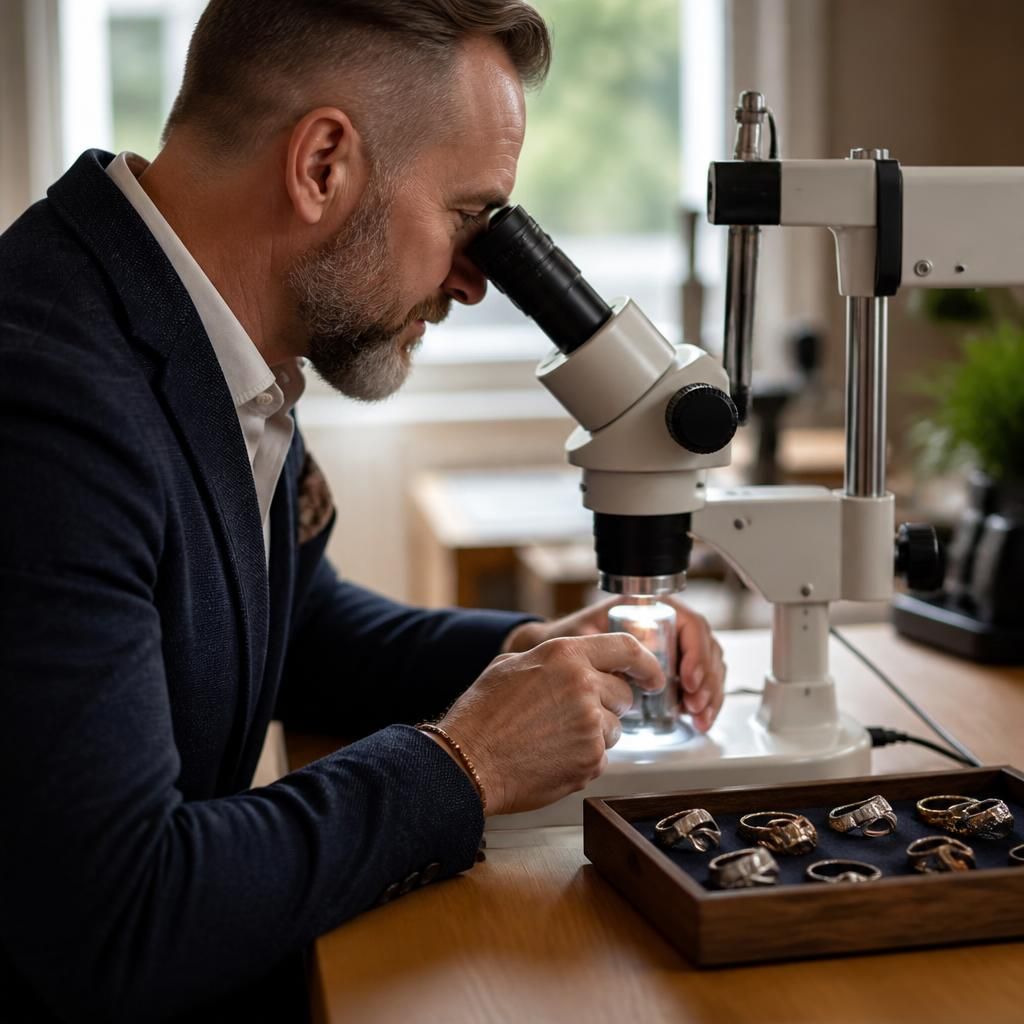
Laser engraving can be carried out on many jewellery materials, but the metal, surface finish and any plating determine the final appearance. Gold, platinum, silver, titanium and stainless steel are generally suitable, while plated or coated pieces need particular care because engraving may expose the underlying metal.
Before engraving, the item should be assessed for its alloy, curvature, thickness and available surface area. This helps establish whether the design will appear as a crisp mark, a darker contrast or a subtle recessed finish, and ensures the lettering or artwork is appropriately sized for lasting clarity.