How does the bespoke creation process ensure a truly unique locket?
A bespoke locket is made unique by developing its design around your chosen details, such as its shape, metal, engraving, gemstones, finish and interior features, rather than selecting a standard style. Steven Charles Quance guides you from initial consultation and design development through to skilled making and final checks, ensuring the finished locket reflects your requirements and is not duplicated as an off-the-shelf piece.
The bespoke creation process ensures a truly unique locket by developing every important feature around your personal requirements, rather than adapting a standard design. Its shape, proportions, metal, surface finish, opening mechanism, engraving, gemstones and interior details can all be considered together. Steven Charles Quance guides you through each stage, so the finished piece is designed specifically for you and is not simply selected from an existing collection.
The process typically begins with a detailed consultation. This is an opportunity to discuss who the locket is for, what it should represent and how it will be worn. You may already have a clear idea, such as a locket incorporating initials, a birthstone or a meaningful motif, or you may need advice on translating a broader idea into a practical piece of jewellery. Reviewing your preferences at the outset helps establish a design brief covering style, scale, wearability and budget.
Personal references can then be interpreted as design features. A symbol, handwritten message, family detail or distinctive pattern may influence the outline, engraving or decoration. The image or keepsake placed inside the locket can also affect its internal layout and proportions. This ensures that personalisation is considered as part of the structure of the locket, rather than added as an afterthought.
Design development gives you control over the details that make the piece individual. Depending on the design, this may include:
- the locket’s shape, size and profile;
- the choice of precious metal and its colour;
- polished, satin, brushed or textured surfaces;
- engraved names, dates, handwriting, symbols or messages;
- the arrangement and type of gemstones or birthstones;
- the style of bail, chain connection and clasp;
- the number and layout of internal compartments; and
- the way photographs, hair or other small keepsakes are protected inside.
These choices are assessed together rather than in isolation. For example, a delicate engraving needs a suitable surface area and finish, while a locket intended for frequent wear needs a secure hinge, dependable closure and an appropriate thickness. Gemstones must be set securely, and the overall dimensions should be comfortable against the skin and balanced with the chain. Expert guidance helps preserve the original idea while making sure the design remains durable and practical.
Once the brief has been established, the design can be refined through sketches, reference images or digital design work where appropriate. This stage allows proportions, decorative elements and practical features to be reviewed before making begins. It is also the point to resolve details such as the placement of an inscription, the visibility of an inner photograph and the relationship between the locket and its chain. Reviewing the design in advance reduces the risk of compromises later in the process.
Skilled manufacture adds another layer of individuality. A bespoke locket may involve forming and joining precious metal, creating a precise hinge and closure, setting stones, applying the selected finish and completing detailed handwork. Even where specialist equipment is used for accuracy, the piece requires careful making and finishing to bring the approved design together. Subtle variations associated with hand-finishing can give the locket its own character while maintaining the required quality and symmetry.
Personalisation is completed with particular care because engraved details cannot usually be altered without affecting the surface. The wording, spelling, punctuation and layout should therefore be checked before approval. If handwriting or a drawn symbol is being reproduced, the source material needs to be clear enough for accurate interpretation. The final result can retain the character of the original while being adapted to suit the scale and material of the locket.
Before the locket is completed, it should be checked against the agreed design. This includes reviewing the quality and legibility of engraving, the security of gemstones, the alignment of the front and back, the operation of the hinge and clasp, the smoothness of edges and the quality of the surface finish. The interior should also close correctly and hold its intended contents without unnecessary movement. These checks help confirm that the finished locket is both visually distinctive and suitable for regular wear.
The result is unique because the design decisions, personal details and making process are specific to one commission. A personalised locket from an existing range may allow selected initials or an inscription, whereas a bespoke locket is developed from the beginning around your requirements. If you are considering a commission, bring any useful reference material, preferred photographs, examples of jewellery you wear comfortably and details of the message or symbolism you want included. This gives the design process a clear starting point and helps ensure the finished locket is recognisably yours.
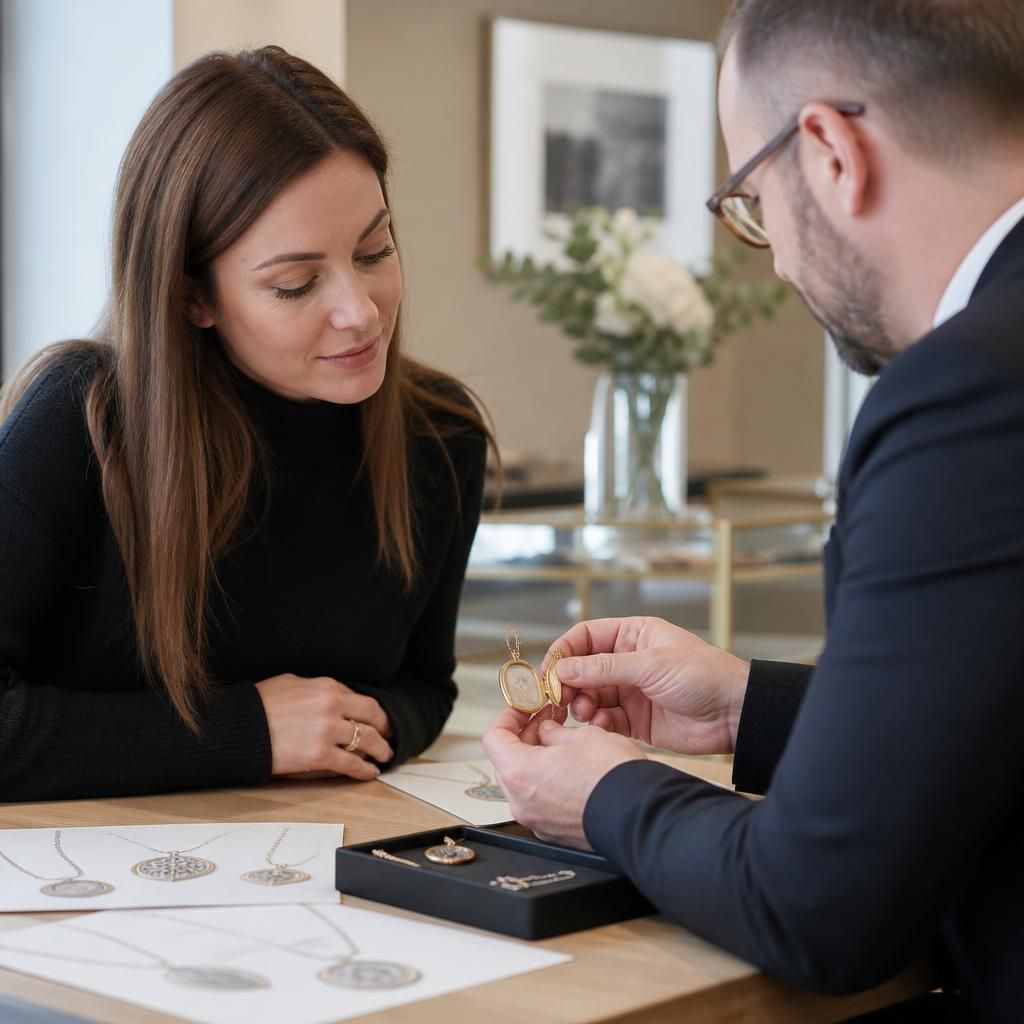
A bespoke locket is unique because its design is developed from your personal requirements rather than selected from a standard range. During the consultation, details such as a handwritten message, family symbol, photograph, preferred proportions or birthstone can be translated into the locket’s shape, surface decoration and interior layout.
These choices are considered together before making begins. This helps ensure that the engraving fits the available surface, the keepsake is protected inside and the hinge, closure and chain connection remain practical for regular wear. Reviewing the design in advance means the finished locket reflects your specification in both its appearance and construction.