What should I know about the ethical considerations of purchasing second-hand jewellery in the Jewellery Quarter?
When purchasing second-hand jewellery in Birmingham’s Jewellery Quarter, consider its environmental benefits, the transparency of its provenance, the materials used and whether the seller can verify its condition and authenticity. Choose a reputable jeweller who can explain the piece’s history where known, provide suitable documentation and offer responsible aftercare, while remembering that buying pre-loved jewellery does not automatically guarantee ethical sourcing.
Buying second-hand jewellery in Birmingham’s Jewellery Quarter is usually a more resource-conscious choice than buying newly manufactured jewellery, because it keeps an existing piece in use and can reduce demand for newly extracted materials. However, “pre-loved” does not automatically mean ethically sourced. You should still consider the item’s provenance, materials, condition, any alterations and the standards of the jeweller selling it.
Consider the following ethical issues before you buy:
- Environmental impact: Reusing an existing ring, chain, bracelet or watch can avoid some of the mining, processing and manufacturing associated with a new equivalent. It also gives a well-made piece a longer useful life rather than sending it for scrap. The environmental benefit is not absolute, however: extensive remodelling, replacement parts, transport and energy-intensive repairs may still be involved.
- Provenance: Ask what is known about the piece’s history and whether the seller can explain how it entered their stock. A reputable jeweller should be clear about information they have and should not present assumptions as confirmed facts. For older or unusual jewellery, the available history may be limited, so honest disclosure is more meaningful than an unsupported story about its origin.
- Conflict and illegal sourcing: A second-hand diamond, gemstone or precious-metal item may have been made or sold many years ago, before current documentation was available. Ask what checks have been carried out and whether the jeweller can provide relevant information about the stone or metal. This is particularly important if a seller describes a gemstone as ethically sourced, fair trade, traceable or conflict-free; such claims should be supported by appropriate evidence rather than simply by the fact that the item is used.
- Metal content and hallmarking: Look for an appropriate UK hallmark where one is required. Hallmarks help identify the fineness of precious metal and the relevant assay information, although a hallmark does not prove that every part of a modified item is made from the same metal. Clasps, replacement sections, solder, settings and later additions may need separate assessment. If a piece is unhallmarked, ask why and whether its metal content has been tested.
- Gemstone disclosure: Find out whether stones are natural, laboratory-grown, treated, fracture-filled, composite or synthetic where that distinction affects value or care. Treatments are not necessarily unethical, but they should be disclosed because they can affect durability, cleaning methods, resale and insurance. A suitable report may be advisable for a significant diamond or coloured gemstone.
- Ownership and cultural sensitivity: Some jewellery may have links to protected materials, archaeological objects or culturally significant designs. Ask questions if an item appears to contain ivory, coral, tortoiseshell or another restricted material, or if its age and origin are uncertain. Import, export and sale restrictions can apply, and a responsible jeweller should not encourage a transaction where the legal position cannot be established.
- Fair treatment of sellers: Ethical retailing also involves how jewellery was acquired. When a jeweller buys unwanted jewellery, transparent explanations of the valuation and buying process help ensure that sellers are treated fairly. This is relevant when considering a part-exchange, scrap valuation or a piece that has been recently acquired from a private individual.
Ask for clear information before committing to a purchase. Useful questions include:
- Is the item being sold as second-hand, antique, vintage, restored or newly made from reclaimed components?
- Which parts are original, and what has been repaired, replaced, resized or remodelled?
- Are the metal fineness, gemstones and treatments confirmed by testing or documentation?
- Is there a valuation, previous receipt, gemstone report or other supporting paperwork?
- What is known about the piece’s provenance, and which details remain uncertain?
- Does the purchase include a written description, guarantee, return terms and aftercare options?
Documentation should match the item being sold. Check that descriptions of the metal, stones, dimensions and condition are consistent across the receipt, valuation and any report. For a valuable piece, an independent assessment can provide additional reassurance, particularly where the jewellery has been substantially altered or where a gemstone’s identity has a material effect on its value.
Condition is also an ethical consideration because buying an item that cannot be safely worn may lead to unnecessary replacement or waste. Examine claws, settings, hinges, catches, joints and areas of thinning. Ask whether the piece has been professionally inspected and whether essential repairs are recommended. A repairable item can still be a responsible purchase, provided the likely work and cost are explained before the sale. Appropriate aftercare, such as resizing, cleaning, repairs and periodic checks, helps extend its useful life.
Be cautious of broad claims such as “100% ethical”, “fully sustainable” or “conflict-free” without an explanation of what they cover. Ethical sourcing is not a single attribute: it can involve environmental impact, labour conditions, legality, traceability, animal welfare, cultural heritage and accurate selling information. A jeweller who distinguishes verified facts from information that is unavailable is giving you a more reliable basis for deciding.
In the Jewellery Quarter, the most practical approach is to choose an established jeweller who provides a proper description, explains testing and hallmarking, discloses treatments and alterations, and offers accountable aftercare. Keep the receipt and any reports with the jewellery, and obtain an updated valuation if the piece is valuable or significantly remodelled. These steps allow you to benefit from the reuse of existing jewellery while making an informed decision about its ethical and practical suitability.
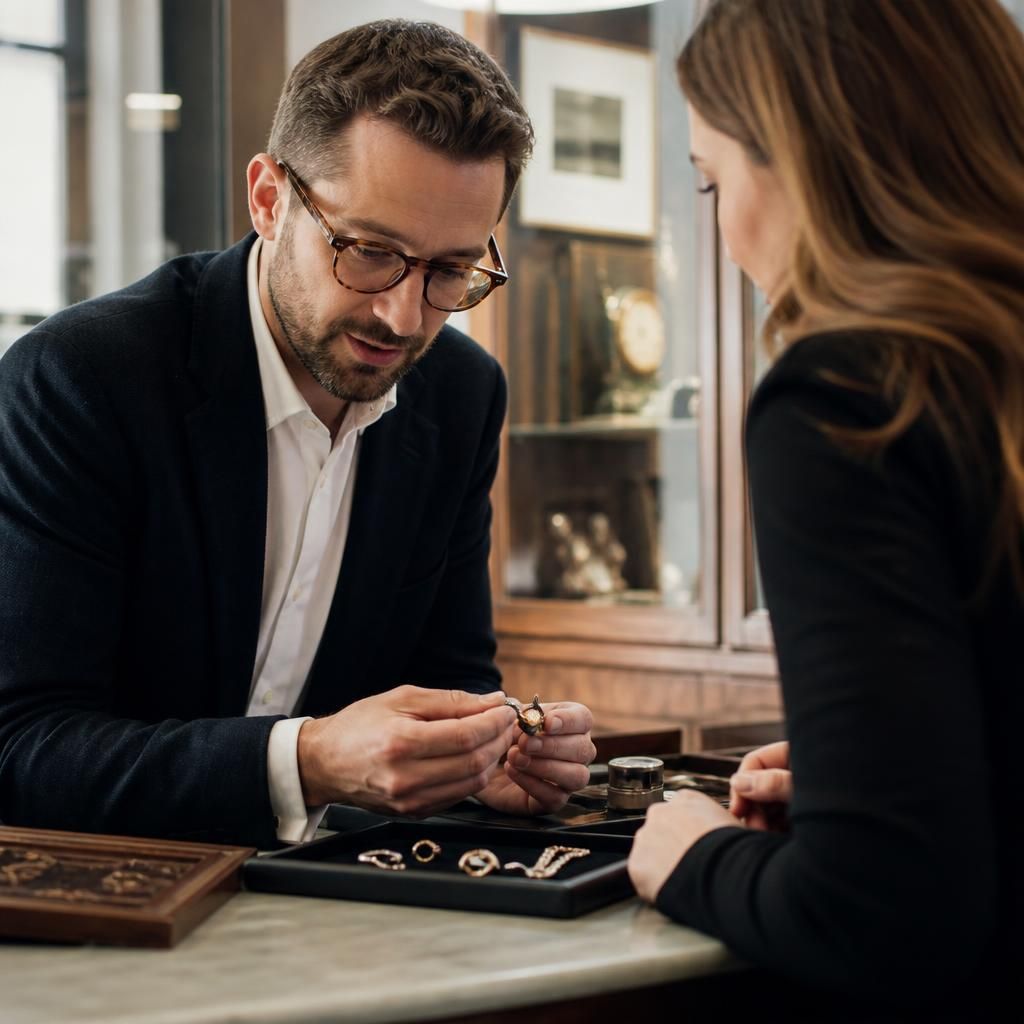
The ethical value of second-hand jewellery depends partly on what can be established about its provenance, not simply on the fact that it has been owned before. Reusing an existing ring, chain or watch can reduce demand for newly extracted materials, but a pre-loved piece may still contain materials with uncertain origins or have been substantially altered.
Ask what the jeweller knows about how the item entered stock and which details are documented. A responsible description should distinguish confirmed information from assumptions, particularly for older pieces where a complete ownership history may not exist. If a diamond or coloured gemstone is described as traceable, conflict-free or ethically sourced, ask what paperwork or testing supports that claim.
It is also sensible to check whether the metal is hallmarked and whether any later additions, replacement sections or repairs have been identified. Treatments to gemstones are not automatically unethical, but they should be disclosed because they can affect care, durability and value. Clear information about provenance, materials, alterations and condition allows you to make a properly informed purchase rather than relying on broad ethical claims.
Discuss the Ethical Considerations of Your Pre-Loved Jewellery Purchase
Speak to our jewellery team about the provenance, materials, condition and documentation of any pre-loved piece you are considering. We can provide expert guidance and discuss suitable testing, valuation and aftercare before you purchase.