
What are the most important factors to consider when choosing an engagement ring in Birmingham's Jewellery Quarter?
The most important factors when choosing an engagement ring in Birmingham’s Jewellery Quarter are your budget, preferred design, ring size, metal, diamond or gemstone quality, ethical sourcing and the jeweller’s expertise. Consider whether you want a ready-to-wear or bespoke ring, request clear information about materials and stone certification, and check that resizing, repairs and valuation services are available after purchase.
Choosing an engagement ring in Birmingham’s Jewellery Quarter involves balancing design, wearability, stone quality, ethical sourcing, budget and the expertise of the jeweller. The right choice should suit the wearer’s lifestyle and personal taste, be accurately described, fit comfortably, and come with clear advice about certification, care and aftercare.
Start with the overall budget
Set a realistic budget before visiting jewellers, but treat it as a guide rather than a rule. The price of an engagement ring depends on the metal, craftsmanship, design complexity and, where applicable, the quality and size of the diamond or coloured gemstone. A clear budget allows your jeweller to recommend suitable options without directing you towards features that are not important to you.
Ask what is included in the quoted price. This may include the setting, centre stone, additional stones, engraving, valuation documentation or future adjustments. A bespoke design can require a different budget from a ready-to-wear ring because it involves design development, modelling and skilled hand-finishing. A reputable jeweller should explain the costs clearly and identify any choices that would significantly affect the final price.
Consider the wearer’s style and daily routine
The ring should reflect the wearer’s preferences rather than simply follow a current trend. Look at the jewellery they already wear for clues about preferred metals, colours, proportions and shapes. Some people prefer a simple, understated design, while others may want a distinctive halo, cluster, trilogy or bespoke setting.
Daily activities are equally important. A high-set stone may provide presence but can catch on clothing or equipment. Low-profile settings can be practical for active lifestyles, while rounded edges and securely protected stones may be preferable for someone who works with their hands. The setting should also allow enough space if the wearer plans to wear a wedding ring alongside the engagement ring.
If the design needs to be discreet, bring photographs or sketches to a consultation. When the ring is intended to be a surprise, discreetly check existing ring sizes or ask a trusted family member for guidance. Ring size can be adjusted in many cases, but getting as close as possible initially helps protect the proportions and structure of the design.
Choose the metal carefully
Common choices include platinum, white gold, yellow gold and rose gold. Platinum is naturally white, dense and well suited to secure settings. White gold has a bright appearance and may be finished with rhodium plating, which can require renewal over time as the underlying tone becomes visible through wear. Yellow and rose gold provide warmer colours and can be selected in different purities.
Ask which alloy is being used, how it is finished and how it is expected to age. Metal choice can affect the appearance of the stone, the overall weight, maintenance requirements and how easily the ring can be resized or matched with a wedding band. It is also sensible to discuss any known metal sensitivities before making a decision.
Assess the diamond or gemstone beyond its appearance
For a diamond, the commonly discussed factors are the four Cs: cut, colour, clarity and carat weight. Cut is particularly important because it influences how effectively the stone reflects light. Colour and clarity should be assessed in relation to the chosen setting and the wearer’s priorities, rather than selected from a specification alone. Carat weight describes weight, not an exact visual size, so the stone’s proportions and shape also matter.
View the stone in suitable lighting and, where possible, examine it from different angles. Ask whether the diamond is natural or laboratory-grown, and request independent grading documentation where available. The report should correspond with the stone being offered. For coloured gemstones, ask about the type of stone, treatments, durability, origin information where available and any additional care requirements.
Do not rely solely on a certificate or grading report. Documentation is useful, but it does not replace an experienced assessment of the stone’s cut, setting and overall appearance. A knowledgeable jeweller should explain the information in plain language and help you understand which compromises are reasonable for your design.
Check the quality of the setting and craftsmanship
Inspect how securely the stone is held and whether the setting is suitable for its shape and everyday use. Claws should be even, properly formed and free from sharp catches. Bezel, rub-over and channel settings should be neat and consistent, with no visible gaps or rough edges. The inside of the ring should feel smooth, and the band should be proportionate to the stone and setting.
For a bespoke ring, ask how the design will be developed and approved. You may be shown drawings, computer-aided design images or a model before manufacture. Confirm which details can be changed, how alterations affect the price and when the final design must be approved. This process helps prevent misunderstandings about dimensions, stone placement and the finished profile.
Verify ethical and provenance information
Responsible sourcing should be considered alongside design and quality. Ask where the metal and stones come from, what sourcing assurances are available and whether the jeweller can provide relevant documentation. For diamonds, ask about compliance with recognised conflict-diamond controls and whether the available provenance information matches the description given.
Recycled metals, traceable materials, laboratory-grown diamonds and responsibly sourced natural gemstones each involve different considerations. None should be accepted as an unexplained label. Ask what the term means in practice, what evidence supports it and whether the information will be recorded on your paperwork. Ethical sourcing also includes fair treatment of skilled craftspeople, transparent trading practices and avoiding misleading claims.
Choose a jeweller who provides clear advice
The Jewellery Quarter offers a wide range of established workshops, retailers and independent specialists, so compare the quality of the consultation as well as the rings themselves. A trustworthy jeweller should listen to your requirements, explain alternatives, disclose treatments and limitations, and give you time to make an informed choice.
Before ordering, confirm:
- the exact metal, purity and finish;
- whether each stone is natural, laboratory-grown or treated;
- the stone’s grading or valuation documentation, where applicable;
- the ring size and how sizing will be assessed;
- the expected completion date for a bespoke design;
- the deposit, payment and cancellation terms; and
- the warranty and aftercare arrangements.
A willingness to answer these questions is more useful than a sales-led presentation. The jeweller should also tell you if a requested design is unsuitable for the wearer’s lifestyle or could create future repair problems.
Understand aftercare before purchase
Engagement rings require periodic inspection because claws, settings and shanks can wear with use. Confirm whether the jeweller offers cleaning, inspection, resizing, repairs, remodelling and valuation services. Ask how adjustments may affect an existing design, particularly where the ring has intricate detail, pavé stones or an unusual setting.
Request a written valuation for insurance purposes when appropriate, and keep it with your purchase documents. The valuation should describe the ring accurately, including the metal, stones and distinguishing features. It is also worth checking whether the ring should be removed for particular activities and how it should be cleaned at home.
Make the final decision methodically
Compare complete rings rather than focusing on one feature in isolation. Consider the balance between the stone, setting, metal, comfort, durability and price. Try the ring on, view it in different lighting and check how it sits on the finger. For a bespoke piece, make sure the approved design and specifications are recorded before manufacture begins.
The most suitable engagement ring is one that combines an appropriate design with secure craftsmanship, verified materials, comfortable wear and dependable aftercare. Taking time to examine these factors makes it easier to choose confidently in Birmingham’s Jewellery Quarter and to protect the ring’s condition for years to come.
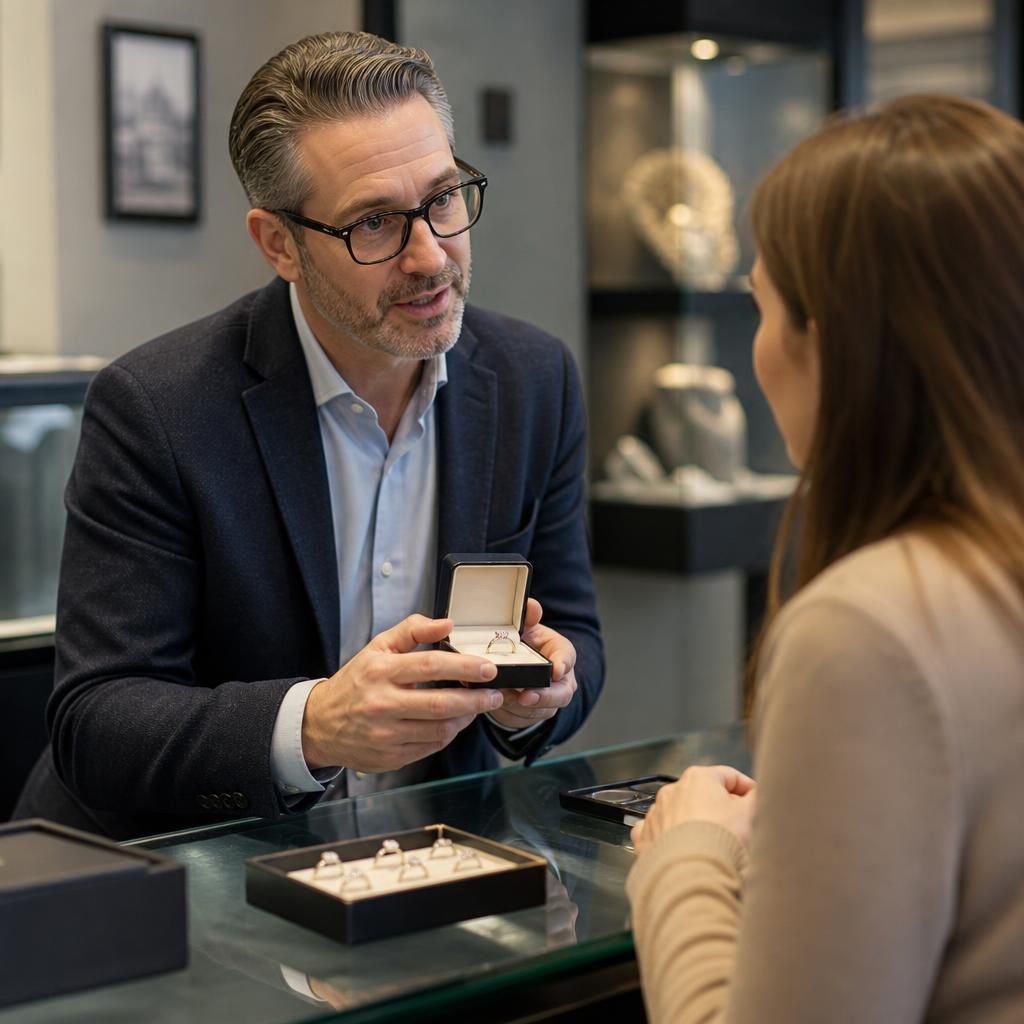
The setting is one of the most important factors when choosing an engagement ring because it affects the ring’s security, appearance and suitability for everyday wear. A well-made setting should hold the stone firmly, feel smooth against the skin and suit the wearer’s daily activities.
Claw settings allow more light to reach a diamond, while bezel and rub-over settings provide greater protection around the stone. A low-profile design may be more practical for someone who works with their hands or regularly wears gloves, whereas a high setting can create more visual presence but may catch on clothing. Check that the claws are even, the edges are free from sharp catches and the band is strong enough for the chosen stone.
It is also important to consider how the engagement ring will sit alongside a wedding ring. Ask to see the rings together, particularly if the engagement ring has a shaped setting, side stones or a substantial gallery. Discussing these details during your consultation helps ensure the finished ring is comfortable, secure and appropriate for long-term wear.
Book an engagement ring consultation in Birmingham’s Jewellery Quarter
Book an engagement ring consultation in Birmingham’s Jewellery Quarter to discuss your preferred design, budget, metal, gemstone and ring size with our team. We can advise on ready-to-wear and bespoke options, ethical sourcing, craftsmanship and the aftercare available for your chosen ring.