What specific restoration needs does your jewellery have, and how does this service address them effectively?
Jewellery restoration can address worn surfaces, damaged settings, loose or missing stones, broken mounts, tarnishing, and outdated designs. Steven Charles Quance assesses each piece before recommending suitable repairs, cleaning, polishing, remodelling or stone-setting work to restore its condition while preserving its character and materials.
Jewellery restoration addresses physical damage, wear, tarnishing, deterioration and outdated design while aiming to preserve the piece’s original character, materials and sentimental value. Steven Charles Quance examines each item before work begins, identifies the cause of the problem and recommends the most appropriate combination of repair, cleaning, polishing, stone-setting or remodelling.
A professional assessment is important because visible damage is not always the only concern. A ring may appear intact while its claws have worn thin, a chain may have weakened around a clasp, or a gemstone may have become loose within its setting. The restoration process considers the jewellery’s construction, metal, gemstones, previous repairs and intended future use.
- Worn or scratched surfaces: Cleaning, polishing and, where suitable, refinishing can improve the appearance of precious metal. Care is taken not to remove excessive metal or soften important details such as engraving, milgrain edges or textured finishes.
- Tarnishing and surface discolouration: Appropriate cleaning can remove accumulated dirt and tarnish. The method depends on the metal, gemstones and any treatments, as some pieces should not be exposed to aggressive chemicals, heat or ultrasonic cleaning.
- Loose, damaged or missing stones: A jeweller can inspect the setting, check whether the stone is secure and assess whether worn claws, bezels or channels need attention. Missing stones may be replaced where a suitable match can be sourced, with consideration given to colour, cut, size and the design of the original piece.
- Broken or weakened mounts: Fractured shanks, damaged shoulders, split links, bent components and worn joints may require careful repair or the replacement of a compromised section. The repair should restore strength without unnecessarily changing the proportions of the jewellery.
- Worn ring shanks and settings: Daily wear can thin the metal, particularly underneath a ring or around the claws. Restoration may involve rebuilding worn areas, reshaping the ring or strengthening the setting, subject to the condition and construction of the piece.
- Damaged clasps, hinges and chains: Faulty fastenings and stretched or broken links can affect both usability and security. Repairs may include servicing or replacing a clasp, repairing links and checking that moving parts operate correctly.
- Outdated or unsuitable designs: Remodelling can retain valuable metal or gemstones while creating a design that is more suitable for current wear. Options may include resetting stones, combining elements from several pieces or adapting an inherited item into a new ring, pendant or pair of earrings.
- Worn or unclear engraving: Existing engraving may sometimes be cleaned up or protected during restoration. New engraving can also be considered where the condition and thickness of the metal allow it.
Material identification forms part of the assessment. Gold colour and fineness, platinum, silver and mixed-metal construction each require different repair techniques. Gemstones also need individual consideration: porous, treated, heat-sensitive or softer stones may require gentler handling than durable stones such as diamond, sapphire or ruby. Any known history of treatments, previous repairs or alterations should be shared before work is agreed.
The recommended service may be a straightforward clean and polish, a focused repair or a more extensive restoration. Where the original structure can be safely retained, targeted work is generally preferable to unnecessary remodelling. If a repair would be unsuitable, unstable or likely to compromise the piece, alternative options can be discussed, including redesign or replacing a component rather than attempting to preserve damaged material at any cost.
Before restoration, the jewellery should be examined for loose stones, fractures, missing components and areas of thinning. The proposed work, materials, finish and any limitations should be explained clearly so that you can make an informed decision. For valuable, inherited or highly personalised pieces, it is also sensible to discuss valuation and documentation separately from the restoration itself, as repair work does not automatically establish a current market value.
After completion, the piece should be checked for secure settings, sound joins, correctly functioning fastenings and an even finish. Restoration does not make jewellery immune to future wear, so ongoing care remains important. Remove pieces for activities that could expose them to impact, chemicals or excessive pressure, store them separately and arrange periodic professional inspections for rings, stone-set jewellery and frequently worn chains.
Whether your jewellery needs a minor repair, specialist cleaning, stone-setting, structural strengthening or a complete redesign, the correct approach depends on its condition and the result you want to achieve. A careful assessment ensures that the restoration responds to the specific fault rather than applying a standard treatment that could damage the piece or remove its original character.
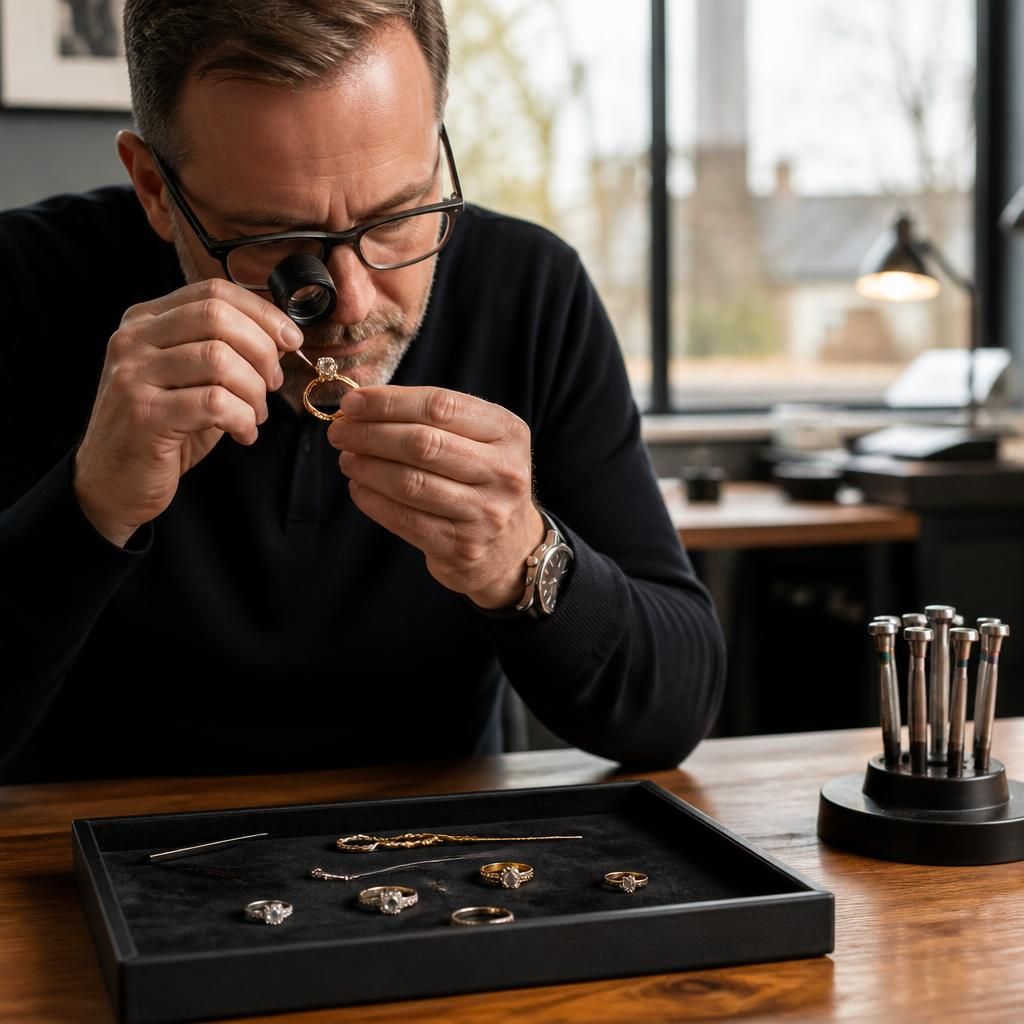
Jewellery restoration begins with a detailed assessment of the piece’s metal, gemstones, settings and previous repairs. This identifies the actual cause of wear or damage, such as thinning claws, a weakened shank, a loose stone or a faulty clasp, rather than treating only the visible symptom.
The restoration method is then matched to the jewellery. Cleaning and polishing may improve worn surfaces, while structural repairs, stone-setting or remodelling may be more appropriate for damaged or outdated pieces. Gemstones and finishes require individual care; softer, porous or treated materials may not be suitable for heat, chemicals or ultrasonic cleaning. This careful approach helps preserve the piece’s proportions, detail and original character while restoring safe, practical wear.