
Can handmade jewellery be repaired?
Yes, handmade jewellery can usually be repaired, although the appropriate method depends on its materials, construction and condition. An experienced jeweller can assess the piece and recommend discreet repairs, restoration or remodelling where damage is extensive or the original design needs adapting.
Yes, handmade jewellery can usually be repaired, but the suitable approach depends on the materials, construction, age and condition of the piece. A jeweller should assess the item before work begins, particularly if it includes fragile gemstones, unusual alloys, hand-engraving, delicate settings or evidence of previous repairs. In some cases, a discreet repair is appropriate; in others, restoration, partial reconstruction or remodelling will provide a safer and more durable result.
Handmade jewellery is not necessarily more difficult to repair than factory-made jewellery, but every piece may be constructed differently. A bespoke ring, pendant or bracelet can contain design features that are not immediately visible, such as concealed joints, hand-filed edges, unusually thin sections or stones set into non-standard settings. Understanding how the piece was made helps the jeweller choose a repair that preserves its proportions, appearance and structural strength.
Common repairs for handmade jewellery include:
- Rejoining a broken chain, shank, gallery or pendant loop.
- Repairing worn or split claws and rebuilding parts of a gemstone setting.
- Replacing worn catches, hinges, jump rings and other fittings.
- Closing gaps in rings, earrings, bracelets and brooches.
- Replacing missing sections with matching or compatible metal.
- Re-securing loose gemstones after checking the condition of the setting.
- Restoring worn surfaces, followed by cleaning, polishing or refinishing where appropriate.
- Repairing or adapting a handmade piece as part of a wider remodelling project.
The repair method is selected according to the damage. Traditional soldering may be suitable for some joints, while laser welding can be useful for precise work in areas where limited heat is important. A jeweller may also use hand fabrication, metal replacement, filing and finishing to restore a damaged section. The choice is not based solely on appearance: the repaired area must be strong enough for the way the jewellery will be worn.
Gemstones require particular care. Heat, pressure, chemicals and sudden temperature changes can damage certain stones or affect treatments. Before repair, the stones should be identified where possible and checked for chips, fractures, looseness and existing damage. Some gemstones are more vulnerable than others, and a piece with an enclosed, heat-sensitive or treated stone may need a lower-heat technique or for the stone to be removed before work. A setting that appears to need tightening may also require rebuilding if the surrounding metal has become too thin.
Older handmade and antique pieces can be repaired, but preserving their character may be as important as making them look new. Original tool marks, patina, hand engraving and minor variations can form part of the design and history of the item. Over-polishing may remove detail or reduce the definition of an engraving. Restoration should therefore be discussed in advance so that the intended finish is clear: a full refinish, a light clean, or a conservation-led repair that retains evidence of the original workmanship.
Previous repairs can affect what is possible. Repeated soldering, thinning from wear, unsuitable replacement metals or repairs that have altered the shape may make a straightforward fix inappropriate. For example, adding more solder to a heavily worn ring will not restore the strength of the surrounding metal. The worn section may need to be replaced, reinforced or redesigned. If the original construction is no longer reliable, remodelling can preserve the gemstones or much of the metal while creating a more durable piece.
A professional assessment normally considers:
- The metal type, purity, thickness and condition.
- How the piece was originally constructed and where its load-bearing points are.
- The security and condition of every gemstone and setting near the damaged area.
- Evidence of previous repairs, wear, distortion or metal fatigue.
- Whether the proposed technique could affect engraving, plating, patina or surface texture.
- How the jewellery is worn and whether the repair must withstand regular contact or movement.
- Whether the requested finish should match the existing piece or restore it more extensively.
Not every repair should be carried out exactly as it was originally made. A handmade design may have a very fine feature that has become unsuitable for everyday wear, or a ring may have been made before the wearer’s lifestyle changed. In these situations, the repair can include a considered modification, such as strengthening a band, changing a clasp, improving a setting or adapting the dimensions. This is different from disguising damage: the aim is to retain the character of the piece while addressing the reason it failed.
Before authorising work, ask for an explanation of the proposed repair, the likely finish and any limitations. It is also sensible to clarify whether gemstones will be removed, whether the original patina or engraving will be retained, and whether the item will be checked and cleaned after repair. For valuable, sentimental or particularly unusual jewellery, a written assessment and valuation may be appropriate before work begins. A valuation is separate from a repair estimate and should not be assumed to reflect the cost of recreating the piece.
After repair, handmade jewellery should be treated according to its materials and construction rather than simply by its appearance. Remove rings and bracelets for heavy manual work, avoid exposing delicate pieces to harsh chemicals, and store items separately to reduce scratching and tangling. Have settings, claws, clasps and areas of regular wear checked when the jewellery is cleaned or whenever a stone appears loose. Prompt attention to a small defect can prevent the loss of a gemstone or the need for more extensive reconstruction.
Where a damaged handmade piece cannot be safely repaired in its existing form, the practical alternatives may include replacing one component, rebuilding the damaged section or remodelling the item. The gemstones, engraving or usable metal can sometimes be incorporated into a new design, subject to condition and suitability. An expert jeweller can explain these options after examining the piece and can distinguish between a repair that restores its original structure and a redesign that gives it a new one.
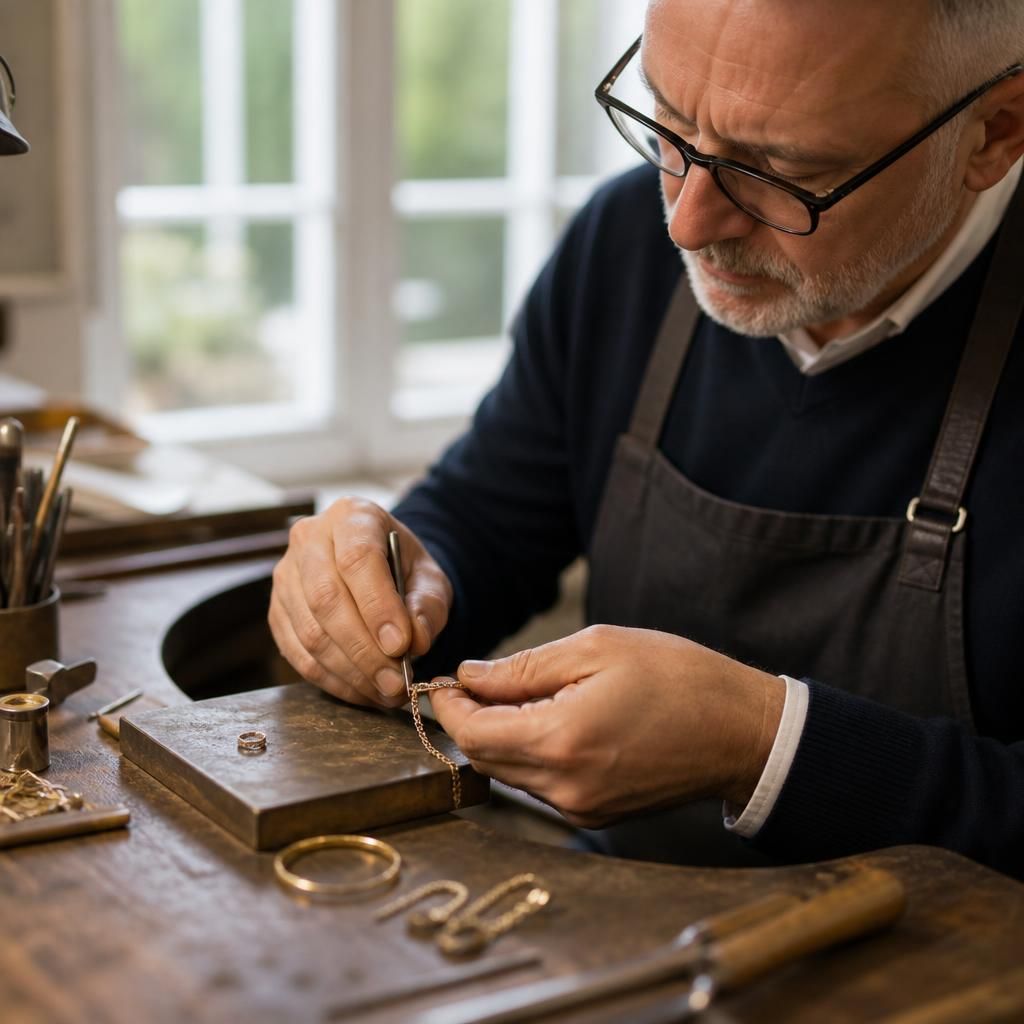
Handmade jewellery can usually be repaired, but the technique must suit its construction, materials and condition. A bespoke piece may include hand-finished details, concealed joins or a non-standard setting, so the repair should begin with a careful assessment rather than a standardised fix.
The jeweller will examine the metal, previous repairs, areas of wear and the security of any gemstones. This helps determine whether soldering, laser welding, replacement metal or hand fabrication is appropriate. Gemstones also need particular care because heat or pressure can damage some stones or affect existing treatments.
Where a section has become too thin or the original construction is no longer strong enough, simply adding solder may not provide a lasting repair. The damaged area may need reinforcing, rebuilding or remodelling. This can preserve the character of the handmade piece while making it more suitable for regular wear.
Arrange a handmade jewellery repair assessment
If your handmade jewellery is damaged, loose or showing signs of wear, arrange an assessment so the metal, settings and gemstones can be checked before repair work is recommended. We can explain whether repair, restoration or remodelling is the most suitable option for your piece.