
What ethical considerations should be kept in mind when selecting wedding rings from the Jewellery Quarter?
When selecting wedding rings in the Jewellery Quarter, it is essential to consider the ethical sourcing of materials and responsible craftsmanship practices. Ensuring that the precious metals and gemstones used are sourced in an environmentally and socially responsible manner is pivotal. Look for jewellers who provide transparency about their supply chain, prioritise conflict-free diamonds, and utilise recycled materials to minimise environmental impact.
When selecting wedding rings from the Jewellery Quarter, ethical considerations are paramount, ensuring both peace of mind and a contribution to sustainable practices. The essence of ethical jewellery begins with the sourcing of materials. It’s crucial to ascertain that the gold, platinum, and other metals used are acquired from mines that comply with environmentally responsible and socially fair practices. Seek jewellers who prioritise transparency in their supply chain and can verify that their materials are from conflict-free zones.
Diamonds and gemstones also require close scrutiny. Conflict, or “blood” diamonds, have historically been a significant concern. Therefore, look for jewellers who adhere to the Kimberley Process, an international certification scheme that aims to prevent the flow of conflict diamonds. Additionally, there is a growing demand for lab-grown diamonds, which are deemed more sustainable due to their reduced environmental impact and guaranteed ethical production.
Recycled materials present another avenue for ethical consideration. Jewellery using recycled precious metals not only limits the need for new mining but also contributes to a circular economy, reducing overall environmental strain. Many jewellers in the Jewellery Quarter offer pieces crafted from recycled gold, silver, and platinum, providing the double benefit of eco-friendliness without compromising quality or aesthetic.
Beyond materials, it’s also essential to consider the craftsmanship’s ethical implications. Supporting local artisans who employ fair labour practices ensures that your purchase upholds ethical standards regarding working conditions and fair wages. Choose jewellers who can assure fair treatment of their workers and maintain high ethical standards throughout the creation process.
Finally, transparency is crucial. Before making a decision, engage with jewellers who are open about their sourcing policies and environmentally friendly practices. Many will provide documentation or certifications to support their claims, offering assurance that they adhere to the highest ethical standards.
By keeping these considerations in mind, you not only select a wedding ring that symbolises love and commitment but also one that aligns with values promoting environmental sustainability and social responsibility.
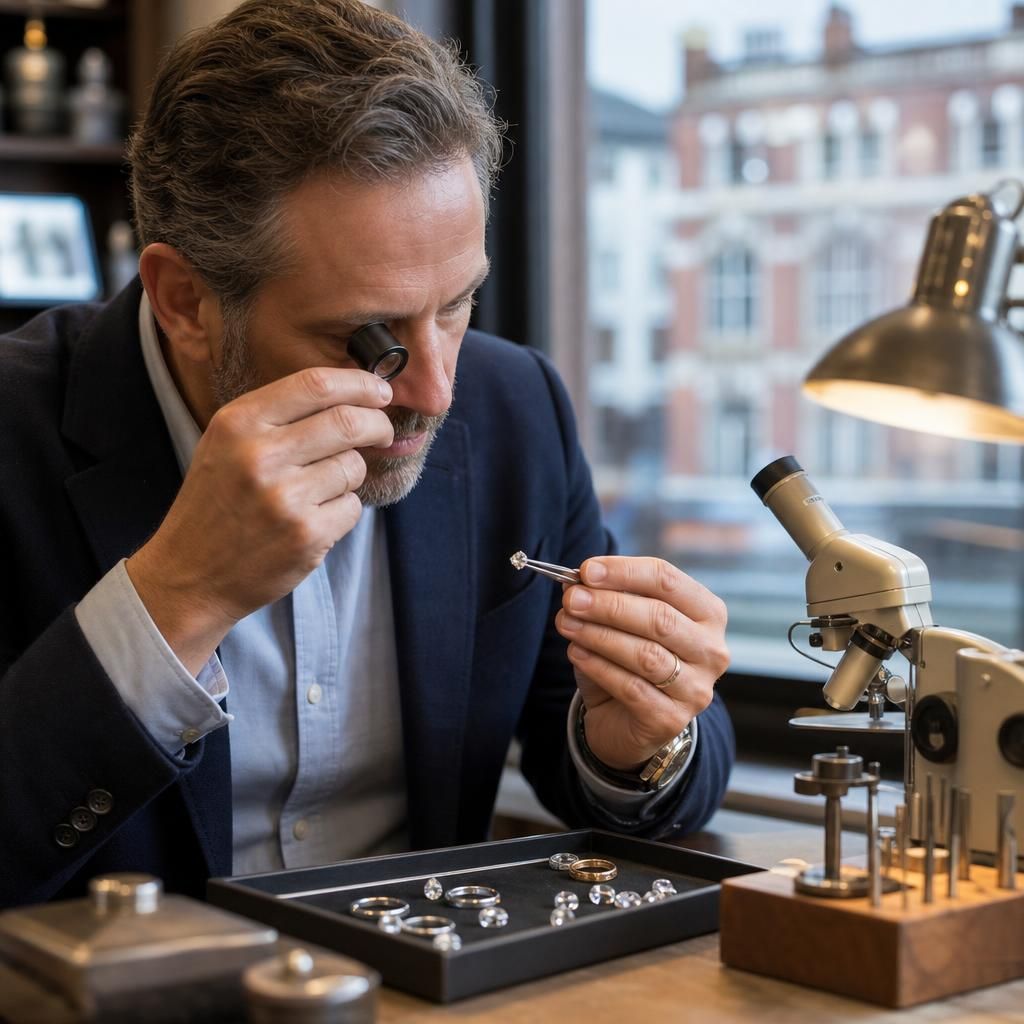
Conflict-Free Diamonds: When selecting wedding rings in the Jewellery Quarter, understanding the importance of conflict-free diamonds is crucial. These diamonds are sourced responsibly to ensure they do not finance violence or exploit humans in mining areas. Ethical jewellers should follow the Kimberley Process Certification Scheme, which tracks a diamond’s journey from mine to market, confirming it is conflict-free. Furthermore, the demand for lab-grown diamonds is increasing, as they offer an eco-friendly and ethical alternative. These diamonds are virtually identical to mined ones but produced in controlled environments, bypassing ethical concerns associated with traditional mining practices.
Discuss Ethical Options for Your Wedding Ring
For practical guidance on ethical sourcing, recycled metals, responsible gemstones and durable design, speak with Steven Charles Quance when selecting your wedding rings in Birmingham’s Jewellery Quarter. We can help you assess each material and craftsmanship decision before commissioning or choosing your rings.