What factors affect the resale value of my second-hand Rolex?
The resale value of a second-hand Rolex is mainly affected by its model, reference, condition, age, rarity, demand, originality and provenance. The presence of the original box and papers, a clear service history, and desirable features such as an uncommon dial or limited production can also influence the valuation.
The resale value of a second-hand Rolex is determined by the interaction of its model, reference, condition, originality, provenance and current market demand. A valuation is not based solely on the age or original purchase price of the watch. Two Rolex watches that appear similar can have materially different values if they differ in reference, dial, bracelet, service history, completeness or condition.
Model, reference and configuration
The exact reference is one of the first points to establish. The model family, case size, metal, bezel, dial, movement, bracelet and production period all contribute to the watch’s desirability and resale value. A professional valuation should therefore identify the reference and configuration rather than relying only on a broad description such as “Datejust” or “Submariner”.
Some configurations have a wider audience in the pre-owned market because they are practical, recognisable and consistently requested. Others appeal to a smaller group of collectors but may command a premium when their rarity, originality or condition is verified. Precious-metal cases, particular dial designs, unusual complications and discontinued references can all affect value, although the effect depends on genuine market demand rather than the feature alone.
Condition and originality
Condition has a direct effect on both value and buyer confidence. A watch with a clean case, clear dial, healthy movement, correctly functioning functions and a well-preserved bracelet will generally be more attractive than one showing heavy wear or requiring immediate work. Scratches and dents are assessed differently from light signs of use, and over-polishing can also reduce desirability if it has softened the original case shape or removed definition from the lugs and edges.
Original components are particularly important. Replacement dials, hands, bezels, bracelets or other parts may be perfectly functional, but they can alter the watch’s originality and affect its appeal to collectors. Aftermarket components, custom modifications, refinishing or non-original gemstones can have a more significant negative effect and should always be disclosed. A replacement part does not automatically make a watch valueless, but the valuation must reflect what is actually being offered and whether the work is documented.
Service history and mechanical performance
A Rolex that keeps time appropriately, winds correctly and passes a careful inspection is easier to sell than one with an unknown mechanical problem. Evidence of servicing by an appropriately qualified professional can support confidence, particularly where the work is recent and supported by an invoice or service record. However, a service history does not necessarily add the full cost of the work to the resale price.
Conversely, a watch that needs servicing, has moisture damage, a worn bracelet, a faulty clasp or problems with its functions may be valued on an as-is basis. The likely cost, complexity and risk of repair are taken into account. Repairing a watch before sale can sometimes improve its marketability, but unnecessary work, cosmetic alterations or replacement of desirable original parts may not increase the final value. It is sensible to obtain advice before authorising repairs solely for resale.
Box, papers and supporting records
The original presentation box, warranty card or papers, instruction booklets, tags and purchase documentation can strengthen a watch’s completeness and provenance. These items can make the watch easier for a future buyer to assess and may support a stronger resale position, particularly when the details correspond with the watch.
Missing packaging does not prevent a genuine Rolex from being valued or sold. Likewise, paperwork cannot prove authenticity on its own. The watch, its reference, serial details, condition and history must be assessed together. Any discrepancy between the documents and the watch should be investigated before a value is given.
Provenance and authenticity
A clear ownership history can help establish confidence, especially for a valuable or unusual reference. Receipts, service records, insurance valuations and previous purchase documentation may be useful, but they should be treated as supporting evidence rather than a substitute for inspection. Authenticity depends on examining the watch and its components, including the movement where appropriate, and checking whether modifications or replaced parts have been made.
Unclear provenance does not necessarily mean that a watch cannot be sold. It can, however, lead to additional checks, a more cautious valuation or a longer process. Be open about the watch’s history and provide all relevant documentation at the outset.
Current demand and market conditions
Resale prices change as buyer preferences, availability and wider luxury-watch market conditions change. Demand can vary between models and configurations, and a reference that is highly sought after at one point may not achieve the same price later. Condition, originality and completeness become even more important when buyers have greater choice.
There is also a difference between an advertised asking price and a realistic selling price. Online listings may remain unsold, include dealer margin or describe an unusually complete example. A professional valuation considers comparable watches that are genuinely available or have recently changed hands, together with the costs and risks involved in preparing and selling the watch. A trade-in or dealer purchase value may be lower than a private asking price because it allows for authentication, servicing, stock holding and resale risk.
Metal, materials and technical features
The case and bracelet material influence the underlying value, but weight or precious-metal content should not be used as the sole measure. The reference, condition, construction and demand remain important. Features such as a date function, chronograph movement, rotating bezel or specific dial treatment can alter the market position of a watch, while signs of damage or non-standard alteration can offset the value of an otherwise desirable specification.
How to protect your Rolex’s resale value
- Keep the watch, box, papers, tags, spare links and service records together.
- Store invoices and documentation that identify the reference or serial details.
- Avoid aftermarket modifications and do not replace original parts without considering their effect on originality.
- Have faults assessed by a suitably qualified professional rather than attempting an informal repair.
- Do not polish the case or bracelet simply to prepare it for sale without first taking advice.
- Describe any service, replacement component, damage or alteration accurately.
- Obtain a valuation based on an inspection of the actual watch, not photographs or a generic model description alone.
For an accurate assessment, bring the watch with all available packaging and documentation. The valuation should identify the reference and configuration, consider condition and originality, and explain whether the figure reflects an outright purchase, trade-in or another selling route. This gives you a more realistic basis for deciding how to sell your second-hand Rolex.
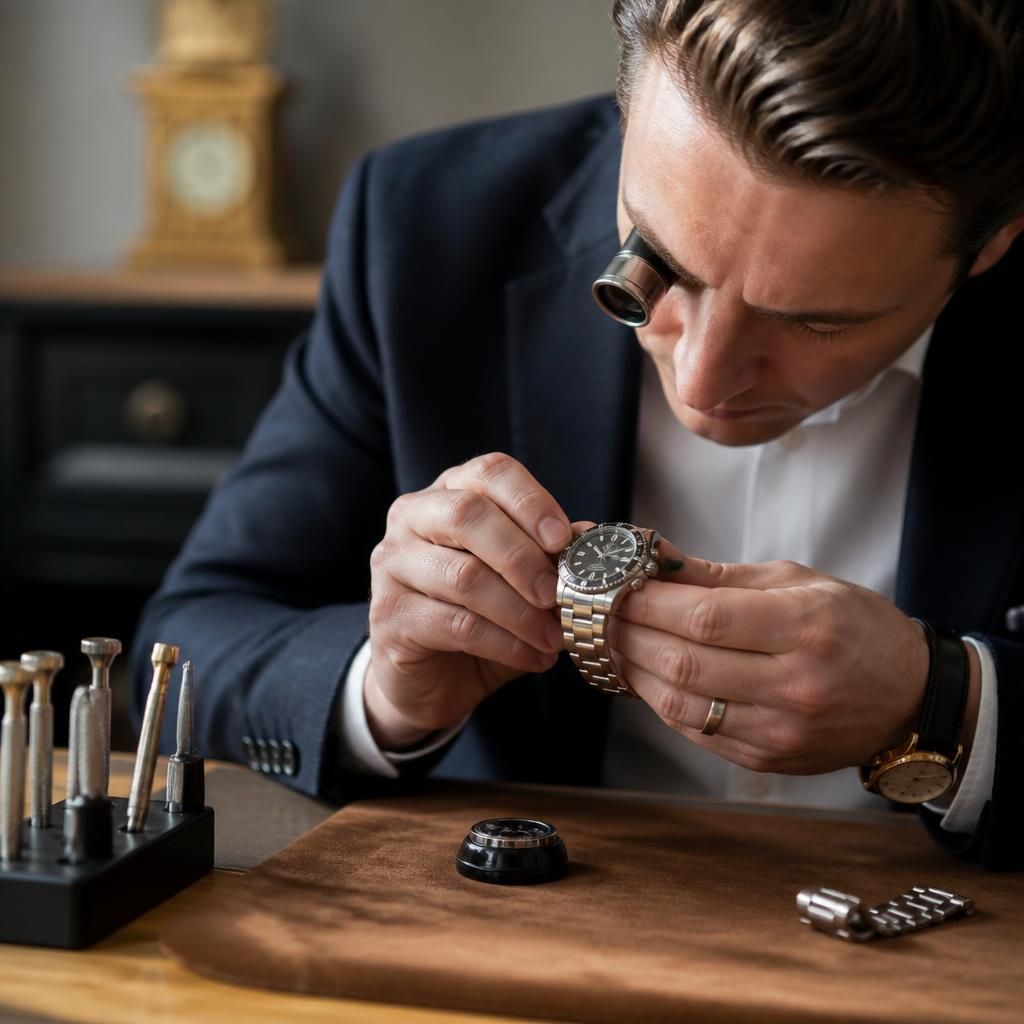
The condition and originality of a second-hand Rolex have a direct effect on its resale value. A watch with a well-preserved case, clear dial, correctly functioning movement and sound bracelet will usually appeal to more buyers than one requiring immediate work.
Original components also matter. An aftermarket dial, bezel or bracelet can reduce collector interest, while excessive polishing may soften the case edges and alter its original proportions. Before authorising cosmetic work or replacing a genuine part, obtain advice on how the change could affect the watch’s resale position.
Arrange Your Expert Rolex Valuation
Arrange an expert valuation of your second-hand Rolex with Steven Charles Quance, including an assessment of its reference, condition, originality and supporting documentation. Bring the watch with any box, papers and service records available for a clear, informed valuation.