What types of second-hand jewellery are popular in Birmingham's Jewellery Quarter?
Popular second-hand jewellery in Birmingham’s Jewellery Quarter includes vintage and antique rings, pre-owned gold chains and bracelets, signet rings, diamond jewellery, and luxury watches. Buyers often choose these pieces for their distinctive design, precious-metal value and potential to be remade, resized or restored by an experienced jeweller.
The most popular types of second-hand jewellery in Birmingham’s Jewellery Quarter are vintage and antique rings, pre-owned gold chains and bracelets, signet rings, diamond jewellery, earrings, brooches and luxury watches. Buyers typically choose these pieces for their character, established craftsmanship, precious-metal content and potential to be resized, repaired or remodelled by an experienced jeweller.
Vintage and antique rings are particularly sought after because older designs often differ noticeably from contemporary, mass-produced styles. Common choices include cluster rings, three-stone rings, signet rings, dress rings and period-inspired engagement rings. Art Deco pieces are recognised for geometric shapes and contrasting colours, while Victorian and Edwardian jewellery may feature more detailed settings, floral motifs or fine engraving. The date and style of a ring should be assessed separately from its condition, as an older ring may have been altered, repaired or fitted with replacement stones during its lifetime.
Second-hand rings are also popular because they can offer useful options for a bespoke purchase. A ring may be resized, restored or adapted, subject to its construction and condition. In some cases, stones or metal from an inherited or pre-loved piece can be incorporated into a new design. Any proposed alteration should be assessed before purchase, particularly where the ring has a delicate setting, substantial engraving or evidence of previous resizing.
Pre-owned gold chains and bracelets remain practical choices for people looking for wearable precious metal. Curb, belcher, trace, rope and snake chains are among the styles commonly encountered, while bracelets may include matching links, woven designs or hinged forms. Their appeal is influenced by the design, weight, gold carat, condition and security of the clasp. A heavier piece is not automatically better value: construction, workmanship and any stones or decorative details also affect its suitability and price.
Gold chains and bracelets should be checked for stretched links, thinning caused by wear, previous soldering and damage around the clasp. These issues may not be obvious when a piece is viewed in a display case. An experienced jeweller can examine the links, test the metal and explain whether repair or reinforcement is advisable before the item is worn regularly.
Signet rings and men’s jewellery are also widely chosen in the Jewellery Quarter. Traditional signet rings may have a plain oval, cushion or rectangular face, while others carry an engraved initial, crest, emblem or decorative shoulder. Second-hand signet rings are valued for their solid construction and the opportunity to personalise them through engraving or remodelling. When buying one, check that the face is thick enough for any planned engraving and that the shoulders have not been excessively worn or filed down.
Other pre-owned men’s jewellery includes cufflinks, tie pins, dress studs, bracelets and pendants. These pieces can be made from gold, silver, platinum or mixed materials. Matching pairs should be checked carefully, as replacement parts or later repairs can affect their appearance and value.
Diamond jewellery is popular in the form of engagement rings, eternity rings, cluster rings, earrings, pendants and tennis-style bracelets. With second-hand diamond jewellery, the setting is as important as the stones. Prongs should hold the stones securely, the back of the setting should not be excessively worn, and the piece should be examined for chips, abrasions or loose diamonds. A diamond’s appearance, cut, colour, clarity and carat weight all contribute to its value, but the overall design and condition also matter.
Second-hand diamond jewellery may have been remodelled previously, so it is sensible to ask whether the stones and mount are original to the piece. Where appropriate, independent documentation or a valuation can provide further information, although paperwork should always be considered alongside a professional inspection rather than treated as a substitute for it.
Pre-owned luxury watches attract buyers who want established mechanical design, precious-metal cases or a particular period of manufacture. Popular examples include classic dress watches, automatic watches, chronographs and robust everyday models. Condition, movement performance, originality, service history and the availability of relevant paperwork can all affect a watch’s value and reliability.
A watch should be checked for signs of polishing, replacement parts, moisture ingress, damage to the bracelet and wear around the crown or clasp. Water resistance can deteriorate with age, even when a watch appears sound. A pre-owned watch may require servicing, and the cost and availability of suitable aftercare should be considered before purchase.
Brooches, earrings and pendants are useful alternatives for buyers who want distinctive jewellery without choosing a ring. Vintage brooches may incorporate enamel, seed pearls, coloured gemstones or intricate metalwork. Earrings can include studs, drops, hoops and clip-on designs, while pendants range from simple gold shapes to gemstone and diamond pieces. With earrings, confirm whether the backs are original and secure. For brooches, inspect the pin, hinge and safety catch, as these components experience repeated use.
Hallmarks are an important part of assessing second-hand jewellery in Birmingham’s Jewellery Quarter. They can help identify the metal, fineness, sponsoring maker and, where applicable, the assay office. A Birmingham assay mark is traditionally represented by an anchor. Hallmarks may be worn, hidden inside a setting or absent from very small components, so they should be interpreted with the rest of the inspection rather than used as the only indication of authenticity.
When comparing popular pre-loved pieces, consider:
- the metal type and carat, supported by appropriate testing and visible hallmarks where present;
- the condition of settings, clasps, hinges, links, shanks and moving parts;
- whether stones are secure, original, treated or replaced;
- the accuracy of any stated age, maker, provenance or design period;
- whether resizing, cleaning, servicing or restoration is likely to be needed;
- the quality of any valuation, documentation or previous repair information; and
- whether the design remains suitable for the way you intend to wear it.
The Jewellery Quarter is well suited to buying second-hand jewellery because retail advice and specialist workshop skills are available in the same area. This makes it easier to assess a piece not only as found, but also in terms of possible restoration, resizing, valuation or remodelling. For inherited jewellery or a purchase with an uncertain history, a professional examination is the safest way to establish what the piece is made from, how it has been maintained and whether it is suitable for continued wear.
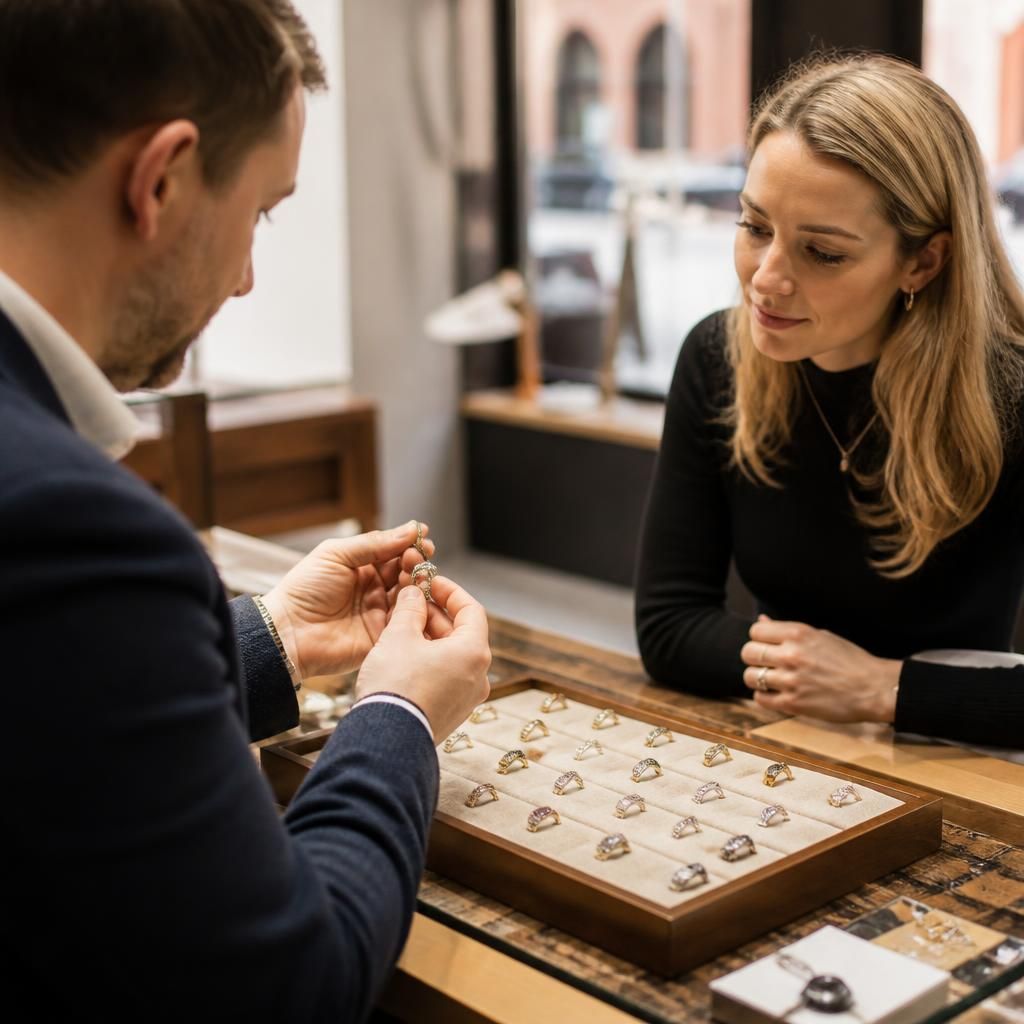
Vintage and antique rings are among the most popular types of second-hand jewellery in Birmingham’s Jewellery Quarter. Their appeal often comes from period design details, established craftsmanship and the possibility of restoring, resizing or adapting the piece for modern wear.
Before buying, inspect the setting, shank and hallmarks carefully. An older ring may have been resized, repaired or fitted with replacement stones, so its age and condition should be assessed separately. A jeweller can also advise whether the design is suitable for further alteration or whether restoration could affect its structure.
Explore Pre-Loved Jewellery with Expert Advice
If you are considering a pre-loved ring, chain, signet ring or watch, speak to Steven Charles Quance for advice on condition, authenticity, valuation and any required restoration. We can also explain whether a piece is suitable for resizing, repair or bespoke remodelling.