Should I consider professional aftercare services for used fine jewellery?
Yes. Professional aftercare can identify wear, secure settings, restore appearance and protect the condition and value of used fine jewellery, while providing appropriate cleaning, repairs, resizing and valuation advice for each piece.
Professional aftercare is advisable for used fine jewellery because it can identify hidden wear, protect gemstones and settings, restore the finish and help preserve the piece’s condition and value. Pre-owned jewellery may have experienced years of wear, previous repairs or alterations that are not immediately visible, so an expert assessment is often more appropriate than routine cleaning alone.
Why used fine jewellery needs specialist attention
Fine jewellery can look sound while still having developing problems. Claws may have become thin, a stone may be slightly loose, hinges and catches can weaken, and rings can lose their shape. Previous polishing may also have softened detail or reduced the definition of a setting. Professional aftercare examines these points before cleaning or carrying out further work.
This is particularly important for antique, vintage, handmade or personalised pieces. Their construction may differ from modern jewellery, and an unsuitable cleaning method, excessive polishing or incorrect repair can affect the original character or structural integrity.
What professional aftercare can include
- Condition assessment: inspection of the metal, settings, gemstones, joins, clasps, hinges and any previous repairs.
- Professional cleaning: removal of accumulated oils and dirt using a method suitable for the jewellery’s metals, gemstones and construction.
- Setting checks: examination of claws, bezels, channels and other settings to reduce the risk of stones becoming loose or lost.
- Minor repairs and adjustments: work such as tightening fittings, repairing catches, restoring worn claws or correcting a misshapen ring where appropriate.
- Resizing: assessment of whether a ring can be safely enlarged or reduced without compromising its design, stones or hallmarks.
- Finishing: polishing, satin finishing or rhodium plating where suitable, while avoiding unnecessary removal of metal or original detail.
- Valuation guidance: advice on obtaining an up-to-date valuation for insurance or records when the condition, design or market circumstances have changed.
Aftercare should be tailored to the individual piece. For example, a diamond ring may require setting and claw checks, while an opal, emerald, pearl or other delicate gemstone may need gentler cleaning and stricter protection from heat, chemicals or impact. Gold, platinum and silver also respond differently to wear and polishing.
Benefits beyond appearance
Professional aftercare is not simply about making used jewellery look brighter. Regular inspection can identify small faults before they develop into more costly damage. A worn claw, loose stone or weakened chain may be repairable when found early, whereas continued wear can result in a missing gemstone or a broken component.
Appropriate care can also help maintain the features that make a pre-owned piece valuable. Original engraving, hallmarks, patina, hand-finished details and unusual construction should not be removed or altered without a clear reason. Where restoration is required, the proposed technique should be discussed in advance so that you understand whether the aim is conservation, repair, refurbishment or a more extensive redesign.
When to arrange a professional inspection
Arrange an assessment if a stone moves, a claw catches on clothing, a ring has changed shape, a clasp feels unreliable, a chain is thinning or a piece has suffered an impact. It is also sensible to seek advice before wearing jewellery that has been inherited, purchased pre-owned or stored for a long period, particularly if its repair history is unknown.
Professional aftercare is worth considering before an important occasion, after a significant repair or resizing, and whenever a piece is worn frequently. A valuation may also be appropriate if the jewellery has been substantially restored, remodelled or altered, as its documented description and replacement cost may need updating.
What to ask about the service
Before work begins, ask for a clear condition assessment and written description of the proposed services. Confirm which gemstones and metals are present, whether the piece has existing damage, what cleaning and finishing methods are suitable, and whether any risks apply to antique, fragile or personalised elements. If a stone is already chipped, loose or treated, this should be recorded before cleaning or repair.
You should also understand how the jewellery will be handled, what work is included, whether additional repairs require approval, and what documentation will be provided when the work is complete. Photographs or detailed records can be useful for distinctive pieces, especially where insurance or future restoration decisions are concerned.
Professional care and home care work together
Aftercare does not replace sensible day-to-day handling. Store each piece separately to reduce scratching, remove jewellery before strenuous work, swimming or using household chemicals, and avoid applying creams or fragrances directly to it. Check rings and earrings periodically for movement or damage, but do not attempt to tighten settings or reshape metal at home.
In summary, professional aftercare is a practical choice for used fine jewellery when you want to preserve its safety, appearance and long-term condition. An expert inspection establishes what the piece needs, ensures that cleaning and repairs are appropriate, and provides a reliable basis for future maintenance, valuation and restoration decisions.
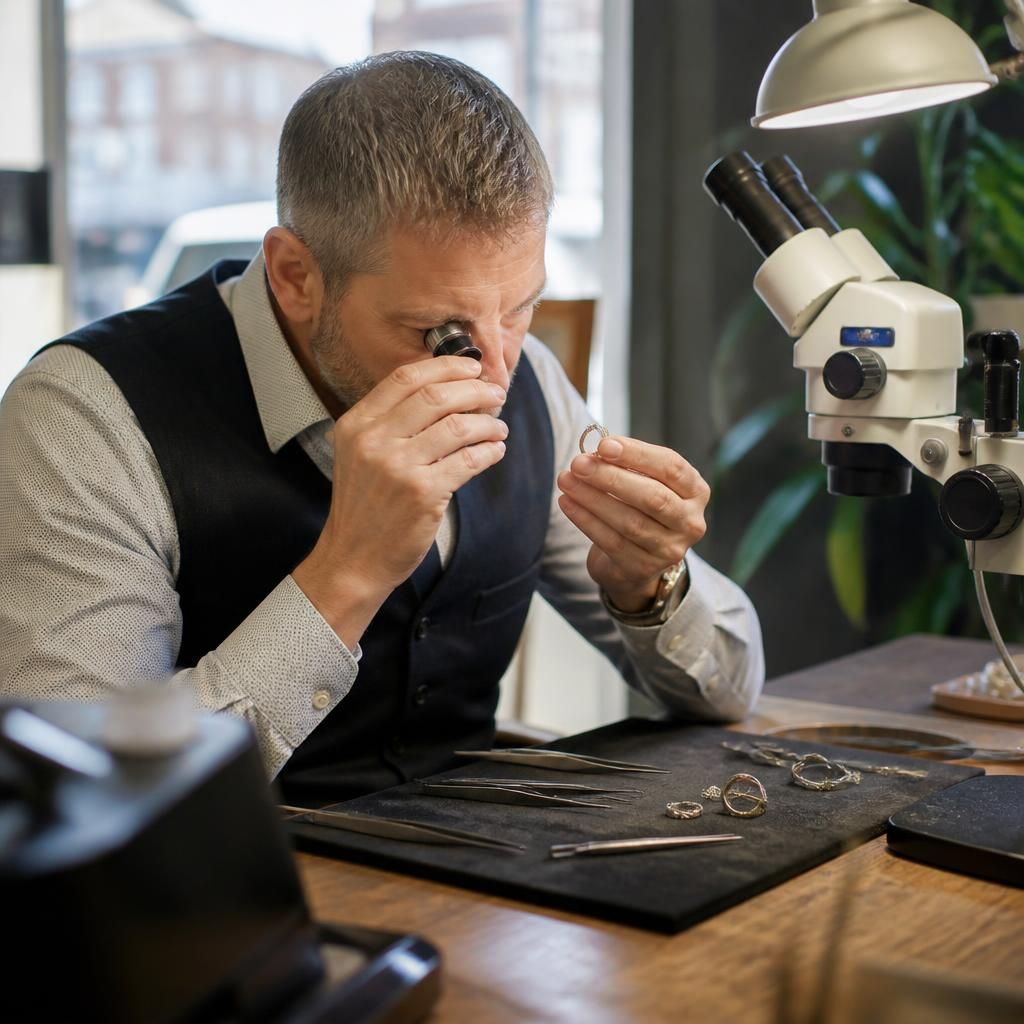
Professional aftercare for used fine jewellery begins with a condition assessment before cleaning or repair. This inspection checks the metal, gemstones, settings, clasps, hinges and any previous alterations for signs of wear that may not be visible during everyday use.
Loose stones, worn claws, weakened joins or a misshapen ring can worsen if the piece is cleaned or worn without suitable attention. Once the condition is understood, the appropriate cleaning method and any necessary work can be recommended without risking delicate gemstones, original detailing or personalised elements.
Ask for existing damage and proposed work to be recorded before treatment. This provides a clear reference for the jewellery’s condition and helps ensure that repairs, polishing, resizing or valuation advice are based on the specific needs of your piece.
Arrange professional aftercare for your fine jewellery
Arrange a professional aftercare assessment for your used fine jewellery to check its condition, settings and previous repairs before any cleaning or further work. We can advise on suitable cleaning, repairs, resizing, restoration and valuation requirements for the individual piece.