
What materials and tools are used in jewellery repair?
Jewellery repair uses matching precious metals, solder, settings and replacement components, selected according to the piece’s construction and finish. Specialist tools and equipment—including precision pliers, files, burnishers, microscopes, polishing equipment, heat sources and ultrasonic cleaners—allow an expert to repair, reshape, secure and refinish jewellery accurately.
Jewellery repair combines compatible materials with precision tools and controlled techniques to restore a piece’s structure, appearance and wearability. The materials must match the jewellery’s metal, colour, fineness, construction and finish, while the tools allow the repairer to work accurately without damaging gemstones, settings or surrounding surfaces.
Materials used in jewellery repair
The starting point is usually a matching precious-metal component. Gold may need to be matched by both colour and carat, such as yellow, white or rose gold. Silver, platinum and other metals each require different working methods, temperatures and finishing techniques. The repairer will assess the existing piece rather than simply selecting a visually similar material, as an incorrect alloy can produce a weak joint, an obvious colour difference or an unsuitable response to heat and polishing.
- Precious-metal sheet and wire: Used to rebuild worn sections, replace broken shanks, strengthen thin areas, make jump rings, repair claws and create new structural components.
- Metal tubing and settings: Used for replacement hinges, tubes, bezels, pendant fittings and gemstone settings where the original component cannot be reused.
- Replacement findings: These include clasps, catches, hooks, posts, butterfly fittings, chain links, bails and pendant loops. The replacement must be appropriate for the jewellery’s weight and method of use.
- Precious-metal solder: Solder joins metal components when used with the correct flux and heat. It is available in different compositions and working temperatures, often described as hard, medium or easy solder. A professional chooses the grade that provides a secure join while protecting previous solder seams and heat-sensitive stones.
- Flux and protective compounds: Flux helps solder flow across a clean metal joint. Protective pastes, barriers or heat-resistant materials may be used to shield gemstones, springs and nearby soldered areas during heating.
- Gemstones and replacement settings: If a stone is chipped, badly abraded or missing, a suitable replacement may be sourced. Its dimensions, cut, colour, durability and setting requirements need to correspond with the design rather than being chosen on appearance alone.
- Finishing materials: Abrasive papers, rubber wheels, polishing compounds and finishing brushes remove marks and restore the intended surface. Matt, satin, brushed, high-polish and textured finishes each require a different approach.
Some repairs also require non-metal components. Watch and jewellery work may involve replacement gaskets, spring bars, pins, thread-locking products or small synthetic components. These are selected according to the construction of the item and should not be substituted with unsuitable general-purpose parts.
Hand tools used by a jewellery repairer
Much of the work is carried out with small bench tools that provide control rather than force. Common examples include:
- Parallel and round-nose pliers: Used to grip, bend and shape wire, links and findings. Smooth jaws help prevent marks on finished metal.
- Side cutters and flush cutters: Used to remove wire, damaged links and excess metal. The cutting edge must be chosen for the material and thickness involved.
- Jeweller’s saws: Fine blades allow accurate cutting through sheet metal, shanks and links, including controlled removal of damaged sections.
- Files and abrasive tools: Needle files, rifflers and abrasive papers level joints, refine profiles and prepare surfaces for soldering or polishing.
- Gravers, burs and rotary tools: Used for shaping, setting work, removing worn metal and refining details. Their size and shape are selected according to the repair.
- Mandrels and triblets: Ring mandrels, bracelet mandrels and specialist forms support circular items while they are resized, reshaped or checked.
- Ring clamps, bench vices and soldering blocks: These hold the item securely and provide a stable, heat-resistant working surface.
- Burnishers and bezel tools: Used to smooth metal, close setting edges and press a secure finish around a gemstone.
- Setting tools: These support claw, bezel, rub-over and channel work. The tool must fit the setting so that pressure is applied to the metal rather than the stone.
Specialist equipment
Precision repairs often require equipment that improves visibility, heat control and finishing accuracy. A jeweller’s loupe or microscope makes it possible to inspect claws, solder seams, hallmarks, stone edges and fine surface damage. Magnification is particularly important when working close to delicate settings or small watch and jewellery components.
Controlled heat may be supplied by a jeweller’s torch or another suitable soldering system. The flame and heat are adjusted to the metal and repair, with care taken to prevent overheating, distortion, fire stain or damage to gemstones. Platinum, gold and silver do not behave identically, so the same heat treatment cannot be applied to every item.
Other workshop equipment can include a flex-shaft or rotary machine, pendant motor, polishing motor, ultrasonic cleaner and steam cleaner. Rotary tools assist with cutting, drilling, sanding and polishing. Polishing equipment restores the surface after a repair, although excessive polishing can soften crisp details or remove metal from hallmarks and edges.
Ultrasonic and steam cleaning are useful for removing residue from many robust items, but they are not suitable for every gemstone, treatment or construction. Fractured stones, loose settings, some porous or treated gems, and delicate assembled pieces may require gentler cleaning. A professional should inspect the item before using this equipment.
How the materials and tools are selected
A repair normally begins with inspection under magnification. The repairer identifies the metal, checks for previous work, assesses the condition of settings and determines whether the piece can safely tolerate soldering, reshaping, cleaning or polishing. The intended repair is then planned around the strongest and least intrusive method.
- The damaged area is cleaned and prepared so that dirt, oxidation and weak metal do not interfere with the repair.
- Matching metal is selected for colour, fineness, thickness and strength.
- Components are shaped and fitted using saws, files, pliers, mandrels or rotary tools.
- The joint is secured by an appropriate method, such as soldering, riveting, pinning, laser welding or carefully forming the existing metal.
- Excess material and marks are removed, followed by polishing or reproduction of the original surface finish.
- The completed item is checked for alignment, security, movement, comfort and overall appearance before it is returned.
Laser welding may be appropriate for certain precise repairs because it can place heat into a small area, but it is not a universal alternative to traditional soldering. The best method depends on the metal, thickness, access, design and condition of the item. Some repairs are safer when completed with mechanical techniques, particularly where heat could affect a stone or a previous repair.
Why the correct materials matter
Using the wrong solder, alloy or replacement component can create a visible colour mismatch, weak joint or premature wear. For example, a heavy ring needs a structurally suitable repair rather than a thin cosmetic layer, while a delicate chain may require a smaller component and a more controlled joining method. Platinum also requires dedicated preparation and finishing practices because contamination from other metals can affect the result.
Gemstones need equal consideration. Some can tolerate controlled workshop heat, while others may fracture, discolour or lose a treatment. The safest approach is to identify the stone and its setting before deciding whether it should remain in place during repair. Where necessary, a stone may be removed and reset after the metalwork is complete.
After repair, care should be taken with cleaning and wear. A newly restored piece may still have areas of thin or fatigued metal that benefit from periodic inspection. If a claw catches on fabric, a stone moves, a clasp feels loose or a soldered area opens again, stop wearing the item and arrange a professional assessment rather than attempting to glue or bend it at home.
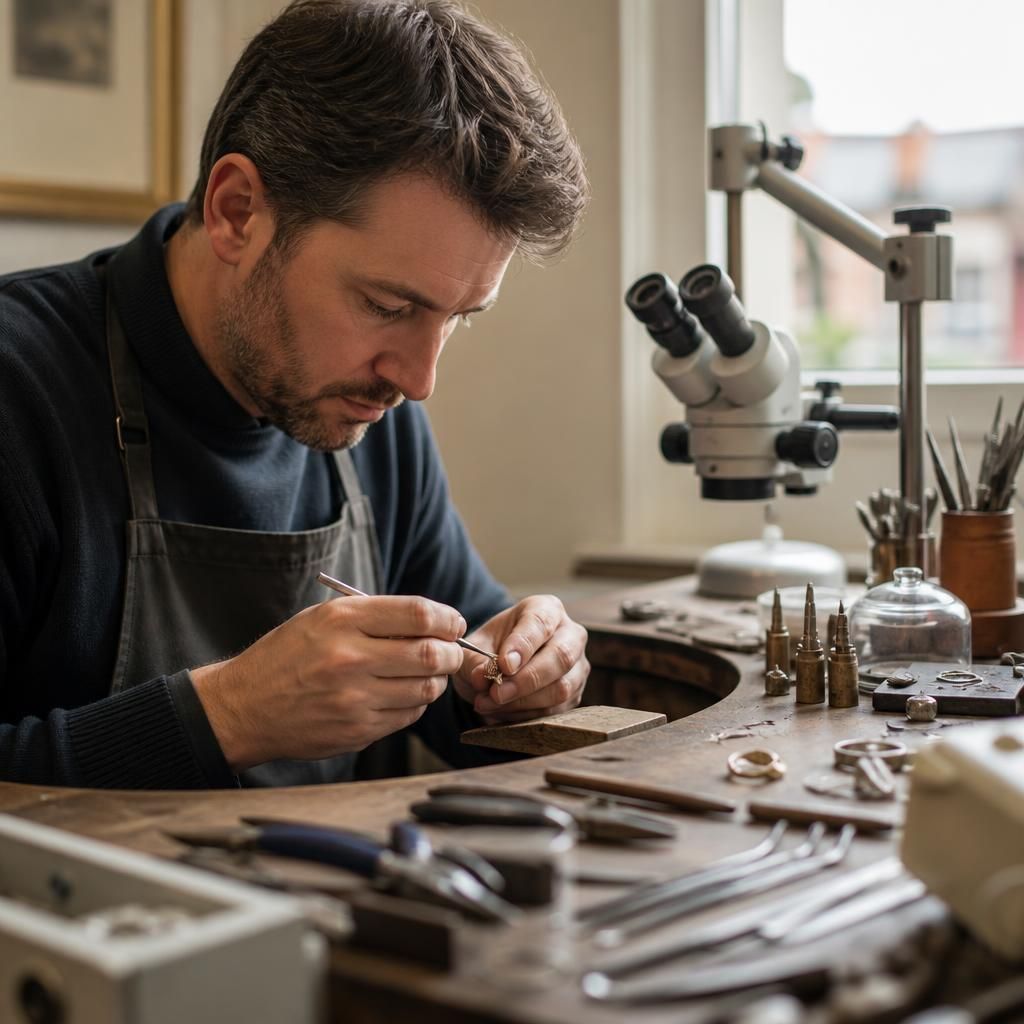
The materials and tools used for a jewellery repair are selected to suit the item’s metal, construction and condition. Matching gold, silver or platinum helps create a secure repair with a consistent colour, while precision tools such as files, mandrels and setting tools allow the jeweller to reshape metal without marking the surrounding surface. Heat, polishing and cleaning equipment are used cautiously, particularly near gemstones, delicate settings and previous repairs. This careful selection helps preserve the jewellery’s strength, finish and original character.