What factors should I consider when selecting a personalised locket?
When selecting a personalised locket, consider the design, precious metal, size, engraving or photograph, chain length, everyday durability and the quality of the workmanship. Choose options that suit the wearer’s style and intended use, then confirm the personalisation details and aftercare requirements with an experienced jeweller.
The main factors when selecting a personalised locket are its design, precious metal, size, personalisation method, chain, durability and the quality of its workmanship. The right choice should reflect the wearer’s style, the intended occasion and how the locket will be used, while leaving enough space for the engraving or photograph without compromising comfort or wearability.
Consider the locket’s purpose and the wearer’s style. A locket intended for everyday wear usually benefits from a refined, practical design that sits comfortably against the chest and works with different outfits. A more decorative locket may be appropriate as a special-occasion gift or statement piece. Consider whether the recipient prefers classic, understated jewellery or a more distinctive shape, finish or surface detail. The locket should also complement jewellery they already wear, particularly if it will be paired with a favourite chain, earrings or rings.
Think about whether the locket is being chosen to hold a photograph, a short message, a date or another sentimental detail. This can influence the shape and internal space required. A locket that looks suitable externally may not provide enough room for the chosen photograph or engraving, so the personalisation should be considered before the final design is selected.
Choose the metal carefully. Gold is available in different colours and purities, each affecting the appearance, character and price of the locket. Yellow gold provides a traditional, warm appearance, while white gold offers a cooler, more contemporary look. Rose gold has a softer pink tone. The chosen metal should suit the wearer’s complexion, existing jewellery and personal preference. If the recipient regularly wears one particular metal colour, matching it can make the locket easier to incorporate into their collection.
Metal choice also affects maintenance. Some finishes show marks more readily than others, and certain items may require periodic cleaning or professional attention to retain their appearance. Discuss the suitability of the metal with an experienced jeweller, particularly if the locket is intended for frequent wear or if the recipient has known sensitivities to particular alloys.
Check the size, weight and proportions. The locket needs to be large enough for the desired engraving or photograph, but not so large or heavy that it becomes uncomfortable. A smaller locket may suit a delicate chain and subtle personalisation, whereas a larger design may provide better visibility for lettering or imagery. Consider the wearer’s build, usual clothing and preferred jewellery scale. The proportions of the locket and chain should work together rather than allowing the pendant to overwhelm a fine chain or appear lost on a heavier one.
The opening mechanism is also important. A well-made locket should close securely, with a hinge and clasp that feel precise rather than loose. If the locket will be opened regularly to view a photograph or message, the construction must be able to withstand that use. Ask to examine how the front and back align when closed and whether there is sufficient protection for anything placed inside.
Decide what type of personalisation is most appropriate. Engraving is suitable for names, initials, dates, short messages and meaningful symbols. The available surface area determines how much text can be used, and the lettering style affects legibility. Simple lettering is often easier to read on a small locket, while decorative scripts may suit a larger, more formal design. Check spelling, punctuation, capitalisation and dates carefully before approving the engraving, as these details are intended to be permanent.
If the locket is to contain a photograph, consider the image’s composition and the way it will be cropped. A clear image with the subject positioned appropriately will usually produce a better result than a photograph with important details close to the edge. The photograph may need to be adjusted to fit the internal shape, particularly with oval, heart-shaped or unusually proportioned lockets. A jeweller can advise on the appropriate size and presentation.
Some designs allow personalisation on the outside, inside or both. External engraving is immediately visible, while an inscription inside the locket can be more discreet. Combining a visible initial or motif with a private message can provide different levels of meaning without overcrowding the design.
Select a suitable chain. The chain should be strong enough for the locket’s weight and compatible with its bail or attachment loop. Its length affects where the locket sits and how visible it is over the wearer’s clothing. Consider the recipient’s neckline preferences and whether the locket is intended to be worn alone or layered with other necklaces. Chain style also changes the overall appearance: a fine chain creates a delicate look, while a more substantial chain gives additional visual weight and may be more suitable for a larger pendant.
Pay attention to the clasp and connecting rings as well as the chain itself. These small components are essential to security and should be proportionate to the locket. If the locket is a valuable or frequently worn piece, it is sensible to ask about secure fastening options and how the chain can be checked during future servicing.
Assess quality and everyday durability. Inspect the precision of the engraving, the smoothness of the edges, the alignment of the front and back and the security of the hinge, clasp and bail. The surface should be finished consistently, without rough areas that could catch on clothing or irritate the skin. A high-quality locket should feel balanced and properly constructed rather than excessively light for its size.
Even a well-made locket should be treated as fine jewellery. Remove it for activities that involve impact, chemicals, swimming or excessive moisture, and store it separately to reduce scratching. If the locket contains a photograph, keep the interior dry and avoid forcing it open. Regular professional checks can identify wear to the clasp, chain or hinge before a problem develops.
Consider budget, provenance and aftercare. The final cost is influenced by the metal, weight, design complexity, engraving, chain and level of hand-finishing. Comparing these elements is more useful than judging the locket by appearance alone. Ask what is included in the personalisation, whether the design can be altered, and what support is available if the chain needs replacing, the locket requires repair or the engraving needs to be reviewed.
At Steven Charles Quance, a consultation can help you compare these choices before the personalisation is confirmed. Bring details of the recipient’s style, the intended message or photograph and any preferences regarding metal colour or chain length. The design can then be assessed for comfort, proportion, legibility and practical use. It is also worth discussing cleaning, valuation, repairs and resizing or remodelling options where relevant, so the locket can be properly cared for throughout its life.
Before placing the order, confirm the metal, dimensions, chain, engraving text, spelling, photograph requirements, delivery timescale and aftercare arrangements. Taking time to check these details helps ensure that the finished personalised locket is comfortable to wear, technically suitable and accurately reflects the meaning you want it to carry.
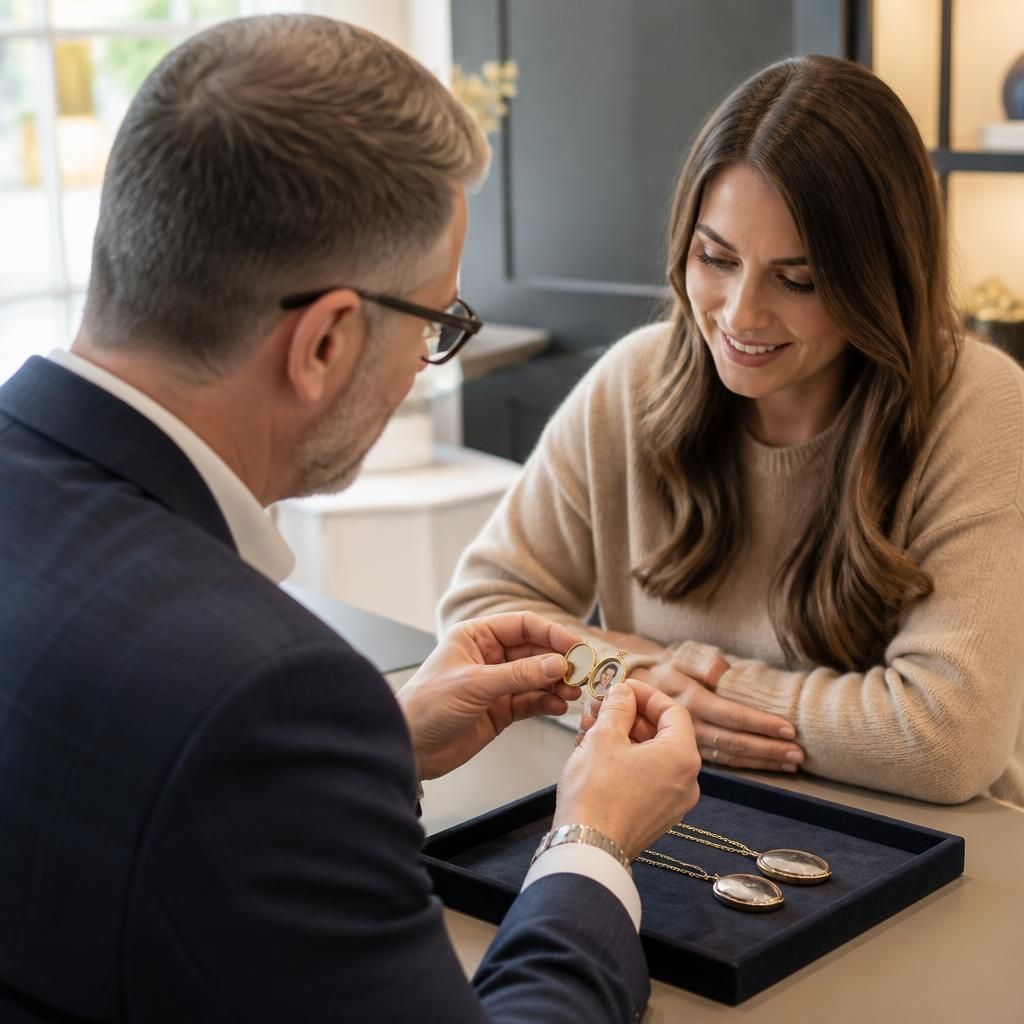
The personalisation method should match both the locket’s available space and the meaning you want it to convey. Engraving is suitable for initials, names, dates and short messages, while a photograph requires sufficient internal space and a design that protects the image when the locket is closed.
Before approving the design, check the engraving text carefully, including spelling, punctuation and dates. Consider whether the message should appear on the front for an immediately visible detail, inside for a more discreet sentiment, or across both surfaces without making the locket feel crowded. If you are adding a photograph, choose a clear image and confirm how it will be cropped to fit the locket’s shape. Your jeweller can assess legibility, proportions and the practical space available before personalisation is completed.
Discuss Your Personalised Locket Options
Speak with Steven Charles Quance to compare personalised locket designs, metals, engraving options and chain styles for your requirements. Our jewellers can help you confirm the proportions, personalisation details and aftercare arrangements before your order is placed.