What factors affect the value of a second-hand Rolex Daytona?
The value of a second-hand Rolex Daytona is influenced by several key factors. Primarily, the condition of the watch, including any wear and maintenance history, plays a significant role, as do its rarity and demand in the current market. Originality is crucial; retaining original parts and features, such as the dial, movement, and bracelet, can greatly enhance value. Additionally, having the original box, papers, and proof of authenticity contributes to a higher valuation. Models with unique attributes or limited editions also tend to hold greater value.
The value of a second-hand Rolex Daytona is determined by a combination of several factors, with condition, rarity, and originality being the primary considerations. Each of these factors plays a crucial role in determining how much a pre-owned Daytona can fetch in the market.
Firstly, the condition of the timepiece is paramount. A Rolex Daytona in pristine condition—free from significant scratches, dents, or signs of wear—will naturally command a higher price. Importantly, the maintenance history can also impact value; a Daytona that has been regularly serviced by authorised Rolex technicians is likely to be more valuable than one lacking recent professional attention.
Rarity significantly influences the second-hand value. Limited edition models or those produced in low quantities tend to appreciate more over time. Within the Rolex Daytona family, certain references known for their scarcity or unique features are particularly sought after by collectors, further elevating their market value.
Originality is another pivotal factor. A Daytona retaining all its original components—such as the dial, movement, and bracelet—without replacements or modifications is always more desirable. Collectors highly value original condition, seeing it as a testament to the watch’s authenticity and heritage.
The presence of original box and papers can considerably enhance the Daytona’s resale value. These elements serve as proof of authenticity and provide assurance regarding the watch’s provenance. Such documentation is particularly crucial for vintage models, where verification can be more challenging.
In summary, while aesthetic and historical elements play their part, the combination of condition, rarity, originality, and provenance primarily dictates the market value of a second-hand Rolex Daytona. Understanding these factors can enable you to make an informed decision when purchasing or selling your cherished timepiece, ensuring both satisfaction and investment value.
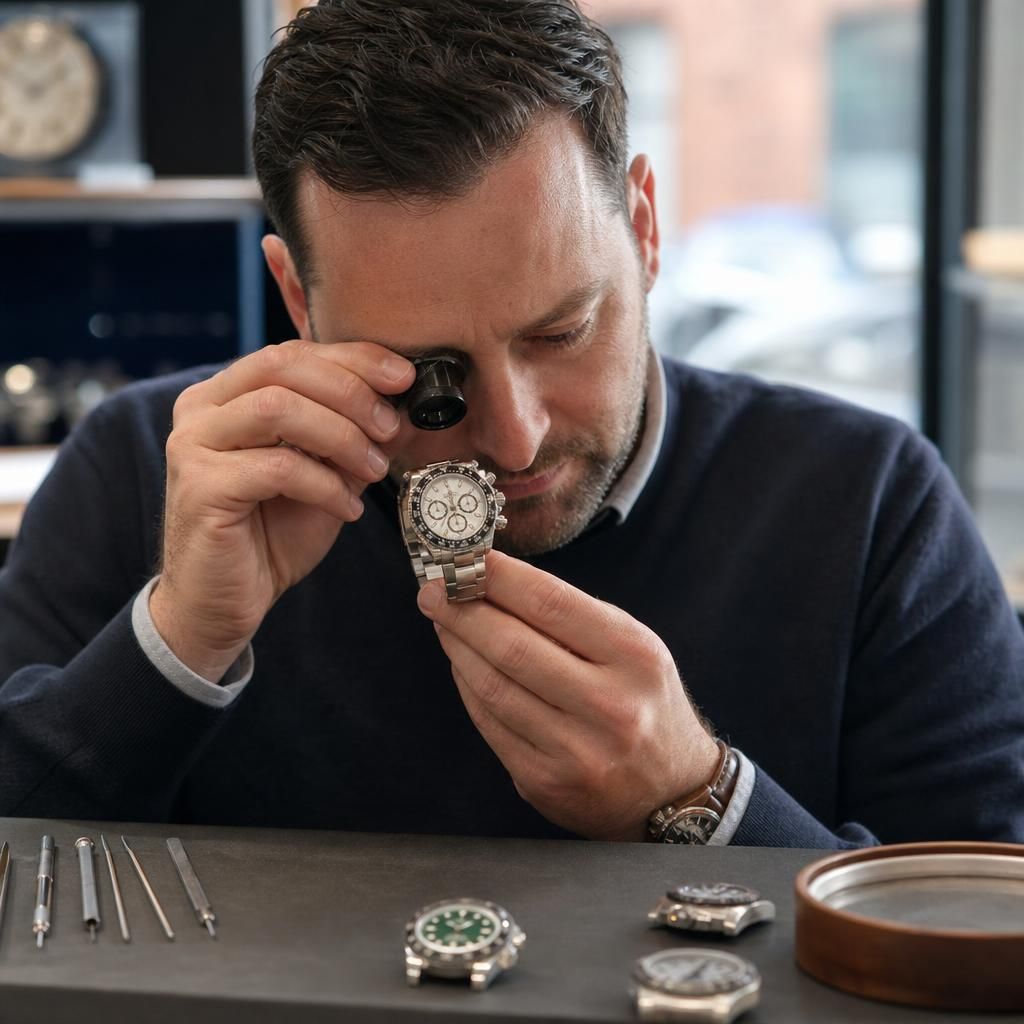
One key factor influencing the value of a second-hand Rolex Daytona is its condition, which encompasses both the physical state of the watch and its maintenance history. Watches that remain in outstanding condition, exhibiting minimal signs of wear and no major scratches, dents, or blemishes, naturally command higher market prices. The watch’s condition not only affects its aesthetic appeal but also impacts its functionality and longevity.
When assessing condition, it’s equally important to consider its service history. A Rolex Daytona that has been consistently serviced and maintained by authorised Rolex technicians tends to hold a greater market value compared to those without a verifiable maintenance record. This is because regular servicing ensures the watch’s movement operates at optimum efficiency and minimises the risk of future mechanical issues. As a result, condition becomes a primary determinant in assessing the potential investment value of a pre-owned Rolex Daytona, reinforcing the importance of careful and regular upkeep of these intricate timepieces.
Discuss Your Second-Hand Rolex Daytona’s Value With Our Experts
For a professional assessment of the factors affecting your second-hand Rolex Daytona’s value, speak to our experienced team. We can discuss its model, condition, provenance and current market position to help you make an informed decision.