
What aftercare services are available for engagement rings purchased in the Jewellery Quarter?
Aftercare for engagement rings purchased in the Jewellery Quarter can include professional cleaning and inspection, resizing, repairs, remodelling, polishing and valuation services. Advice is provided on the most suitable treatment for the ring’s metal, setting and gemstones, helping maintain its condition and security over time.
Engagement ring aftercare in Birmingham’s Jewellery Quarter typically includes professional inspection, cleaning, polishing, resizing, stone and setting repairs, remodelling, engraving and valuation services. The appropriate treatment depends on the ring’s metal, gemstone, setting and condition, so the ring should be assessed before any work is recommended.
Inspection and professional cleaning
A regular inspection checks the areas most likely to experience wear, including claws, bezels, shoulders, hinges, settings and the ring’s shank. The security of the centre stone and any smaller stones is assessed, and the jeweller looks for signs such as worn claws, looseness, thinning metal, damaged settings or movement in the stones.
Professional cleaning removes deposits that can dull the metal or obscure the gemstones. The cleaning method should be selected with care: some stones, treatments and delicate settings are not suitable for every cleaning process. After cleaning, the ring can usually be examined more clearly and any maintenance can be discussed before a minor issue develops into a lost stone or more extensive repair.
Resizing and fitting adjustments
Resizing can make an engagement ring more comfortable and secure when the finger size has changed or the original fit was not quite right. A ring may be enlarged by adding metal or reduced by removing a section and joining the band, subject to the design and construction of the piece.
Not every ring can be resized in the same way. Eternity-style rings, intricate shoulders, patterned bands and rings with settings around the entire circumference may require a different solution. The position of stones, hallmarks, engraving and the condition of the metal must be considered. If a permanent alteration is unsuitable, a jeweller may discuss alternatives such as a sizing aid or a redesigned band.
Stone and setting repairs
Repair work may include tightening a loose stone, rebuilding worn claws, replacing a damaged setting, repairing a split shank or restoring a worn gallery. Even if a stone is still present, continued wear can increase the risk of damage, so a ring that catches on clothing, rattles, feels sharp or shows a visibly worn claw should be examined promptly.
Where a stone has been lost, the jeweller can assess the setting and advise whether it can be repaired before a replacement stone is sourced. Matching a replacement involves more than selecting a similar colour; cut, measurements, clarity, durability and the design of the existing ring all need to be considered.
Polishing and refinishing
Polishing can reduce suitable surface marks and restore brightness to precious metals. It does remove a small amount of metal, however, so it should not be treated as routine for every scratch. Excessive polishing may soften crisp edges, details, hallmarks or engraved decoration. Some rings are better suited to a light clean, a satin finish or localised refinishing rather than a full polish.
White metals may also need finish maintenance if their surface coating becomes worn. The correct approach depends on the metal and the finish originally used, and should be confirmed during assessment.
Remodelling and design changes
Remodelling can give an existing engagement ring a new form while retaining meaningful gemstones or metal where practical. Options may include changing the setting, incorporating the engagement ring into a wedding ring, adapting an inherited piece, or creating a new design from suitable components.
Before remodelling, each stone and section of metal should be evaluated for condition, suitability and sentimental or financial importance. The proposed design should account for everyday wear, stone security, proportions and future maintenance. Not all materials can be reused, and some stones may need to be replaced if they are damaged, unsuitable for the new setting or difficult to incorporate safely.
Valuations and documentation
A valuation provides a written assessment for a defined purpose, such as insurance or personal records. It normally considers the ring’s materials, gemstones, workmanship and relevant identifying details. A valuation is not the same as a purchase price or a guaranteed resale value, so the purpose should be made clear when arranging the service.
Keep the valuation with photographs, receipts and any available gemstone or design documentation. If the ring has been substantially altered, repaired or remodelled, its records may need to be reviewed so that they continue to describe the piece accurately.
Practical care between appointments
- Remove the ring for activities that may expose it to impact, abrasion, chemicals or excessive force.
- Take care with household cleaning products, chlorine, cosmetics and hand creams, which can leave deposits or affect some materials and finishes.
- Store the ring separately from other jewellery to reduce scratching and tangling.
- Check occasionally for movement, sharp edges, bent claws or changes in fit, without trying to adjust the ring yourself.
- Arrange an inspection if a stone looks uneven, the ring catches on fabric, or the band has become noticeably thinner or distorted.
When an engagement ring is brought in for aftercare, the usual process is to examine the piece, discuss the concern or intended result, explain the available options and confirm the work before proceeding. Ask what treatment is suitable for the specific gemstones and metal, whether any existing marks or risks have been noted, and what care will be recommended after the work. This helps protect the ring’s condition while ensuring that cleaning, repair, resizing or valuation is appropriate to the way it is worn.
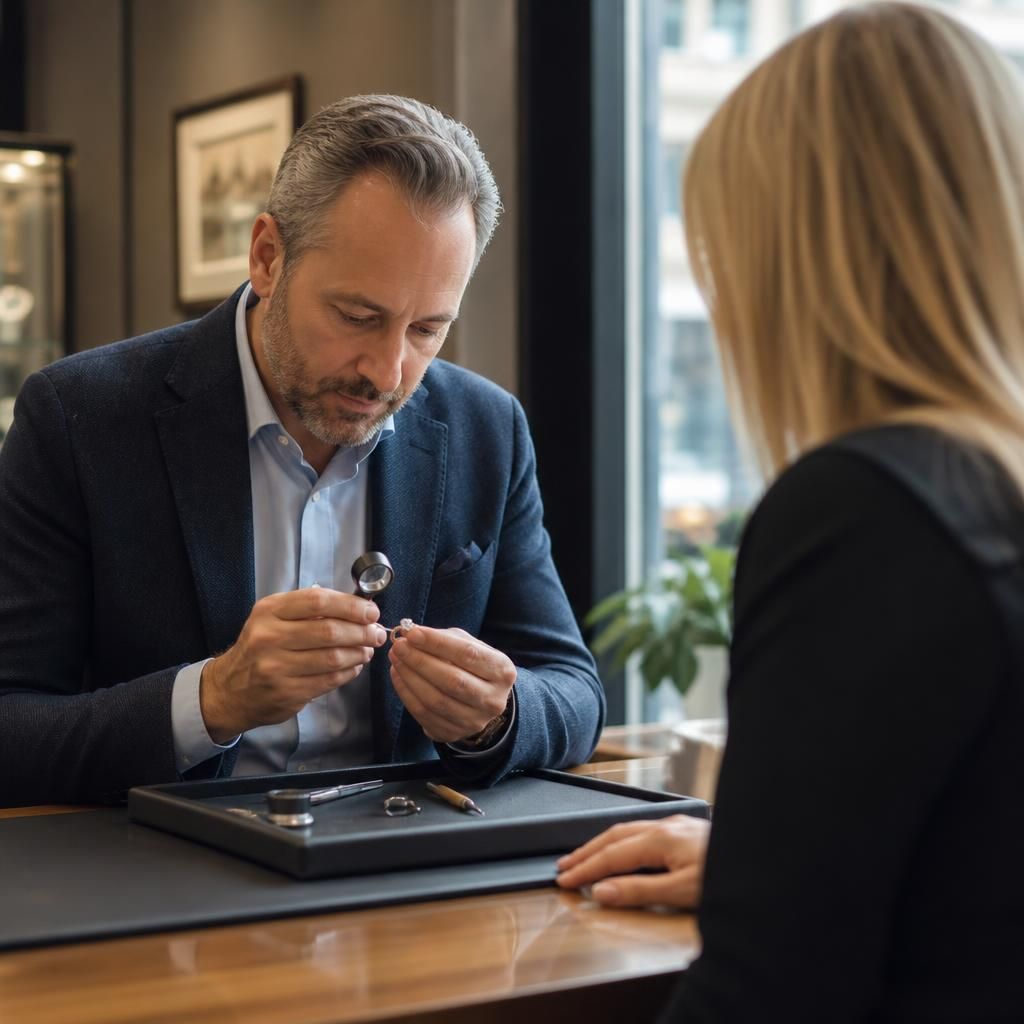
Professional inspection and cleaning are essential engagement ring aftercare services because they reveal wear that may not be visible during everyday use. A jeweller checks the claws, setting, shoulders and shank for looseness, thinning metal, damage or distortion, while confirming that the gemstones remain secure.
Cleaning removes residue from hand creams, cosmetics and daily wear, making it easier to assess the ring and restore the appearance of suitable metals and stones. The method should be selected for the individual piece, as delicate settings, treated gemstones and some finishes may not be suitable for every cleaning process. If a stone moves, the ring catches on clothing or a claw appears worn, arrange an inspection before further wear increases the risk of damage.