
What are the costs associated with jewellery repairs in Birmingham?
The cost of jewellery repairs in Birmingham depends on the type of damage, the metal and gemstones involved, the complexity of the work and whether replacement parts or specialist techniques are required. A professional assessment is needed to provide an accurate quotation, with straightforward repairs usually costing less than intricate restoration, remodelling or work on high-value pieces.
The cost of jewellery repairs in Birmingham is determined by the damage, the materials involved, the time required and the techniques needed to complete the work safely. A simple chain solder or replacement ring shank will usually be less involved than restoring a damaged setting, repairing an antique piece or working on a high-value item containing delicate gemstones. An accurate price can only be confirmed after the jewellery has been examined.
What is included in a jewellery repair cost?
A repair quotation may include several elements rather than one fixed labour charge:
- Assessment and preparation: The piece is inspected to identify visible damage, underlying weakness, loose stones and any previous repairs. It may need to be cleaned or dismantled before the work can be assessed properly.
- Craftsmanship: Labour depends on the repair method, the accessibility of the damaged area and the level of hand-finishing required. Intricate work, fine settings and handmade jewellery generally require more time.
- Replacement materials: New metal, solder, claws, links, catches, posts, clasps or other components may be needed. The cost will vary according to whether the item is made from silver, gold, platinum or another material.
- Gemstone handling: Removing, resetting, replacing or securing gemstones requires specialist care. Fragile, valuable, unusually shaped or antique stones can increase the complexity of the repair.
- Finishing: Polishing, rhodium plating, brushing, texturing or colour matching may be required to make the repaired area consistent with the rest of the piece.
- Specialist processes: Laser welding, hand engraving, casting, CAD-assisted remodelling or specialist restoration may be appropriate for certain repairs and will affect the quotation.
Typical repair categories and what affects their price
Small repairs such as replacing a worn clasp, repairing a broken jump ring or securing a loose earring fitting are often relatively straightforward. The price can rise if the surrounding metal is thin, fatigued or already damaged, as strengthening the piece may be necessary rather than simply reconnecting it.
Ring repairs require particular care because the item must remain accurately shaped and strong enough for everyday wear. Resizing, repairing a split band, replacing a worn section or rebuilding a setting can involve cutting, soldering or adding new metal, followed by shaping and refinishing. Rings with intricate shoulders, pavé stones, hand engraving or unusual construction may need additional work.
Stone-related repairs can include tightening a setting, replacing a missing claw, rebuilding a bezel or resetting a gemstone. Before work begins, the stone should be checked for chips, fractures and signs of wear. If a gemstone is missing, sourcing a suitable replacement involves matching its type, colour, cut, size and quality. A close visual match may be possible, but an exact match is not always available.
Necklace and bracelet repairs vary according to the links, chain gauge and fastening mechanism. A fine chain can require delicate soldering, while a heavy bracelet may need a stronger replacement component. Repeated breakage in the same area can indicate stretched or worn metal, so replacing a single link may not be the most durable solution.
Vintage and antique jewellery can require a separate approach. Older pieces may contain thin sections, soft solder, unusual alloys or historic construction methods. Preserving original details can take longer than carrying out a modern replacement, and the least invasive repair is often preferable where the design or provenance is important.
Why high-value jewellery may cost more to repair
High-value jewellery and luxury watches require controlled handling, appropriate tools and detailed checks before and after the work. A repair may involve additional security procedures, specialist components, movement-related work or manufacturer-specific construction. The cost should reflect the expertise and time required to protect the item, not simply the visible fault.
Designer, bespoke and handmade pieces may also need a tailored repair rather than a standard replacement. Matching the original profile, finish, proportions and workmanship can involve hand fabrication or consultation with a specialist craftsperson.
How a repair quotation is established
- The item is examined under magnification, including the metal, settings, joints, clasps and gemstones.
- The cause of the damage is considered. Wear, impact, poor sizing and weakened metal can require different solutions.
- The repair options are explained, including whether a minimal repair, replacement component, strengthening work or remodelling is most suitable.
- The materials, craftsmanship, finishing and any specialist processes are allowed for in the quotation.
- The proposed work is agreed before repair begins. If further damage is found during dismantling, you should be contacted before additional work is authorised.
A reputable quotation should make clear what is included, whether replacement stones or components are included, whether finishing is included and whether VAT applies. It is reasonable to ask how the item will be recorded, protected and checked during the repair. For valuable pieces, a written description and photographs can help document their condition before work starts.
Repair, replacement or remodelling
Repairing the original item is not always the most economical or durable option. If a chain is extensively worn, a ring has very thin metal or several stones are insecure, rebuilding or remodelling may provide better long-term value. Conversely, replacing a historic component can reduce originality, so the decision should consider the jewellery’s design, condition, sentimental importance and intended use as well as the immediate cost.
Where the repair cost is significant compared with the item’s current value, alternatives may include reinforcing the existing piece, reusing suitable gemstones in a new design or carrying out essential safety work first and cosmetic refinishing later. These options should be discussed before a final decision is made.
Valuations and repair costs are separate services
A jewellery valuation is not normally included in the repair price unless it has been specifically requested. A valuation assesses characteristics such as materials, gemstones, workmanship and condition for a stated purpose, such as insurance or probate. Repair work may affect the item’s condition, so a valuation should be arranged with the intended use in mind.
The most reliable way to establish the cost of jewellery repairs in Birmingham is to arrange an inspection of the actual piece. Bring any relevant paperwork, previous valuation, insurance information or details about the jewellery’s history. This helps the repairer recommend work that is proportionate, technically sound and appropriate for the item’s material, design and value.
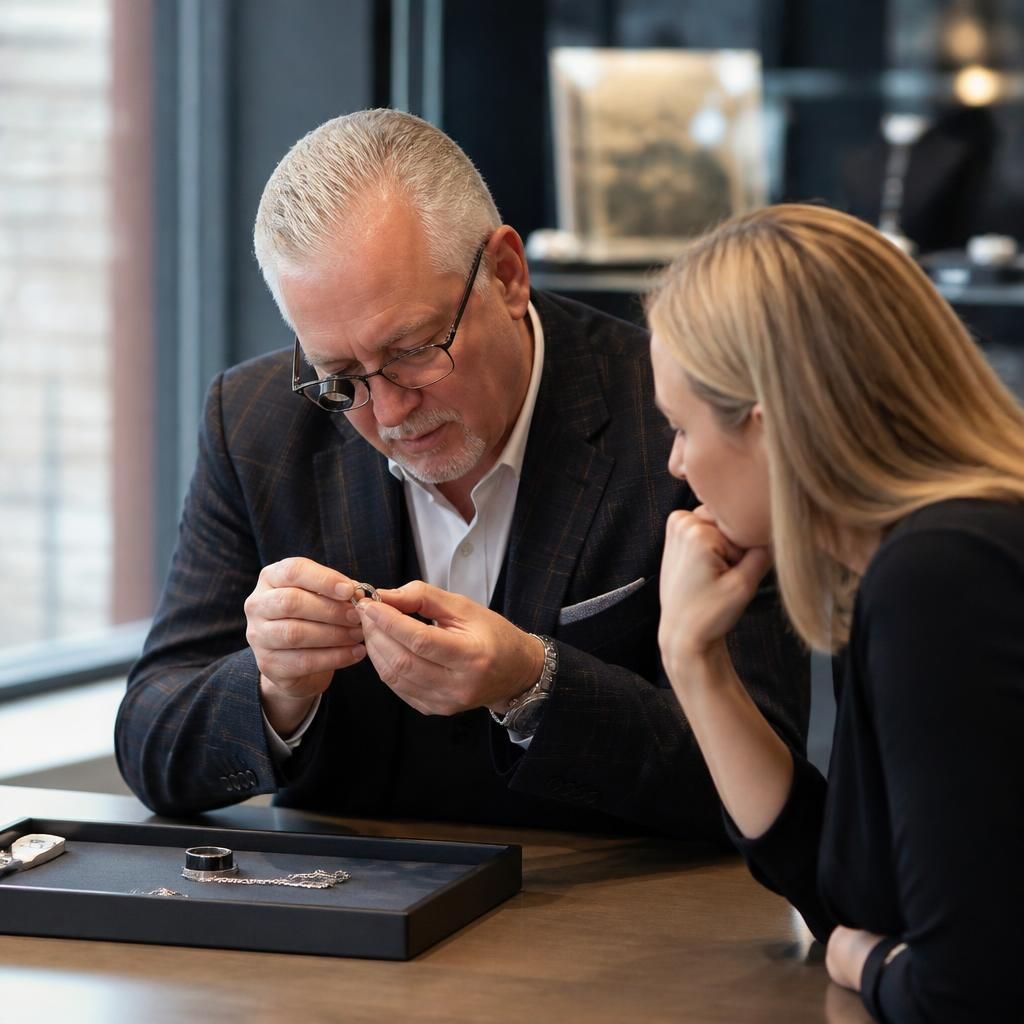
An accurate jewellery repair cost requires an inspection of the actual piece. The jeweller needs to assess the damage, metal, gemstones, previous repairs and the work needed to restore the item safely. A quotation may include labour, replacement metal or components, stone setting, polishing and specialist processes such as laser welding or hand engraving. If further damage is discovered during dismantling, you should be contacted before any additional work is authorised.