What materials can be laser engraved on jewellery?
Laser engraving is suitable for many jewellery materials, including gold, platinum, silver, stainless steel, titanium and selected precious-metal alloys. The engraving depth and finish depend on the material, its surface treatment and the design, so each piece should be assessed before work begins.
Most precious metals used in jewellery can be laser engraved, including gold, platinum, silver and palladium. Laser engraving can also be suitable for stainless steel, titanium and some other jewellery-grade alloys. The result depends on the exact composition of the metal, its surface finish, the item’s construction and the design being applied, so every piece should be assessed before engraving.
Gold is generally well suited to laser engraving. Yellow, white and rose gold can all be engraved, although their alloy content affects the contrast and appearance of the finished mark. Fine lettering, dates, fingerprints, handwriting and small symbols can usually be reproduced accurately on a suitable surface. White gold may have a rhodium-plated surface; engraving can pass through that plating, so the piece may require refinishing or re-plating afterwards to maintain an even appearance.
Platinum is also suitable and is valued for its durability. Its density and hardness require the correct laser settings, but a skilled operator can create clean, permanent lettering and designs on platinum rings, pendants and other items. As platinum is often chosen for important pieces that are worn regularly, the placement and depth of the engraving should be considered carefully to reduce the effect of future wear.
Silver, including sterling silver, can be laser engraved with detailed results. Its relatively bright surface can provide good contrast, particularly where the engraved area is deepened or finished appropriately. Silver does tarnish over time, and its appearance may change with polishing and wear, so the visual contrast of an engraving can alter as the jewellery ages. This does not necessarily mean that the engraving has been lost.
Palladium and selected precious-metal alloys may also be suitable. However, alloy composition can vary between pieces, particularly where a ring or other item has been manufactured to a specific specification. Testing or a material assessment may therefore be appropriate before work begins.
Stainless steel and titanium are commonly used for contemporary jewellery, watch components and durable bands. Both can be laser marked or engraved, although the appearance may range from a subtle change in colour to a sharper recessed design, depending on the grade of metal and the laser process used. Titanium can produce distinctive tonal effects, while stainless steel often gives a crisp, understated result. The surface may need to be cleaned or refinished after engraving to ensure the mark sits neatly within the surrounding finish.
Tungsten and other very hard materials require particular care. Some tungsten jewellery can be laser marked, but its hardness, brittleness and coating may limit the depth or style of engraving available. A deep cut may not be appropriate for every tungsten item. Ceramic, carbon-based materials and specialist watch finishes also need individual assessment because they can react differently to heat and may be difficult to repair if damaged.
Material alone is not the only consideration. A laser engraving specialist will normally assess:
- Surface treatment: plating, oxidised finishes, coatings, enamel and coloured surfaces may be altered by the laser.
- Item construction: hollow, very thin or lightweight jewellery may not be suitable for deep engraving.
- Shape and access: curved, narrow or irregular surfaces can restrict the size and positioning of a design.
- Existing wear: scratches, previous engraving and polishing may affect how clearly the new work can be applied.
- Nearby stones and settings: gemstones must be protected from heat, vibration and accidental contact, and some stones or treatments may make engraving unsuitable.
- Desired appearance: a design can be recessed, darkened or expressed as a surface mark, depending on the metal and the required finish.
Laser engraving is particularly effective on smooth, stable surfaces such as the inside or outside of a ring, the back of a pendant, the surface of a bracelet or the case back of a watch. Brushed, polished and textured finishes can all be considered, but the engraving may look different on each. A polished surface often gives a clear contrast, while a brushed or matt finish may create a more understated result.
Before proceeding, the jewellery should be examined in person or through clear photographs, with the metal confirmed where possible. This allows the engraving size, position, depth and finish to be planned correctly. Where a piece is plated, coated, antique, hollow or set with delicate stones, the assessment is especially important. If the requested design is not suitable for the original material or surface, an alternative position, shallower mark or different finishing method may provide a safer result.
In practical terms, gold, platinum, silver, palladium, stainless steel and titanium are among the most suitable materials for jewellery laser engraving. Other materials may be possible, but suitability should never be assumed from appearance alone. Expert assessment helps protect the jewellery and ensures that the chosen inscription or design is clear, durable and appropriate for the piece.
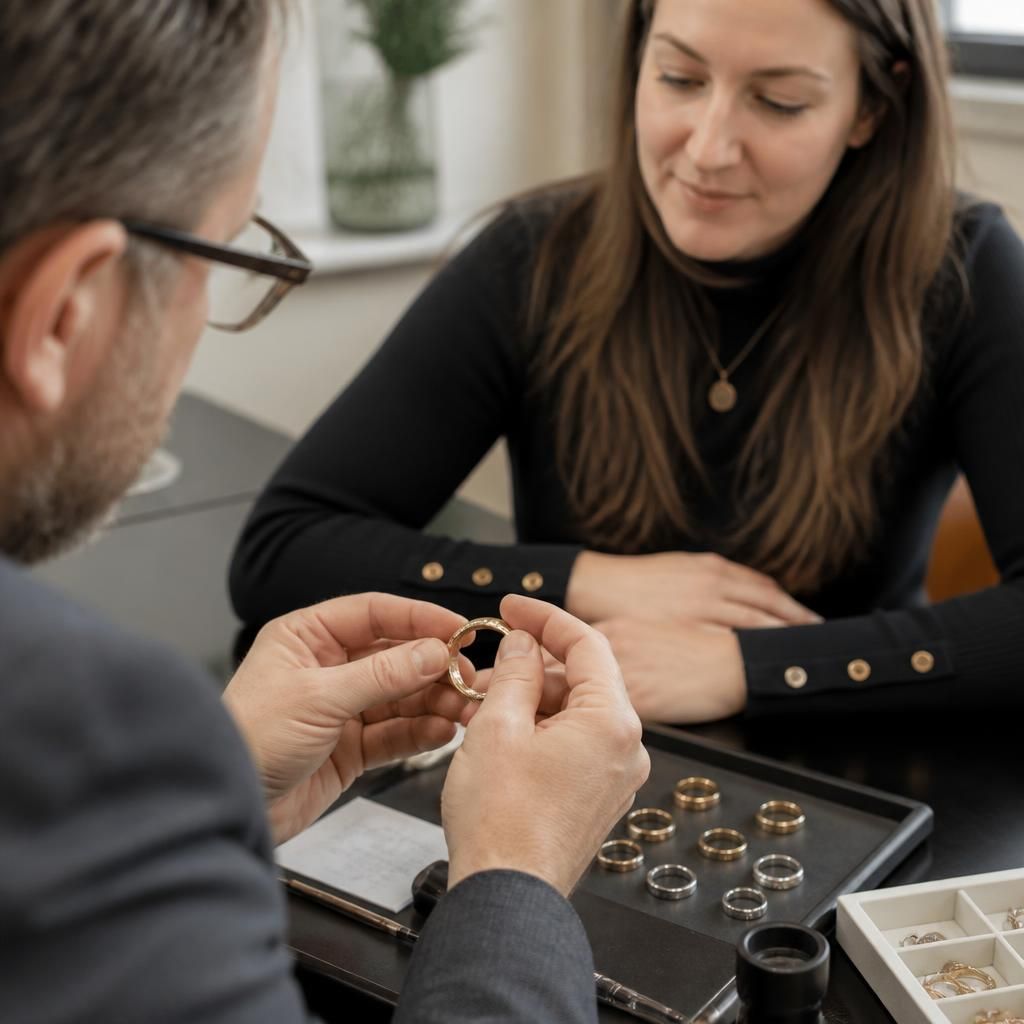
Jewellery can usually be laser engraved only where the surface and metal can withstand the laser process without compromising the finish. Plating, coatings and surface treatments therefore need to be checked before engraving, particularly on white gold, coloured finishes and specialist watch components.
For example, white gold is often finished with rhodium plating to create a bright, reflective surface. Engraving may pass through this plating and expose the underlying alloy, leaving a visible difference in colour around the inscription. Re-plating or refinishing may be needed afterwards to restore an even appearance. Similarly, oxidised, enamelled, coated or coloured surfaces may be changed by the laser, so the design and position should be assessed beforehand.
A professional assessment also considers whether the item is hollow, very thin, curved or set with gemstones. This helps determine a safe engraving depth and whether a shallower mark, a different position or refinishing after engraving would produce the most suitable result.