How can I determine the authenticity of second-hand jewellery when shopping in the Jewellery Quarter in Birmingham?
Check the jewellery for clear hallmarks, examine its metal, gemstones and workmanship, and ask for any provenance or purchase documentation. For greater certainty, have the piece inspected and independently valued by a qualified jeweller before buying, particularly where hallmarks are worn, missing or inconsistent with the item.
The most reliable way to determine whether second-hand jewellery is authentic is to combine hallmark checks with a careful assessment of the metal, gemstones, construction and available documentation. A qualified jeweller can also test the piece and provide an independent valuation where the marks are worn, unclear or inconsistent with the jewellery.
Start by checking the hallmarks. On gold, silver, platinum and palladium jewellery sold in the UK, hallmarks provide important evidence of the metal’s fineness and indicate that the item has been independently tested and marked. A full UK hallmark normally includes a sponsor or maker’s mark, a fineness mark and an assay office mark. Older pieces may have different hallmarking conventions, while imported jewellery may carry marks from another recognised assay system.
Birmingham items may display the Birmingham assay office mark, traditionally an anchor, although jewellery sold in the Jewellery Quarter can have been made or assayed elsewhere. A Birmingham location does not, by itself, prove that an item was manufactured there. Common fineness marks include 375 for 9ct gold, 585 or 750 for higher-purity gold, 925 for sterling silver, and 950 for platinum. These marks should be sharp, correctly positioned and appropriate to the item’s age and style.
Do not rely on a single stamp. Some pieces have a sponsor’s mark or a manufacturer’s logo without a legally recognised hallmark, and counterfeit marks can be copied. The mark should be examined with suitable magnification and compared with the overall quality of the jewellery. A worn or partially obscured hallmark is not automatically suspicious, particularly on an old ring, but it should be professionally interpreted before purchase.
Remember what a hallmark does and does not prove. It confirms the marked precious-metal standard when genuine, but it does not necessarily confirm that every component is made from the same metal. A ring may contain a base-metal spring, solder, setting or plated section. It also does not prove that a gemstone is natural, untreated, of a particular origin or worth a stated amount. Gemstones need separate assessment.
Inspect the metal and workmanship. Look for consistent colour, even finishing and sound construction. Pay particular attention to areas that receive wear, such as the inside of a ring, the shoulders, claws, chain links and clasp. Wear-through may reveal a different-coloured metal beneath plating. Blurred edges, uneven soldering, loose settings, poorly aligned parts or a stamp that appears newly cut can justify further investigation, although repairs and restoration can also explain some irregularities.
Magnetic tests and visual checks can be useful as initial indications but are not conclusive. Gold and silver are not normally attracted to a magnet, yet a non-magnetic item may still be made from a non-precious metal. Home acid tests, filing and scraping can damage jewellery and should not be used on a valuable or delicate piece.
Assess gemstones separately. Check whether the description identifies the stone accurately and whether it states if the stone is natural, laboratory-grown, synthetic, treated or an imitation. Look for chips, abrasions, loose settings and signs that a stone may have been replaced. Colour, brilliance and apparent clarity are not sufficient to establish identity or value. A gemmological examination may be appropriate for a significant diamond, sapphire, ruby, emerald or unusual antique stone.
For diamonds, ask whether any grading report relates to the exact stone being offered. Match identifying details on the report with the stone where possible, and check that the report describes treatments or laboratory-grown material accurately. A jewellery valuation is not the same as a laboratory grading report: a valuation considers the complete item and its intended purpose, while a grading report focuses on characteristics of a particular gemstone.
Ask for supporting information. A reputable seller should be able to provide a clear description of the item, including its metal, gemstone details, condition, approximate age where known and any repairs or alterations. Previous receipts, valuation documents, original boxes and provenance can support the history of a piece, but paperwork can also be lost, so its absence does not automatically mean the jewellery is unauthentic. Conversely, paperwork should relate specifically to the item and should not be treated as proof without checking the jewellery itself.
Ask whether the ring has been resized, whether stones have been replaced, and whether any components are plated or non-precious. For antique or signed jewellery, a specialist opinion may be needed to distinguish an original piece from a later reproduction or an item incorporating replacement parts.
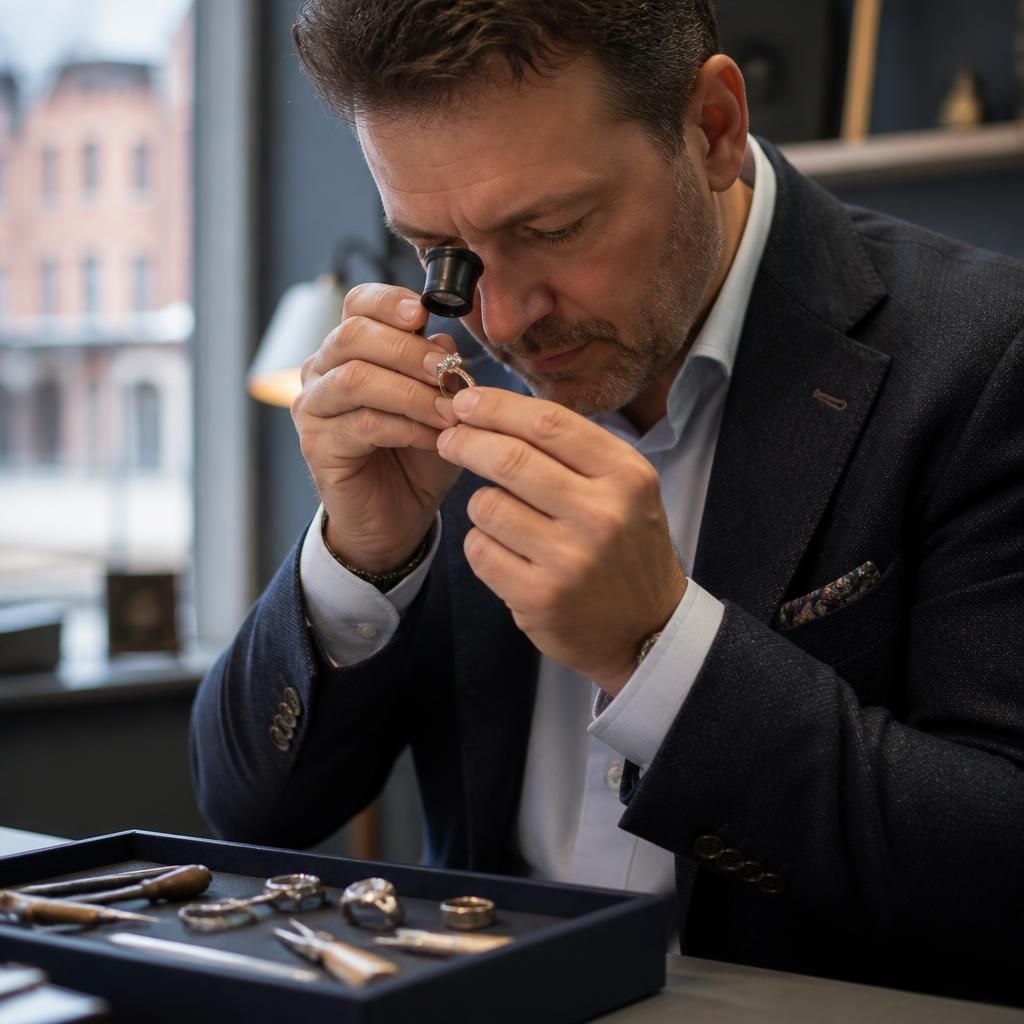
Use professional testing where certainty matters. A jeweller may examine the item under magnification, verify hallmarks, weigh and measure it, assess the settings and use non-destructive metal-testing equipment such as X-ray fluorescence. The appropriate test depends on the construction and value of the piece. Testing cannot always identify every alloy or confirm every aspect of provenance, so results should be considered alongside the hallmark and physical inspection.
An independent valuation is particularly sensible when the price is substantial, the jewellery is described as antique or signed, the hallmark is missing or unusual, or the item contains valuable gemstones. Ask what type of valuation is being supplied. An insurance replacement valuation, probate valuation and likely resale assessment can produce different figures and should not be compared as though they mean the same thing.
Before completing the purchase, check the written terms. The receipt should describe the item accurately and state the metal, stones, condition and any known treatments or alterations. Confirm the seller’s returns policy, aftercare arrangements and what happens if a later professional examination identifies a material discrepancy. If the purchase is being made remotely or the item will be sent elsewhere, retain photographs of the hallmarks and condition before collection or dispatch.
Be cautious if a seller refuses reasonable questions, will not allow an inspection, describes precious-metal jewellery only with vague terms such as “gold colour”, pressures you to pay immediately, or offers a price that appears inconsistent with the stated materials and condition. A low price is not proof of a bargain; it may reflect repairs, composite construction, treated stones, inaccurate description or uncertain provenance.
For most second-hand jewellery purchases in Birmingham’s Jewellery Quarter, the practical approach is to inspect the hallmarks first, compare them with the seller’s description, examine the setting and condition, ask about alterations and provenance, and arrange professional testing or valuation when the value or uncertainty justifies it. This gives you a documented basis for deciding whether the jewellery is authentic and whether the price fairly reflects what you are buying.
Hallmarks are the best starting point for checking the authenticity of second-hand precious-metal jewellery, but they should be assessed alongside the item’s construction and condition. A genuine UK hallmark will usually include a fineness mark, such as 375 for 9ct gold, 925 for sterling silver or 950 for platinum, together with an assay office mark and sponsor’s or maker’s mark.
Examine the marks with magnification and check that they are consistent with the jewellery’s age, style and stated materials. Worn or partially obscured marks are not necessarily a concern on older pieces, while a sharp but poorly positioned mark may require further investigation. Remember that a hallmark verifies the precious-metal standard when genuine; it does not confirm the gemstone’s identity, treatment or value, nor does it prove that every component is made from the same metal.
Where the hallmark is missing, unusual or difficult to interpret, ask for professional testing before purchase. A qualified jeweller can examine the item, assess its workmanship and use suitable non-destructive testing equipment. For valuable, signed or antique jewellery, an independent valuation can provide additional evidence about the piece’s materials, condition and authenticity.
Book an Expert Second-Hand Jewellery Authenticity Check
If you are unsure about the authenticity, hallmarks or gemstones in a second-hand piece, arrange an expert jewellery inspection with Steven Charles Quance before completing your purchase. We can assess the materials, workmanship and condition, and advise whether an independent valuation or further testing is appropriate.