What are the benefits of purchasing pre-loved jewellery from the Jewellery Quarter in Birmingham?
Purchasing pre-loved jewellery from Birmingham’s Jewellery Quarter can provide access to distinctive designs, established craftsmanship and better value than buying comparable new pieces. You can also benefit from specialist guidance, professional checks and the opportunity to choose jewellery with existing character while making a more sustainable purchase.
Purchasing pre-loved jewellery from Birmingham’s Jewellery Quarter can offer better value, distinctive designs, established craftsmanship and a more sustainable alternative to buying newly made pieces. When you buy through an experienced specialist, you can also benefit from professional assessment, practical advice and aftercare tailored to the jewellery’s condition and construction.
Distinctive designs and individual character
Pre-loved jewellery often includes designs that are no longer produced, period details and handmade features that are difficult to replicate in a newly manufactured piece. This can include vintage diamond rings, gold signet rings, unusual gemstone jewellery, antique-style settings and pieces with hand-finished details. Slight variations in shape, surface texture and setting work can give a pre-loved item a character that is not found in standard, mass-produced ranges.
Buying pre-loved can therefore be useful when you want something less conventional. Rather than choosing from only current collections, you may find a wider range of styles, proportions, gemstones and precious metal colours. An experienced jeweller can explain the design’s features and help you assess whether they suit your intended use.
Potentially better value
A pre-loved piece may cost less than a comparable new item because its price is influenced by factors such as condition, age, design, materials, maker, rarity and current demand. You are not necessarily paying for a newly produced retail design, so your budget may provide access to a larger gemstone, a heavier gold piece or more detailed workmanship than an equivalent new purchase.
Value should not be judged by metal weight or the apparent discount alone. The quality of the setting, gemstone, hallmarking, construction and any required repairs all affect the overall cost. A proper examination and clear explanation of condition help you compare a pre-loved piece fairly with new alternatives.
Evidence of established craftsmanship
Older jewellery can demonstrate how well a piece has been made and maintained over time. Secure settings, sound solder joints, even claws and a well-formed shank are positive indications, although age alone does not guarantee quality. Some pre-loved pieces have been handmade or finished by skilled craftsmen, with details that can be valuable to a knowledgeable buyer.
The Jewellery Quarter has a long association with jewellery manufacture, repair and retail. Purchasing from a specialist in this setting gives you access to people familiar with precious metals, gemstones, settings, hallmark interpretation and restoration. They can identify wear that may not be obvious in photographs or under shop lighting, such as thinning at the base of a ring, worn claws or looseness around a stone.
A more sustainable choice
Choosing an existing piece keeps jewellery in use and can reduce the need for new mining, refining and manufacturing associated with a newly made item. It also extends the useful life of the materials and workmanship already present in the jewellery. This does not make every pre-loved purchase automatically ethical, but it can be a practical way to reduce the environmental impact of buying precious jewellery.
If responsible sourcing is important to you, ask about the available information on the item’s history, materials and gemstones. A reputable jeweller should be clear about what is known, what has been assessed and what cannot be confirmed. Where a piece is remodelled or adapted, you should also be told which original components are being retained or replaced.
Professional checks and informed guidance
One of the main advantages of buying from an established jewellery specialist rather than an unverified private seller is the opportunity for professional inspection. This may include checking hallmarks, testing precious metals, examining gemstones, assessing the security of settings and identifying signs of repair or alteration. Depending on the piece, further documentation or an independent valuation may also be appropriate.
Advice is particularly important for engagement rings, wedding rings and valuable gifts. The right choice depends on more than appearance: finger size, daily wear, lifestyle, ring compatibility, gemstone durability and future maintenance all matter. A consultation can help you understand these factors before you commit to a purchase.
Opportunity to personalise or remodel
Pre-loved jewellery does not always have to remain exactly as you find it. A suitable ring may be resized, a worn setting may be repaired, or elements from an inherited or unwanted piece may be incorporated into a new design. Remodelling can preserve meaningful materials while creating jewellery that better suits your style or requirements.
Not every item is suitable for alteration. The metal, construction, gemstone setting and previous repairs need to be assessed before any work is agreed. You should receive a clear explanation of the proposed changes, likely effect on the design and any limitations, particularly where gemstones are delicate or the piece has already been substantially altered.
Useful aftercare and long-term support
Pre-loved jewellery may require more careful assessment than a new piece because it has already been worn. Reputable aftercare can include cleaning, polishing, claw work, chain repairs, ring resizing, gemstone checks and valuations. Regular inspection is especially sensible for rings and jewellery worn every day, as metal can become thin and settings can loosen gradually.
Before buying, ask whether the item has been serviced, what work has been carried out and whether any further work is recommended. Keep records of valuations and repairs, particularly for valuable pieces or jewellery intended for insurance purposes. Following appropriate care advice can help protect both the appearance and the security of the item.
What to check before purchasing
- Confirm the precious metal and look for an appropriate hallmark or other reliable testing.
- Ask whether gemstones have been tested and whether any treatments, replacements or enhancements are known.
- Examine the condition of the shank, claws, settings, clasps, hinges and catches.
- Check whether the item has been resized, repaired or remodelled, and ask how this affects future work.
- Compare the price with the materials, craftsmanship, condition and any recommended servicing rather than relying on weight alone.
- Request suitable documentation, such as a receipt, valuation or gemstone information, where relevant.
- Make sure the ring size, dimensions and intended use are appropriate before purchase.
Pre-loved jewellery is not risk-free: age, wear, previous repairs and incomplete provenance can affect its condition and value. The benefit of buying through Birmingham’s Jewellery Quarter is the opportunity to have these points explained by specialists who can assess the piece properly. With careful inspection, transparent advice and suitable aftercare, a pre-loved item can provide distinctive design, sound workmanship and lasting value.
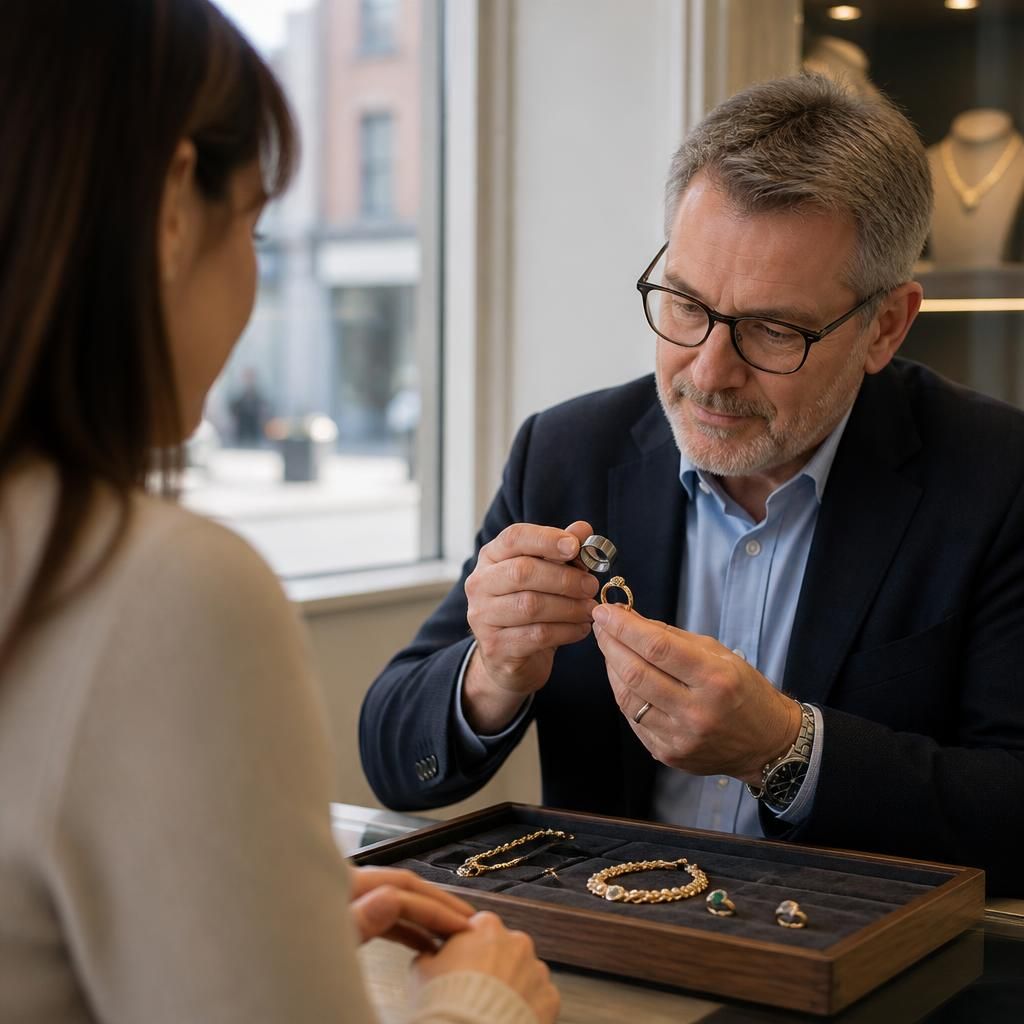
One important benefit of purchasing pre-loved jewellery from Birmingham’s Jewellery Quarter is access to specialist assessment before you buy. An experienced jeweller can examine the precious metal, hallmarks, gemstones, settings and signs of previous repair, helping you understand the item’s condition and suitability for its intended use.
This is particularly useful when buying an engagement ring, wedding ring or valuable gift. A professional assessment may identify worn claws, a thinning shank, loose stones or alterations that are not obvious from photographs. You can then compare the price fairly, taking into account any servicing or remedial work that may be required.
Ask what is known about the jewellery’s history, whether gemstones have been treated or replaced, and whether a valuation or other documentation is appropriate. Clear advice at the point of purchase, followed by services such as resizing, repairs, cleaning and valuation, helps you look after a pre-loved piece for the long term.