
What sets the best jewellers in the Jewellery Quarter apart from others?
The best jewellers in the Jewellery Quarter combine skilled craftsmanship with transparent advice, carefully sourced materials and the ability to create or adapt pieces to suit the customer. They also provide dependable aftercare, including repairs, resizing, remodelling and valuations, so their service continues beyond the initial purchase.
The best jewellers in the Jewellery Quarter are distinguished by the depth of their expertise, the quality of their workmanship and the standard of service provided before, during and after a purchase. They do more than display finished pieces: they help customers make informed decisions, explain materials and processes clearly, offer meaningful customisation and take responsibility for the long-term care of each item.
They begin with consultation rather than a sales-led approach. A reputable jeweller takes time to understand the purpose of the purchase, the wearer’s preferences, the required budget and any practical considerations. This is particularly important when choosing an engagement ring, wedding ring, luxury gift or timepiece. Advice should cover suitability, durability, proportions, comfort and maintenance, rather than focusing only on appearance.
For bespoke work, the consultation should develop into a clear design process. The jeweller should be able to discuss ideas, sketch or refine concepts, recommend appropriate metals and gemstones, and explain how the design will be made. Where a piece is being remodelled or created from inherited jewellery, the process should include an honest assessment of what can be retained, adapted or safely reused. Clear communication at each stage helps ensure that the finished item reflects the customer’s requirements without creating unrealistic expectations.
Craftsmanship is another important point of difference. High-quality jewellery should show careful finishing, secure settings, well-formed joins and proportions that work both visually and practically. Handmade and bespoke pieces may contain subtle signs of individual workmanship, but they should still meet a professional standard of construction. An experienced jeweller can explain how a design has been made and identify the features that affect its strength, comfort and longevity.
The best jewellers also provide knowledgeable guidance on materials. This includes explaining the characteristics of different precious metals, gemstone durability, setting styles and the care required for particular designs. For diamond and gemstone purchases, customers should receive clear information about quality, treatments where relevant and any supporting documentation available. Advice should be balanced: a stone or metal should be recommended because it suits the design and intended use, not simply because it is more expensive.
Trusted sourcing and transparent pricing matter just as much as appearance. A responsible jeweller should be able to explain, in practical terms, where materials and products come from and how ethical considerations are addressed. This may include discussing responsible gemstone sourcing, recycled or newly refined metals, supplier standards and the documentation supplied with a valuable piece. Pricing should be explained clearly, including the design, materials, craftsmanship and any additional services, so the customer can compare options on a like-for-like basis.
When purchasing a luxury watch, the same principles apply. The jeweller should be able to explain the watch’s condition, provenance, authenticity checks, supplied accessories and available documentation. For pre-owned pieces, any service history or known imperfections should be disclosed rather than overlooked. Customers should also understand what is covered by any warranty or guarantee and where future servicing will be handled.
Personalised service is a practical advantage, not simply a courtesy. Customers often need help comparing several designs, coordinating wedding rings with an existing engagement ring, selecting a meaningful gift or adapting a piece for a different occasion. A jeweller who keeps track of these requirements can give more relevant advice and reduce the risk of choosing an item that is unsuitable in size, style or everyday use. Appointments, private consultations and clear follow-up communication can be especially useful for bespoke or high-value purchases.
Aftercare is one of the clearest ways to distinguish a specialist jeweller from a retailer whose involvement ends at the sale. Useful aftercare may include:
- Ring resizing and adjustments where the design allows.
- Repairs to settings, clasps, chains and other worn or damaged components.
- Cleaning and inspection to identify problems before a stone becomes loose.
- Remodelling of inherited, outdated or unworn jewellery.
- Valuations for insurance, probate or personal records.
- Advice on storage, cleaning and the safe everyday use of jewellery and watches.
Good aftercare also requires honest boundaries. Not every ring can be resized indefinitely, and some gemstones or watch components need specialist handling. A professional jeweller should explain the available options, likely risks and expected timescales before work begins, rather than guaranteeing an outcome that cannot be supported.
Finally, the best jewellers combine local knowledge with standards suitable for customers across the wider UK. Their reputation is supported by consistent workmanship, accurate advice, secure handling of valuable items and a willingness to remain accountable after the purchase. When comparing jewellers in the Jewellery Quarter, look beyond the display and ask how designs are made, how materials are sourced, what documentation is provided and what support is available in the future. These details reveal whether the service is genuinely expert and dependable.
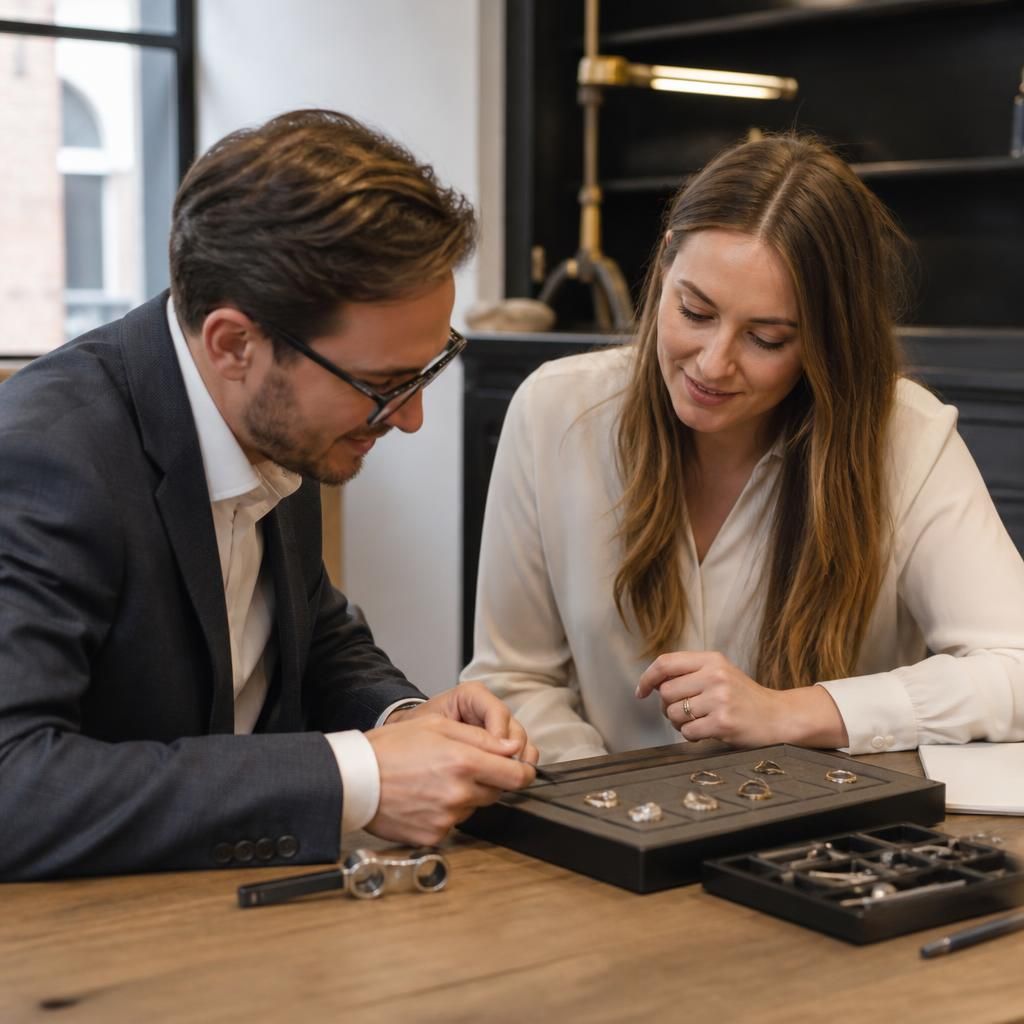
Reliable aftercare is a key difference between the best jewellers in the Jewellery Quarter and a retailer whose service ends at the sale. It provides ongoing support to help keep jewellery safe, wearable and accurately documented as circumstances change.
Useful aftercare may include ring resizing, repairs to settings and clasps, cleaning and inspection, jewellery remodelling, and valuations for insurance or probate. A professional jeweller should assess the piece before work begins and explain whether the design, gemstone or metal places any limits on the available treatment.
This honest, practical advice is important. Some rings cannot be resized indefinitely, delicate settings may require specialist handling, and certain gemstones should not be exposed to particular cleaning methods. Clear explanations of risks, timescales and costs help you make an informed decision and protect the condition and value of your jewellery over time.