
What should I consider when choosing an engagement ring in the Jewellery Quarter?
When choosing an engagement ring in the Jewellery Quarter, consider your budget, the wearer’s style and lifestyle, the metal and setting, and the quality, provenance and certification of the diamond or other gemstone. Compare bespoke and ready-to-wear options, check sizing and aftercare arrangements, and choose a trusted jeweller who can explain the design, materials and long-term care clearly.
When choosing an engagement ring in Birmingham’s Jewellery Quarter, consider the wearer’s style and lifestyle, your budget, the ring’s design and construction, the quality and provenance of its gemstones, and the service available after purchase. A reputable jeweller should explain each option clearly, provide suitable alternatives and give you time to make an informed decision.
Start with the wearer, not just the stone. Consider the jewellery they already wear, whether they prefer classic or contemporary designs, and whether the ring needs to sit alongside an existing wedding or eternity ring. The shape of the centre stone, the width of the band, the setting and the level of detail all affect the overall appearance. If you are unsure of their preferences, discreetly observe the colours, shapes and styles they choose regularly, or bring a trusted family member or friend to a consultation.
Lifestyle is equally important. Someone who works with their hands, plays sport or prefers low-maintenance jewellery may be better suited to a secure, practical setting with fewer projecting details. A person who rarely removes their jewellery may benefit from a robust design that is easy to clean and inspect. Delicate claws, exposed stones and intricate features can be beautiful, but they may require more careful wear and regular checks.
Set a realistic budget before comparing designs. Your budget should include the ring itself and, where relevant, the cost of a particular gemstone, bespoke design work, engraving, resizing or future alterations. It is helpful to tell your jeweller the range you wish to work within. This allows them to recommend appropriate combinations of metal, stone size, cut and setting rather than focusing on one feature in isolation. A well-designed ring is not defined solely by the size of its centre stone.
Ask what is included in the quoted price and request a clear explanation of any additional work. For a bespoke ring, check whether the design consultation, drawings, computer-aided modelling, alterations and final finishing are included. If the ring is being made to order, confirm the expected process and when you will have the opportunity to approve the design before manufacture.
Understand the gemstone’s quality. For a diamond, the traditional assessment considers cut, colour, clarity and carat weight. Cut generally has a significant effect on brightness and sparkle, while colour and clarity should be assessed in proportion to the chosen shape and setting. Carat refers to weight, not directly to visual size. Two diamonds of the same carat weight can appear different because of their proportions, cut and shape.
View the stone in person where possible and ask to compare suitable alternatives. A jeweller should be able to explain what you are seeing without relying on technical terminology alone. Check whether the diamond or coloured gemstone is natural, laboratory-grown, treated or synthetic, and ensure that this is disclosed accurately. If a graded report is supplied, review the issuing laboratory, the recorded characteristics and whether the report matches the stone being offered.
Coloured gemstones require additional considerations. Some are more vulnerable to scratching, heat or impact than others, and treatments may affect cleaning and repair requirements. Ask how the gemstone should be cared for and whether it is suitable for everyday wear. A trusted recommendation should take account of both appearance and durability.
Choose the metal and setting for long-term wear. Platinum and gold offer different appearances, weights, durability characteristics and maintenance requirements. Gold is available in different colours and purities, while white gold may require periodic surface finishing to maintain its appearance. Platinum develops a natural patina over time and can also be polished when appropriate. The most suitable choice depends on the wearer’s preferences, existing jewellery, skin sensitivities and how the ring will be used.
The setting holds the gemstone securely and contributes to the ring’s style. Claw settings allow more light to reach a stone but should be checked periodically for wear. Bezel settings provide more protection around the edge of a gemstone, while rub-over, halo and shoulder settings create different visual effects and proportions. Ask how easily the ring can be cleaned, whether the stone can be inspected and how the setting could be repaired if necessary.
Decide whether ready-to-wear or bespoke is more appropriate. A ready-to-wear engagement ring can be suitable when you have found the right design and require a straightforward purchase. Bespoke design is useful when you want to combine particular elements, accommodate an unusual gemstone, match an existing ring or create a piece with personal significance. It may also allow the proportions, setting and band to be developed around the wearer rather than selected from a fixed range.
Bespoke does not mean accepting an unclear process. Before proceeding, ask how the design will be developed, what materials and gemstones will be used, how changes are handled and when approval is required. A professional jeweller should explain the practical implications of your choices, including how a design may affect durability, comfort, cleaning and future resizing.
Check provenance and ethical considerations. Ask where the precious metals and gemstones come from, what documentation is available and whether any stone has been treated or enhanced. Responsible sourcing should be explained in specific terms rather than described with broad claims. If provenance is important to you, discuss recycled or newly mined metal, laboratory-grown or natural diamonds, coloured gemstone treatments and the documentation supplied with the finished ring.
Ethical sourcing is only one part of responsible purchasing. Consider whether the ring is made to a suitable standard, whether materials are accurately described and whether the jeweller can support repairs, resizing and maintenance over time. Clear records and honest explanations help you understand what you are buying.
Confirm the size and wearing comfort. Ring sizes can be affected by temperature, time of day, band width and the shape of the finger. A wider band may feel tighter than a narrow band in the same nominal size, and a substantial setting can affect how the ring sits. A professional fitting is preferable to estimating from another ring, particularly when the design has a wide band or an unusual profile.
Ask whether the design can be resized in the future. Some rings can be adjusted relatively easily, while intricate settings, full diamond bands and certain construction methods may have limited resizing options. The ring should sit securely without being uncomfortably tight and should be designed to work with any wedding ring you may later choose.
Examine the workmanship before accepting the ring. Check that the band is even, the finish is consistent and the setting is symmetrical. Stones should appear secure, with claws or bezels sitting correctly and no sharp edges catching on clothing. If the ring is bespoke, compare it with the approved design and confirm that the metal, gemstone and details are as agreed. Keep invoices, gemstone reports, design approvals and any valuation documents in a safe place.
Finally, ask about aftercare before you buy. Useful arrangements may include cleaning and inspection, claw or setting checks, resizing, repairs, remodelling and valuation services. Find out how the ring should be cleaned at home, which substances or activities to avoid and what to do if a stone becomes loose or the ring is damaged. Choosing a jeweller who remains available after the sale gives you practical support throughout the ring’s life, not just at the point of purchase.
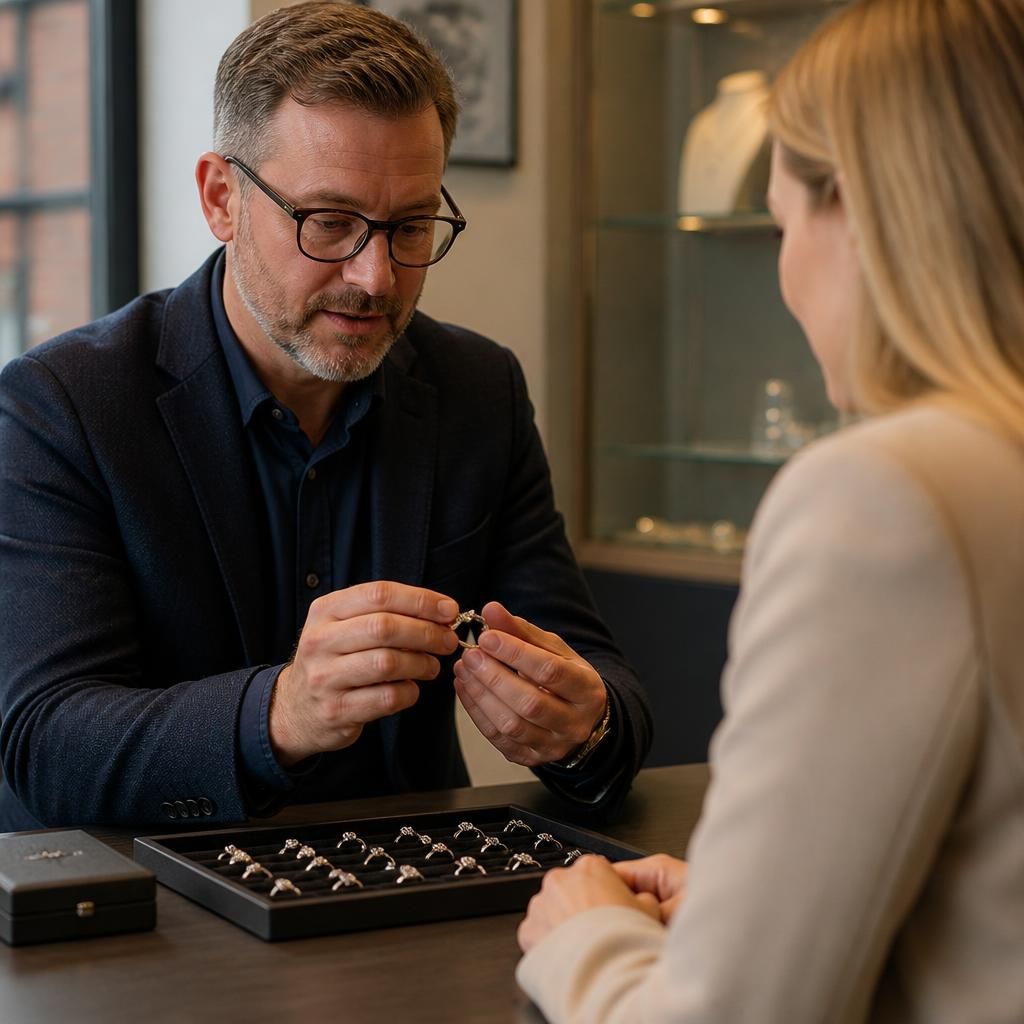
The most important consideration when choosing an engagement ring in the Jewellery Quarter is how well the design suits the wearer’s everyday life, not simply the size or appearance of the centre stone. The setting, band profile and gemstone should work together to provide comfort, security and lasting wear.
For someone active or working with their hands, a lower-profile bezel or rub-over setting may offer greater protection than prominent claws. If the ring needs to sit alongside a future wedding band, check that the shape and setting allow the two rings to fit comfortably together. Also consider whether the chosen gemstone is suitable for daily wear and what cleaning or inspection it will require.
During a consultation, ask the jeweller to explain:
- how securely the gemstone is held;
- whether the design can be resized or altered later;
- how the metal and setting will wear over time; and
- what inspections, repairs and cleaning are recommended.
This practical assessment helps you choose a ring that remains comfortable, secure and serviceable long after the proposal.