What factors determine the value of my 2nd hand Rolex watch?
The value of a second-hand Rolex is determined by its model and reference, condition, originality, age, current demand and overall desirability. Original box and papers, service history, provenance, rarity, and the presence of sought-after features can also affect the valuation, while aftermarket parts, damage or missing documentation may reduce it.
The value of a second-hand Rolex is determined by the specific model and reference, condition, originality, age, current market demand and overall desirability. Original packaging and documentation, service history, provenance, rarity and sought-after features can support the valuation, while aftermarket parts, damage, over-polishing or missing records may reduce it.
Model, reference and configuration
The exact reference is one of the most important factors. Two Rolex watches that appear similar may have very different values because of their production period, case material, dial, bezel, bracelet, movement or complications. A sought-after configuration may command a stronger price than a less desirable version of the same model.
The valuation should therefore identify the watch precisely rather than relying only on its model name. Details such as the dial finish, handset, bezel type, bracelet, clasp and movement can all help establish its specification and market position.
Condition and presentation
Condition affects both desirability and the cost of any work required before resale. A watch with a clean case, clear crystal, well-preserved dial, correctly functioning movement and an undamaged bracelet will usually be more attractive than one showing heavy wear or neglect.
Signs considered during an assessment may include:
- Scratches, dents, corrosion or excessive wear to the case and bracelet
- Damage or marks to the crystal, dial, hands and bezel
- Stretch or looseness in the bracelet
- Whether the crown, clasp and other components operate correctly
- Timekeeping, winding and calendar performance
- Evidence of water ingress, impact or previous poor-quality repairs
Normal age-related wear is not necessarily a serious problem. However, significant damage or a watch that requires servicing, replacement parts or restoration will generally receive a lower offer because those costs and risks must be taken into account.
Originality of the components
Rolex watches are assessed as complete, original products. Original Rolex components that match the watch’s period and specification can make a material difference to its value. Replaced dials, hands, bezels, bracelets or other parts may affect desirability, particularly where the replacement is aftermarket or not appropriate to the reference.
Polishing also requires careful consideration. A professionally refinished case may remain attractive, but excessive polishing can soften the original edges, alter the case shape and reduce collectability. An unpolished or sympathetically preserved example may be valued differently from one that has been heavily refinished.
Age, rarity and collectability
Age alone does not determine value. Some older watches are valuable because they are rare, historically significant or fitted with an especially desirable specification. Others may be less sought after if they are common, heavily worn or no longer retain their original parts.
Collectability can be influenced by limited production, discontinued references, unusual original dials, particular dial variations, early design details and documented links to a notable owner or event. These features must be verified carefully, as apparent rarity can sometimes result from later modifications rather than original manufacture.
Current demand and market conditions
Values change as buyer preferences and the wider luxury watch market change. Demand may vary between professional models, classic dress watches, precious-metal examples and watches with particular dial or bracelet combinations. A model that is highly sought after at one point may not attract the same level of interest later.
A valuation reflects the market at the time of assessment, not simply the original purchase price or a previous advertised price. Advertised prices are also not always the same as completed transaction prices. The route used to sell the watch, the time involved and the level of specialist demand can affect the amount ultimately offered.
Original box, papers and accessories
The original presentation box, guarantee documentation, manuals, swing tags and other accessories can support confidence in the watch and make it more complete to a future buyer. Documentation can also help confirm the model, reference, serial details and purchase history.
Missing papers do not automatically make a genuine Rolex unsaleable, and a complete set does not remove the need for an authenticity and condition assessment. However, incomplete accessories may reduce the value compared with an otherwise identical watch supplied with its original documentation and packaging.
Service history and maintenance
A clear service history can provide evidence that the watch has been maintained properly. Records from an authorised or suitably qualified service provider may show when work was carried out and which components were replaced. This can reduce uncertainty for a buyer and help identify whether the watch is ready to wear or likely to need attention.
A recent service is not automatically an increase in value if the work was unnecessary, poorly documented or involved inappropriate parts. Conversely, an older watch without service records may still be valuable, but the possibility of servicing or repair will need to be allowed for in the valuation.
Provenance and authenticity
Provenance means the documented history of ownership and purchase. An original receipt, insurance valuation, service record or other credible paperwork can help establish the watch’s history. This is particularly useful where the watch has unusual features or is being presented as a collectible example.
Authenticity remains essential. The case, movement, dial, serial details, bracelet and documentation should be assessed together. Any inconsistencies, altered markings or non-original components can affect both the valuation and whether the watch can be offered for resale.
Precious metals and technical specification
The material of the case and bracelet, such as steel, gold or platinum, contributes to the watch’s underlying value. However, the metal content is only one part of the assessment. A precious-metal watch may not achieve a higher market value than a steel model if its condition, configuration or demand is weaker.
Movement type, chronograph or calendar functions, water-resistance design and other technical features can also influence value. These features must be considered alongside serviceability and the availability of suitable original parts.
How a valuation is reached
A proper assessment combines physical inspection, authentication, condition grading, specification checking and comparison with relevant market activity. The watch should be examined as an individual item rather than valued from a broad model average.
Before an appointment, gather the watch, box, papers, receipts, service records, spare links and any other original accessories. Do not attempt to polish the case, replace parts or carry out repairs solely to improve the valuation without discussing it first. Unnecessary work can remove original features, while the cost may not be recovered in the sale price.
It is also helpful to be open about known damage, repairs, modifications and the watch’s ownership history. Accurate information allows the assessment to account for the watch’s actual condition and helps avoid delays during authentication.
What can reduce the value?
- Aftermarket or incorrectly matched components
- Heavy polishing, deep scratches, dents or corrosion
- A damaged dial, crystal, bezel or bracelet
- Missing or inconsistent serial and reference details
- No documentation where comparable watches have complete sets
- Unrecorded repairs, movement problems or water damage
- Features that are less desirable in the current market
The most reliable valuation comes from examining the complete watch and its supporting records together. If you are considering selling your second-hand Rolex, a physical assessment can establish its exact specification, identify any factors affecting the price and explain whether servicing or other work is likely to be worthwhile before sale.
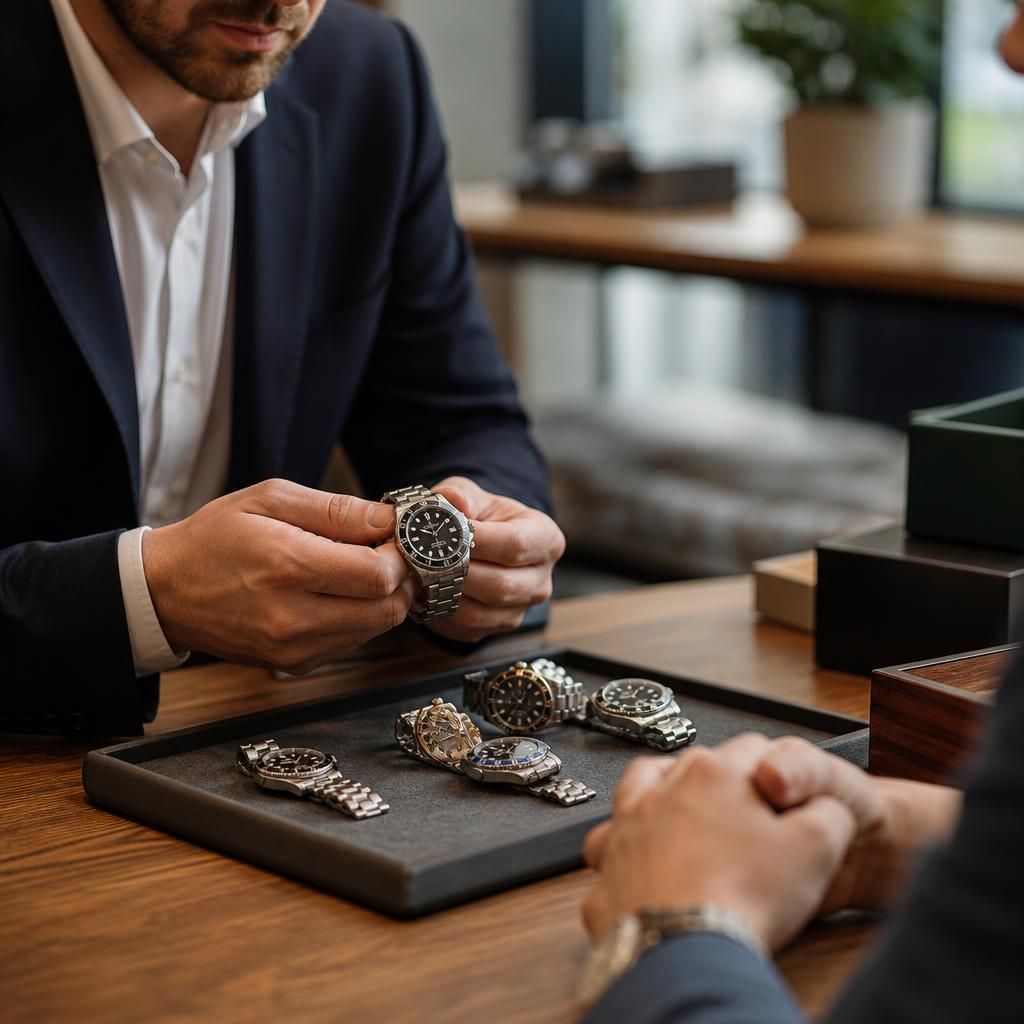
The exact Rolex reference and its originality are among the most important factors in a second-hand valuation. Watches from the same model range can differ significantly in value according to their production period, dial, bezel, bracelet, movement and case material.
Condition is assessed alongside specification. A well-preserved case, original dial, correctly functioning movement and undamaged bracelet will generally be more desirable than a watch requiring extensive work. Heavy polishing, aftermarket components, corrosion, stretched bracelet links or water damage can reduce the valuation.
Original box, guarantee papers, service records and spare links can support confidence in the watch’s history and completeness. They do not replace a physical inspection, but they help confirm the specification and may strengthen its appeal to a future buyer.
Arrange Your Second-Hand Rolex Valuation
Arrange a professional second-hand Rolex valuation with Steven Charles Quance to establish your watch’s exact specification, condition and current market value. Bring the watch, original box, papers, service records and accessories where available for a thorough assessment.